Getting started
Vegetarian Moroccan Cooking Basics
Moroccan food is far more vegetarian-friendly than its reputation for lamb tagines suggests — it's a cuisine built on vegetables, pulses, grains, olive oil and spice, where meat is often just one element and easily left out. Learn a few naturally meat-free dishes and you have a rich, satisfying plant-based repertoire.
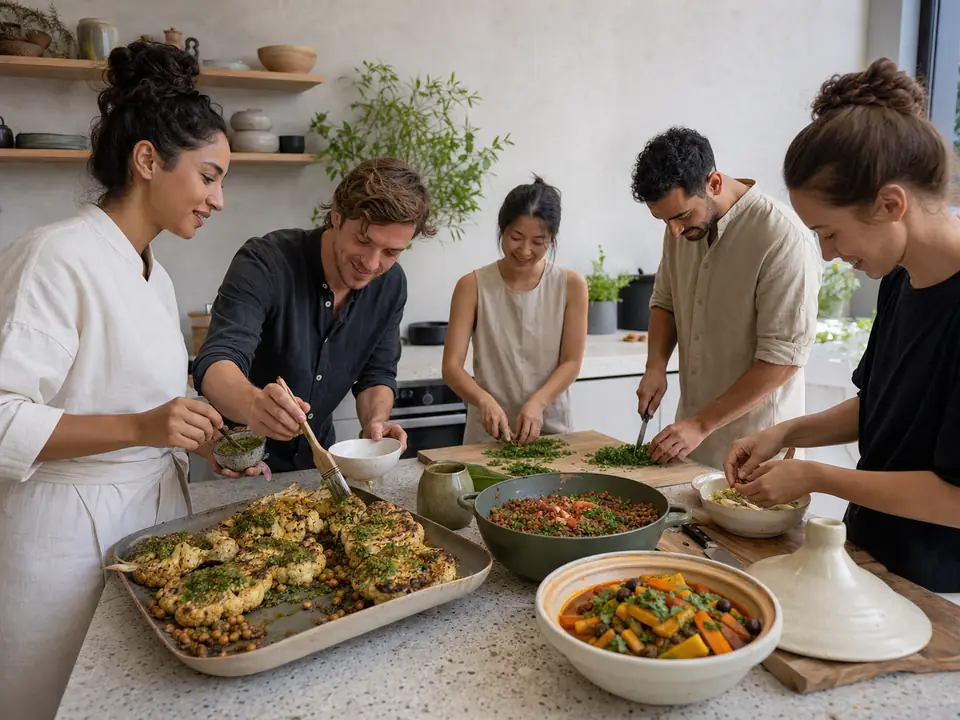
At a glance
- Vegetable tagines and seven-vegetable couscous are naturally meat-free and complete
- Pulses — lentils, chickpeas, loubia, bissara — are hearty, cheap, traditional staples
- The salad spread (zaalouk, taktouka, carrot-cumin, etc.) is mostly vegetable and often vegan
- For vegan: swap butter/smen for olive oil, skip honey, use vegetable broth in couscous
Guide
The backbone of vegetarian Moroccan cooking is the same spice-and-onion base as the meat dishes, so nothing tastes like a compromise. Vegetable tagines — root vegetables, squash, chickpeas and preserved lemon braised with the classic spices — are hearty and complete. The seven-vegetable couscous is naturally vegetarian and one of the country's great dishes. Pulses do heavy lifting: lentils, chickpeas and dishes like loubia (white beans in tomato sauce) and bissara (a fava-bean purée) are cheap, filling and traditional everyday food.
The salad course is where vegetarian Moroccan cooking shines. Zaalouk (smoky aubergine), taktouka (peppers and tomato), carrot-and-cumin, beetroot, lentil salads and the fresh diced Moroccan salad are mostly vegetable-based and many are vegan as they stand. A spread of these plus bread is a meal in itself. Bread and the breakfast breads — khobz, msemen, baghrir, harcha — are vegetarian, and amlou (argan oil, almonds, honey) is a plant-based breakfast treat.
To keep dishes fully vegan, watch for a few animal ingredients: butter and smen (swap in olive oil), honey (use sugar or leave out), and meat-based broth in couscous (use a vegetable broth or water). Most core dishes adapt easily because so much Moroccan home cooking is already plant-based out of everyday economy. Flag vegan needs when following recipes, lean on the vegetable tagines, couscous, pulse dishes and the salad spread, and you'll eat extremely well — this is genuinely how much of Morocco eats day to day.
Practical tips
- 1
Build vegetable tagines on the same spice base as the meat ones — no compromise in flavour.
- 2
Make the seven-vegetable couscous with vegetable broth to keep it vegetarian or vegan.
- 3
A spread of cooked and raw salads plus bread is a satisfying meal on its own.
- 4
Lean on pulses — lentils, chickpeas, white beans — for hearty, cheap plant-based mains.
- 5
For vegan, swap butter and smen for olive oil and use sugar instead of honey.
Frequently asked questions
Is Moroccan food good for vegetarians?
Very — it's built on vegetables, pulses, grains, olive oil and spice, with meat often just one element. Vegetable tagines, seven-vegetable couscous, pulse dishes and the salad spread make a rich, satisfying meat-free repertoire.
How do I make Moroccan dishes vegan?
Swap butter and smen for olive oil, skip honey or use sugar, and use vegetable broth or water instead of meat broth in couscous. Most core dishes adapt easily because so much Moroccan home cooking is already plant-based.
What are the best vegetarian Moroccan dishes?
Vegetable tagine, seven-vegetable couscous, lentil and chickpea dishes, bissara (fava purée), loubia (white beans), and the range of cooked and raw salads like zaalouk and taktouka — most naturally meat-free.
Try the recipes
Put the tip into practice with these free step-by-step recipes: