Equipment
The Moroccan Tea Set Explained
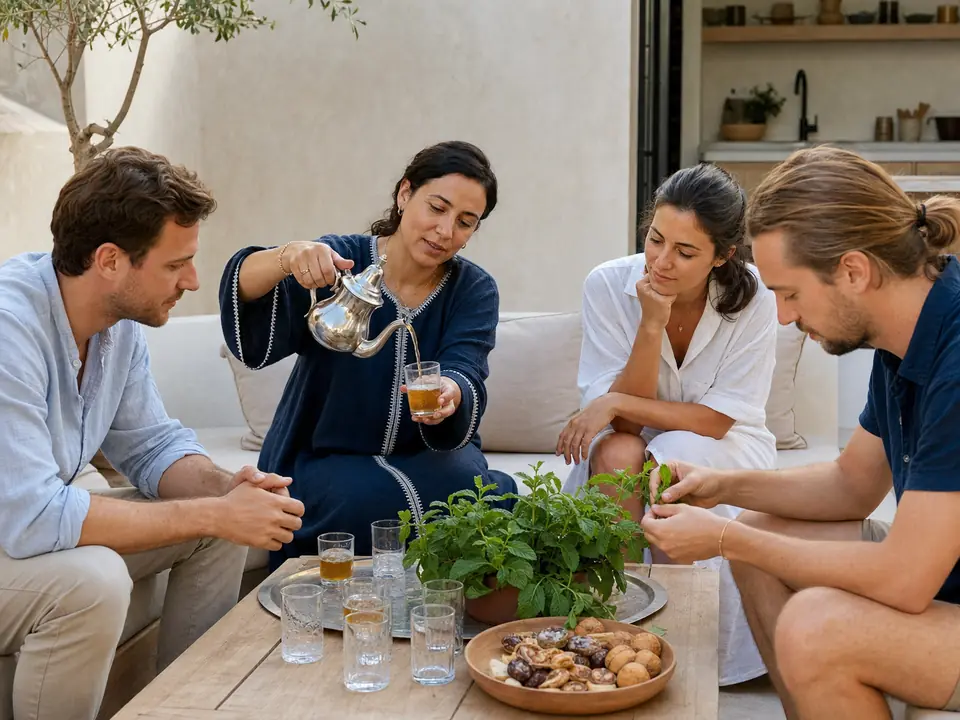
Serving Moroccan mint tea is a ritual, and the tea set is its equipment — a distinctive teapot, an engraved tray, small coloured glasses and, traditionally, a cone of sugar. Each piece has a purpose in the ceremony of pouring and welcoming, and together they turn making tea into a performance of hospitality.
At a glance
- The berrad teapot brews on the heat and its curved spout enables the high pour
- Small, handleless, often coloured glasses keep tea hot and the ritual repeating
- The engraved metal tray (siniya) presents the whole set
- Sugar traditionally came as a cone, broken off and added to the pot
Guide
The centrepiece is the berrad, the Moroccan teapot — traditionally silver or, more commonly, silver-coloured metal, with a curved spout and a hinged lid. It's designed to go on the heat: unlike many teapots, the tea is often brewed and even simmered directly in the berrad on the stove, then poured from it. Its long, curved spout is what makes the signature high pour possible, sending a thin stream of tea down into the glass from height to build the foam.
The glasses are small, handleless and often beautifully coloured or gilded, sometimes gold-rimmed with painted patterns. They're small deliberately — tea is served in modest glasses, refilled often, so it stays hot and the pouring ritual repeats. Because the glasses have no handles and the tea is hot, you learn to hold them by the rim and base. The engraved metal tray (siniya) holds the whole set and is itself often a fine piece, brought out to present the tea.
Traditionally sugar came as a solid cone (qaleb sokkar), pieces broken off with a little hammer and added generously to the pot — a reminder of how central sweetness is to the drink. A complete traditional set might also include a box or dish for the tea and mint. You don't need the full array to make good tea, but a berrad with a proper curved spout genuinely helps with the high pour, and the small glasses are part of the experience. The set is often given as a wedding gift and treasured, a symbol of hospitality itself.
Practical tips
- 1
A berrad with a proper long, curved spout makes the signature high pour much easier.
- 2
The glasses are small on purpose — frequent refills keep the tea hot.
- 3
Hold handleless glasses by the rim and base, as the tea is very hot.
- 4
You don't need the full traditional set, but the teapot shape genuinely helps.
- 5
A good tea set is a classic, treasured Moroccan wedding gift.
Frequently asked questions
What is a Moroccan teapot called?
The berrad — a metal (traditionally silver or silver-coloured) teapot with a curved spout and hinged lid. The tea is often brewed and simmered directly in it on the heat, and its long spout enables the signature high pour.
Why are Moroccan tea glasses so small?
Small glasses keep the tea hot and encourage frequent refills, which suits the repeated pouring ritual of Moroccan tea service. They're usually handleless and decorated with colour or gold.
What is in a Moroccan tea set?
A berrad teapot, small coloured glasses, an engraved metal serving tray (siniya), and traditionally a cone of sugar with a little hammer to break it. It's brought out to present the tea as an act of hospitality.
Try the recipes
Put the tip into practice with these free step-by-step recipes: