Getting started
Moroccan Cooking in a Small Kitchen
You do not need a big kitchen to cook Moroccan food. The cuisine was developed in kitchens far smaller and simpler than most modern ones — often a single burner, a shelf of spices and a few well-chosen pots. Here is how to make a small kitchen work for Moroccan cooking.
At a glance
- Cook sequentially: salads first, tagine next, bread while the tagine finishes
- A medium tagine/Dutch oven, one knife, a grater and a mortar cover most tasks
- Store spices in uniform jars on a narrow shelf or in a drawer
- Clean as you go — use the tagine's passive braising time to reset the counter
Guide
The key is sequential cooking, not simultaneous. In a small kitchen, trying to make tagine, salads, bread and pastries all at once is a recipe for chaos. Instead, work in stages. Make salads first and refrigerate them — they take only a cutting board and a bowl. Then start the tagine — it occupies one burner and needs minimal attention for most of its cooking time. While it braises, clean the counter and prep bread dough. Bake the bread in the oven while the tagine finishes on the hob.
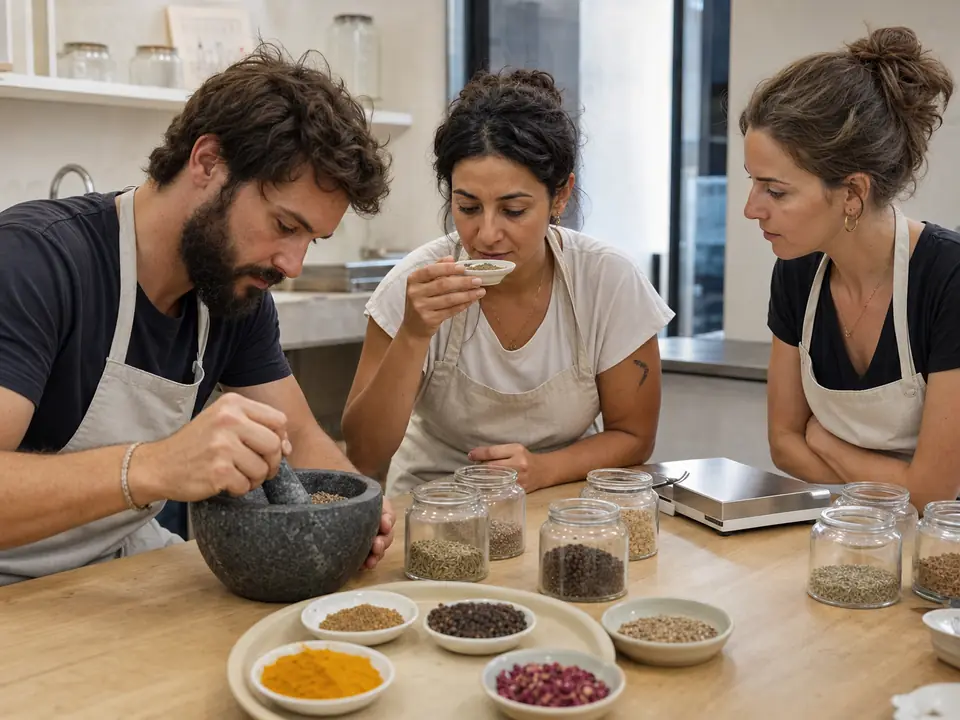
Equipment choices matter in a small kitchen. A medium tagine or Dutch oven (25–28 cm) handles most recipes and stacks on a shelf. A single good knife, a cutting board, a box grater and a mortar cover all the prep. A stackable steamer insert for couscous avoids needing a separate couscoussier. Multi-function tools earn their space; single-function gadgets don't. Store spices in uniform jars on a narrow shelf or in a drawer — a tidy spice collection takes less room than a disorganised one.
Counter space is managed by cleaning as you go. Once the onion base is in the pot, wash the board and grater. Once the tagine is braising, clear everything except what you need for the finishing step. Moroccan cooking has a natural rhythm — bursts of activity followed by long passive periods — that suits small kitchens well. Use the passive time to clean, prep the next step, and reset the counter. The constraint is real, but it is workable.
Practical tips
- 1
Work in stages: salads, then tagine, then bread. Don't try everything simultaneously.
- 2
A 25–28 cm tagine or Dutch oven handles most recipes and stores easily.
- 3
Use the tagine's long braising time to clean, prep and reset your counter.
- 4
Choose multi-function tools (good knife, box grater, mortar) over single-use gadgets.
- 5
Store spices in uniform, labelled jars — a tidy collection takes less room than a messy one.
Frequently asked questions
Can I cook Moroccan food with only two burners?
Yes — most Moroccan dishes use only one burner at a time. A tagine occupies one; if you need the second, use it for heating bread or making tea. Couscous uses one burner for the couscoussier (broth and steamer in one stack).
What equipment do I really need for a small kitchen?
A medium tagine or Dutch oven, one good knife, a cutting board, a box grater, a mortar and pestle, and a stackable steamer insert. That covers tagines, couscous, salads and most prep.
How do I manage counter space?
Clean as you go — wash boards and bowls during the tagine's passive braising time. Work sequentially rather than simultaneously. Use the natural rhythm of Moroccan cooking (bursts of activity, then long pauses) to reset between stages.
Try the recipes
Put the tip into practice with these free step-by-step recipes: