Getting started
Moroccan Breakfast Basics
Moroccan breakfast is a generous, mostly savoury spread built around bread — flaky msemen, spongy baghrir, crumbly harcha and everyday khobz — served with olive oil, honey, amlou, olives, cheese, eggs and, always, mint tea or coffee. It's one of the loveliest and most underrated parts of the cuisine.
At a glance
- Breakfast breads are the stars: msemen, baghrir, harcha, khobz, and weekend sfenj
- Savoury-sweet spread: olive oil, honey, jam, olives, cheese, and amlou in the south
- Eggs and, in winter, hearty leftovers like bissara feature too
- Always mint tea or coffee (often nous-nous, coffee with milk)
Guide
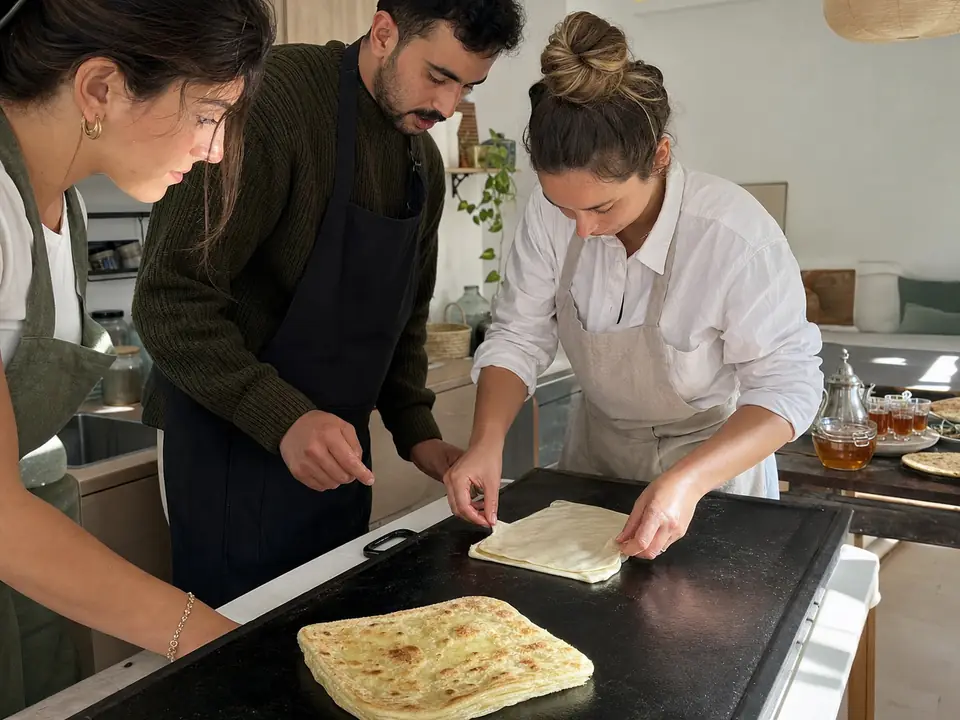
Bread is the centre of the Moroccan breakfast table, and it's the breakfast breads that make it special: msemen, the flaky folded square, torn and dipped in honey; baghrir, the thousand-hole semolina pancake that soaks up a honey-and-butter mix; harcha, the crumbly pan-fried semolina bread eaten warm; and khobz or the day's fresh bread. Sfenj — Moroccan doughnuts, fried rings of dough — are a beloved weekend and street breakfast, dusted with sugar. These breads are the reason breakfast is such a treat.
Around the breads go a spread of accompaniments, mostly savoury: good olive oil for dipping, honey, jam, olives, and often cheese (a soft white cheese, or the processed cheese wedges that are surprisingly common). Amlou — the moreish paste of argan oil, ground roasted almonds and honey — is a special-occasion breakfast spread eaten on bread, particularly in the argan-growing south. Eggs appear too, sometimes as a simple omelette or the tomato-and-egg dish, and in some homes leftover soup like bissara (fava purée) is a hearty morning dish, especially in winter.
And always the drink: mint tea, or coffee, often café-style as coffee with milk (nous-nous, 'half-half'). Breakfast is where Morocco's love of combining savoury and sweet shows early — honey and olives on the same table, a piece of msemen dipped first in oil then in honey. Recreating a Moroccan breakfast at home is easy and rewarding: make or buy some msemen or baghrir, set out olive oil, honey, olives and cheese, brew mint tea, and you have a spread that turns breakfast into an event.
Practical tips
- 1
Make or buy msemen or baghrir as the centrepiece of a home Moroccan breakfast.
- 2
Set out olive oil and honey to dip bread in — the savoury-sweet combination is the point.
- 3
Try amlou (argan oil, almonds, honey) on bread for a special treat.
- 4
Sfenj doughnuts are a classic weekend or street breakfast.
- 5
Brew mint tea or make a nous-nous coffee to complete the spread.
Frequently asked questions
What do Moroccans eat for breakfast?
A mostly savoury spread built around breads — msemen, baghrir, harcha and khobz — with olive oil, honey, jam, olives, cheese and eggs, plus amlou in the argan-growing south, all with mint tea or coffee. Sfenj doughnuts are a weekend favourite.
What is amlou?
A rich Moroccan breakfast spread of argan oil, ground roasted almonds and honey, eaten on bread. It's a specialty of the argan-growing south and often reserved for special occasions.
Is Moroccan breakfast sweet or savoury?
Both, on the same table — that's part of its charm. You'll find honey and jam alongside olives, olive oil and cheese, and a piece of msemen might be dipped first in oil and then in honey.
Try the recipes
Put the tip into practice with these free step-by-step recipes: