Techniques
Knife Cuts for Moroccan Dishes
Moroccan recipes are surprisingly specific about how ingredients are cut, and the cuts matter. Grated onion dissolves into a silky sauce; sliced onion holds its shape and caramelises. Chunky vegetables stay whole through a long braise; fine dice cook quickly for a salad. Getting the cut right is half the technique.
At a glance
- Grated onion melts into silky sauce; sliced onion holds shape and caramelises
- Grate tomatoes on a box grater for smooth pulp without peeling
- Cut vegetables large for long braises — they need to survive the cooking time
- Fine dice and julienne are for salads and fresh preparations
Guide
Grating is the most distinctively Moroccan cut. Onions are often grated on a box grater for tagines — the fine pulp melts into the sauce, thickening it and creating the silky, unified base that defines a good tagine. Tomatoes are grated too: hold a halved tomato cut-side against the grater and rub until only the skin is left in your hand. This gives a smooth tomato pulp without needing to peel or seed. The grating technique is central to the cuisine's characteristic smooth sauces.
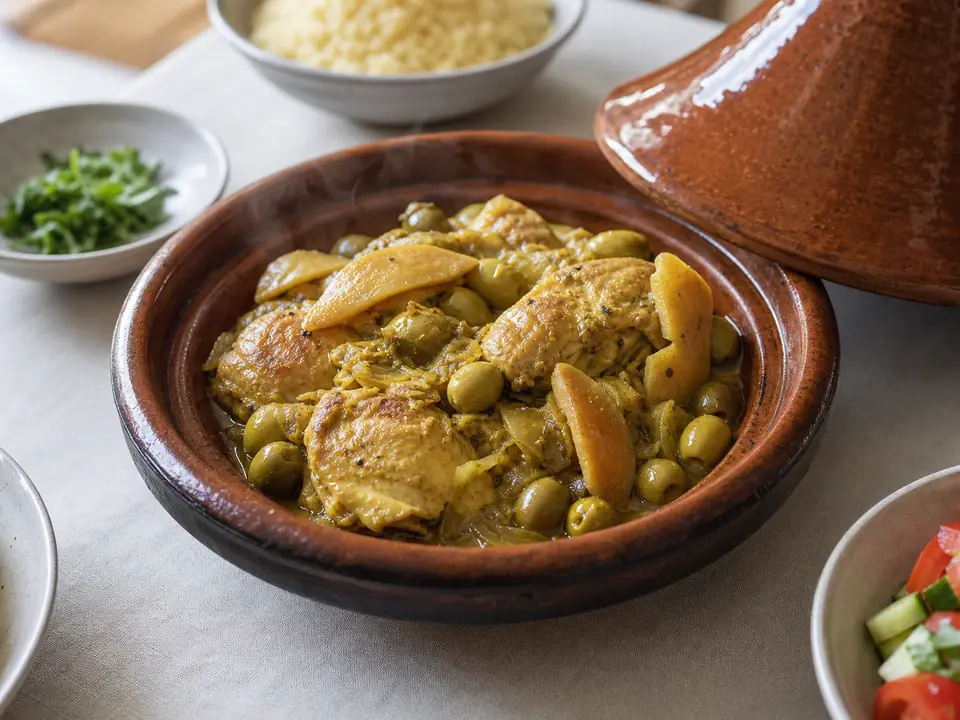
Slicing and chunking are for when you want ingredients to hold their shape. Onion rings or half-moons go on top of a tagine, caramelise and become part of the presentation. Root vegetables for a seven-vegetable couscous are cut into large chunks — quarters of turnip, thick carrot batons, halved courgettes — so they survive a long steam without disintegrating. Potatoes in a tagine are quartered, not diced. The rule is: the longer the cooking, the larger the cut.
Fine dice and julienne appear in salads and fresh preparations. Moroccan salads are often built on very fine dice — tiny cubes of tomato, cucumber and pepper tossed with cumin and lemon. Carrot salad uses a coarse grate or julienne. The precision is part of the presentation: a zaalouk or taktouka has a specific texture that comes from the right cut. Learning these few cuts — grate, chunk, slice, fine dice — covers almost everything Moroccan cooking asks of you.
Practical tips
- 1
Grate onions on a box grater for tagines — the pulp melts into a silky sauce base.
- 2
Grate halved tomatoes cut-side down; the skin stays in your hand, the pulp goes through.
- 3
Cut root vegetables for couscous into large chunks so they hold up through steaming.
- 4
Use very fine dice for Moroccan salads — the precision is part of the dish.
- 5
A sharp knife matters more than a fancy one; hone before every session.
Frequently asked questions
Why do Moroccan recipes say to grate onions?
Grated onion dissolves into the sauce during cooking, creating the silky, unified base that defines a good tagine. Sliced onion holds its shape, which is right for presentation layers but wrong when you want a smooth sauce.
How do you grate a tomato the Moroccan way?
Cut a tomato in half, hold it cut-side against a box grater and rub. The flesh grates through into smooth pulp; the skin stays in your hand. It is quicker than peeling and seeding.
How big should I cut vegetables for tagine?
Large — quarters of potato, thick batons of carrot, halved courgettes. They need to survive one to two hours of braising without falling apart. The longer the cooking, the larger the cut.
Try the recipes
Put the tip into practice with these free step-by-step recipes: