Ingredients
Choosing Olive Oil for Moroccan Cooking
Olive oil is the fat of Moroccan cooking — used more generously than most Western cooks expect. But not all olive oils are the same, and knowing which to cook with and which to save for finishing makes a real difference to your food and your budget.
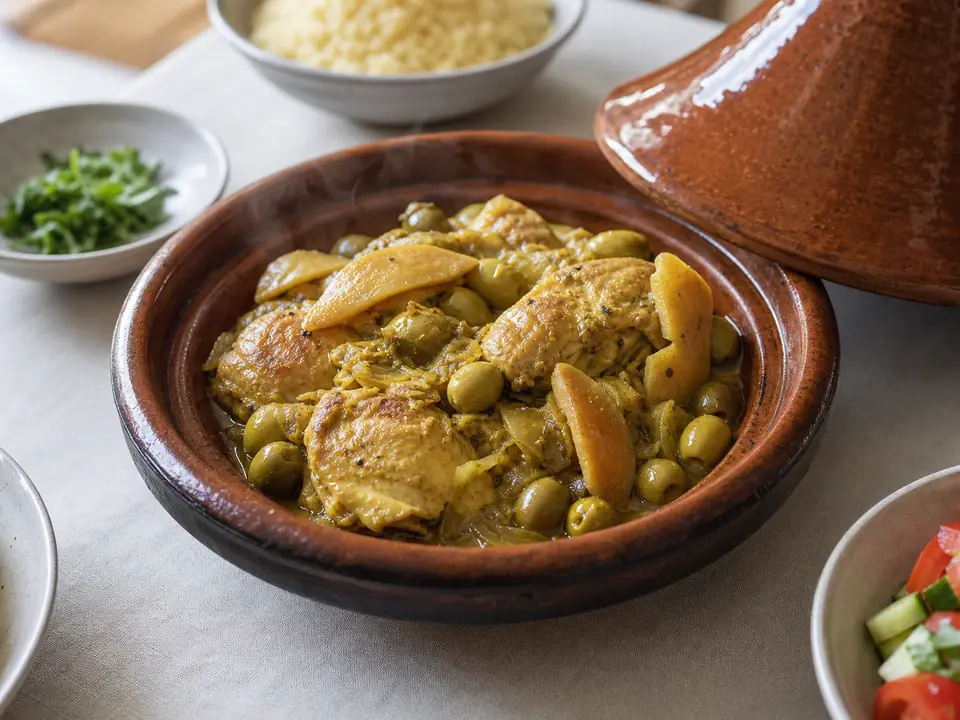
At a glance
- Moroccan picholine is robust and peppery — the default Moroccan cooking oil
- For cooking tagines, any decent extra-virgin or pure olive oil works
- Use a generous hand — Moroccan cooking is not shy with oil
- Save your best extra-virgin for finishing, drizzling and dipping
Guide
Morocco is one of the world's largest olive oil producers, and the dominant variety is the picholine marocaine — a robust, slightly bitter, peppery oil with good body. It is the oil most Moroccan cooks reach for every day. If you can find it, Moroccan picholine is the most authentic choice for cooking tagines, frying and dressing salads. But any good-quality, reasonably priced extra-virgin olive oil works for everyday Moroccan cooking — Spanish, Tunisian, Turkish or Italian oils all perform well.
For cooking — sautéing onions, braising tagines, frying bread — you want a decent but not expensive extra-virgin oil, or even a refined (pure) olive oil. These have higher smoke points and less delicate flavour, which suits the long cooking of a tagine where the subtleties of a premium oil would be cooked away. Use a generous hand: Moroccan cooking is not shy with oil, and the fat carries the spice flavours through the dish.
For finishing — drizzling over salads, dipping bread, adding a final glossy pour to a tagine at the table — use your best extra-virgin. Here the flavour shows, so a peppery picholine, a grassy arbequina or whatever good oil you enjoy will make a noticeable difference. The principle is simple: cook with everyday oil, finish with good oil, and never let either run out.
Practical tips
- 1
Use a robust, affordable extra-virgin or pure olive oil for cooking tagines.
- 2
Save your best peppery extra-virgin for drizzling on salads and dipping bread.
- 3
Moroccan cooking uses oil generously — the fat carries spice flavours through the dish.
- 4
If using argan oil, treat it as a finishing oil only — it burns at low temperatures.
- 5
Store olive oil in a dark, cool place; it goes rancid in light and heat.
Frequently asked questions
What olive oil do Moroccan cooks use?
Most use picholine marocaine — a robust, slightly bitter, peppery oil. It is the everyday oil for cooking, frying and salads in Morocco. Any good-quality extra-virgin olive oil is a fine substitute.
Should I use expensive olive oil for tagines?
No — the long cooking of a tagine cooks away the delicate flavours of a premium oil. Use a decent everyday oil for cooking, and save your best bottle for finishing and drizzling.
How much olive oil should I use?
More than you might expect. Moroccan cooking is generous with oil — it is the vehicle for spice flavour and contributes to the sauce's body. Three to four tablespoons for a tagine serving four is typical.
Try the recipes
Put the tip into practice with these free step-by-step recipes: