Marrakech dining
Couscous in Marrakech: Where and When to Eat the Friday Dish
Couscous is not everyday food in Morocco — it is the Friday dish, the communal centrepiece of the family lunch after prayers, and the benchmark by which a home cook is judged. In Marrakech that means the best couscous appears at the end of the week, and the difference between properly steamed, hand-worked grain and a rushed reheated bowl is enormous. Knowing when and where to look is everything.
- Read
- 8 min
- Guide
- Marrakech dining
- Updated
- 19 July 2026
At a glance
- Couscous is traditionally a Friday dish — that is when the best is served.
- Real couscous is steamed and hand-worked to fluffy separate grains, not boiled.
- The great versions are seven-vegetable and tfaya (sweet onion, raisin, cinnamon).
- Many restaurants offer it daily for tourists; Friday is when it is taken seriously.
The Friday tradition
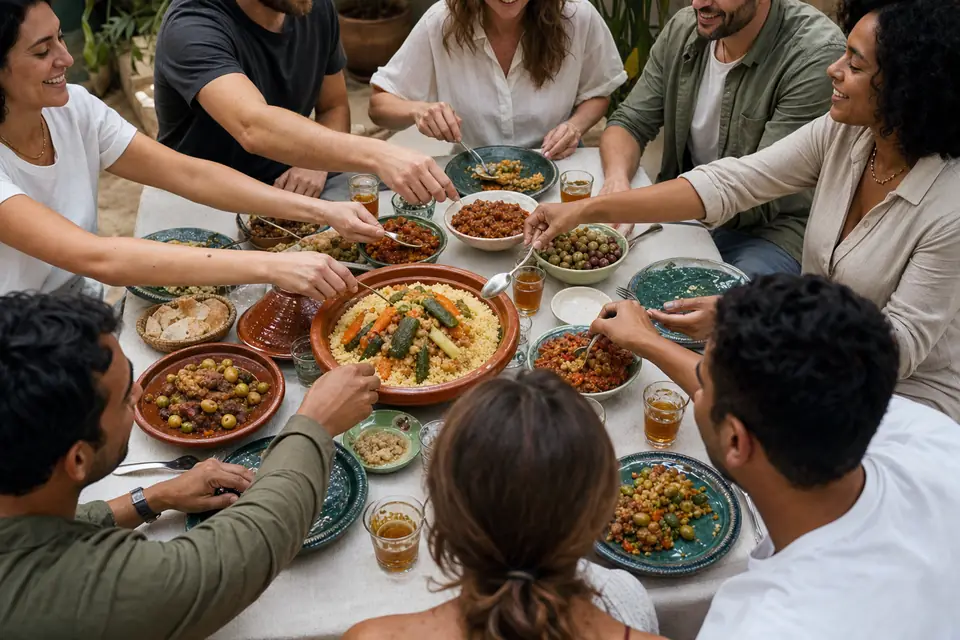
Across Morocco, Friday is the day of the big midday meal, and couscous is its classic form — a vast shared platter brought out after the congregational prayer, eaten with family and often shared with those in need. Restaurants that respect the tradition put their real effort into couscous on Fridays, and some serve it only then. If you want the genuine article at its best, plan a Friday lunch rather than expecting it any night of the week.
Tourist-facing places do offer couscous daily, and some is fine, but be aware that a Tuesday couscous is often a reheated concession rather than a fresh steaming. The rhythm of the week is a real clue to quality here.
How to tell good couscous from bad
Couscous is technically demanding: the tiny semolina grains are steamed in stages over the simmering stew below, raked and worked by hand between steamings so they swell light and separate. Done right, the grain is fluffy, distinct and soaked with the broth's flavour; done wrong — boiled like pasta or, worse, instant from a box just rehydrated — it is a stodgy, claggy mass.
- Look for separate, fluffy grains that hold their shape, not a wet clump.
- A mound with vegetables piled on top, broth served alongside to moisten to taste, signals care.
- Tfaya on top — caramelised sweet onions, raisins and cinnamon — marks a traditional kitchen.
- Ask if it is hand-steamed; proud kitchens will happily say yes on a Friday.
The classics to order
The everyday hero is seven-vegetable couscous — grain heaped with carrot, turnip, courgette, pumpkin, cabbage, chickpeas and more, over lamb, chicken or beef, moistened with the spiced broth. Tfaya couscous adds the sweet-savoury crown of caramelised onions, raisins and cinnamon, sometimes with a scatter of fried almonds. On the coast you will also find fish couscous, and some homes make a sweet seffa of couscous with cinnamon and sugar as a dessert or light meal.
Order one couscous between two or three unless you are very hungry — the platters are large and filling. It is eaten communally, traditionally rolled into neat balls by hand from your section, though a spoon is perfectly acceptable. To watch the hand-steaming and rolling up close, a Friday-timed cooking class is the ideal way in.
Frequently asked questions
When is the best day to eat couscous in Marrakech?
Friday. Couscous is the traditional dish of the Friday family lunch after prayers, so that is when kitchens put their real effort into it and some serve it only then. A Friday lunch is your best chance at fresh, properly hand-steamed couscous rather than a reheated weekday version.
How can I tell if couscous is properly made?
Real couscous is steamed in stages and worked by hand so the grains swell light, fluffy and separate, then soak up the broth's flavour. Look for distinct grains that hold their shape rather than a wet, stodgy clump. A mound topped with vegetables, with broth served alongside, signals a careful kitchen.
What are the classic types of couscous to try?
Seven-vegetable couscous is the everyday classic — grain heaped with seasonal vegetables over lamb, chicken or beef. Tfaya couscous adds a sweet-savoury crown of caramelised onions, raisins and cinnamon. On the coast, fish couscous appears, and seffa is a sweet cinnamon-and-sugar version.
How do you eat couscous the traditional way?
It is a communal dish eaten from a shared platter. Traditionally you roll the grain into neat balls by hand from the section in front of you, moistening it with the broth served alongside. A spoon is perfectly acceptable for visitors, and vegetables and meat are shared from the top of the mound.