Moroccan · Main course
Tanjia Marrakchia (Marrakech Urn-Cooked Beef)
Tanjia is Marrakech's own dish — and nowhere else's. Cubes of beef or lamb, often shank and cheek, are packed into a tall clay urn (also called a tanjia) with smen, preserved lemon, whole garlic, cumin, saffron and ras el hanout, sealed, and left to cook for hours in the warm ashes of the neighbourhood hammam furnace, the farnatchi. It is traditionally the bachelor's feast: prepared by men and carried to the furnace-keeper on the way to work.
- Prep
- 20 min
- Cook
- 300 min
- Total
- 320 min
- Serves
- 4
- Level
- Medium
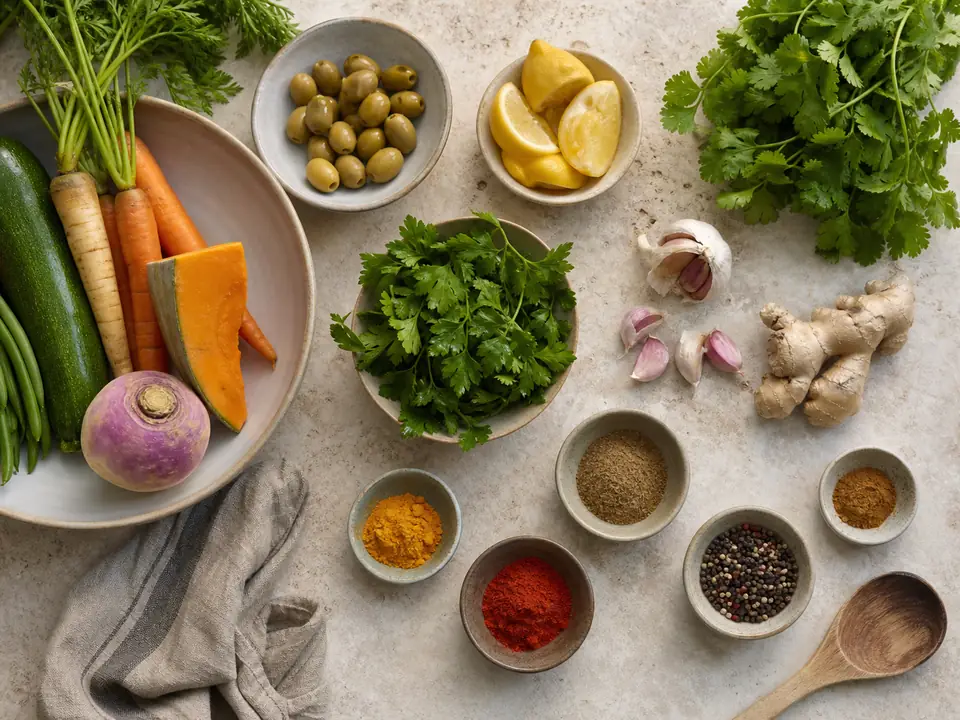
Ingredients
- 1.2 kg beef or lamb, ideally shank, cheek or shoulder, in large cubes (with a marrow bone if you have one)
- 2 tbsp smen (aged fermented butter) or ghee
- 1 preserved lemon, quartered, plus a little of its brine
- 1 whole head of garlic, cloves peeled and left whole
- 1 tbsp ground cumin
- 1 tbsp ras el hanout
- Generous pinch of saffron threads
- 1 tsp ground ginger, black pepper
- 3 tbsp olive oil
- Salt; a little water
Method
- 1
Season the meat
Put the meat in the tanjia urn (or a deep, lidded, oven-safe pot). Add the smen, olive oil, whole garlic cloves, preserved lemon, cumin, ras el hanout, saffron, ginger, pepper and salt, and turn everything to coat.
- 2
Add a little water and seal
Pour in just a small glass of water — tanjia cooks in its own juices, not a broth. Traditionally the urn's mouth is covered with parchment or cloth and tied; use a tight lid or a double layer of foil under the lid.
- 3
Cook low and slow
In the medina this bakes for 5–7 hours in the hammam ashes. At home, cook at 130–140°C for about 5 hours, or overnight in a very low oven, until the meat is completely falling apart and the fat has melted into a rich sauce.
- 4
Rest and mash the garlic
Let it settle a few minutes. The garlic cloves will be sweet and soft — crush some into the buttery juices to thicken them.
- 5
Serve
Serve the meat straight from the pot with its glossy juices, plenty of khobz bread, and cumin and salt on the side. No couscous, no rice — tanjia stands alone.
Chef's tips
- Use gelatinous cuts — shank, cheek, oxtail — so the long, dry cook renders them silky rather than stringy.
- Smen is what makes a tanjia taste like Marrakech; if you can't find it, brown a little butter and add a pinch of blue cheese for that funky, aged note.
- Keep the added water minimal. Tanjia is not a soupy tagine — the meat should confit slowly in fat and its own juices.
Frequently asked questions
What is the difference between tanjia and tagine?
Tagine is cooked fairly quickly over a flame in a shallow conical dish and eaten by the whole family. Tanjia is a Marrakech speciality slow-cooked for many hours in a tall urn buried in hammam ashes, historically a men's dish carried to the furnace-keeper. The flavour is deeper, butterier and less saucy.
Can I make tanjia without the clay urn?
Yes. Any deep, heavy, tightly lidded pot in a very low oven reproduces the same slow, sealed, low-moisture cook. The urn shape and hammam ashes are traditional but not essential to the flavour.
Why is tanjia called the bachelor's dish?
In old Marrakech, working men would fill the urn in the morning, drop it at the farnatchi (hammam furnace) to cook in the ashes all day, and collect it — ready and falling apart — on the way home. It needed no cooking skill beyond assembling the pot, so it became associated with men and bachelors.