Buying guide
Where to Buy Honey & Amlou in Marrakech
Herbalists and cooperatives in the medina and on the Ourika and Essaouira roads
Morocco has a deep honey culture, with mountain and desert bees producing intensely flavoured varietal honeys — thyme, carob, jujube (sidr), orange blossom, euphorbia — that are eaten with bread and butter, drizzled on pastries and used in tagines. Alongside them sits amlou, the addictive argan-almond-honey spread. Here's how to find the good stuff and avoid syrup-cut jars.
Go here for
Morocco's honeys
Moroccan honeys are prized for their range and intensity. Thyme honey is herbal and robust; carob honey is dark and malty; jujube (sidr) honey is rare, dark and highly valued; orange-blossom honey is floral and light; euphorbia (daghmous) honey is famously pungent and peppery. They're eaten with bread and butter, spooned over msemen and pastries, and used to balance savoury tagines.
Real honey is thick, crystallises over time and has a genuine floral or herbal aroma; cheap 'honey' cut with sugar syrup is thin, uniform and cloyingly one-note. Taste and smell before you buy.
Amlou and where to buy
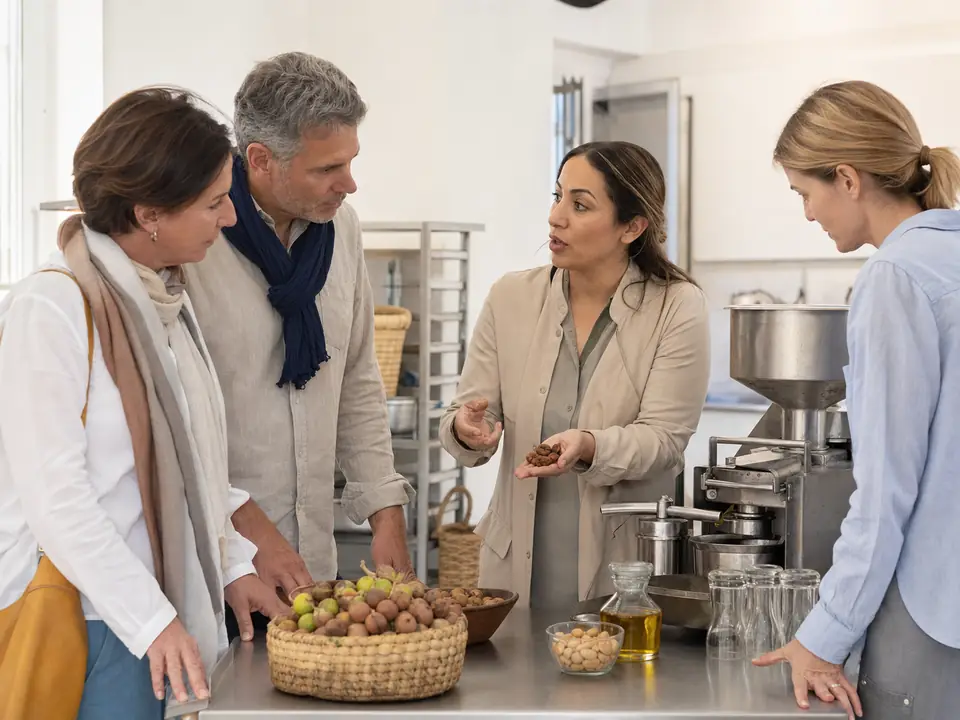
Amlou — culinary argan oil ground with roasted almonds and honey — is one of Morocco's great edible treasures, eaten with bread at breakfast. The best honeys and amlou come from herbalists in the medina and, more reliably, from cooperatives on the roads toward the Ourika valley and Essaouira, where argan and mountain honey are produced.
Buy in sealed jars for travel; both honey and amlou survive the flight well in hold luggage and make superb, distinctive food gifts.
How to shop like a local
- Taste and smell before buying; real honey has a genuine floral or herbal aroma, while syrup-cut jars are thin and one-note.
- Try the varietals — thyme, carob, jujube, orange blossom — they taste wildly different from supermarket honey.
- Buy from cooperatives on the Ourika or Essaouira roads for the most reliable, traceable honey and amlou.
- Don't be put off by crystallised honey; it's a sign of the real, unheated thing.
- Buy sealed jars for travel; honey and amlou pack safely in hold luggage.
Bargaining etiquette
- At genuine cooperatives, honey and amlou are usually fixed and fair — little haggling.
- In the souks, bargain modestly, but remember rare honeys like jujube are expensive for good reason.
- Buying honey plus amlou together may earn a small combined discount.
What to avoid
- Avoid thin, uniform, cloying 'honey' — it's likely cut with sugar syrup.
- Be sceptical of cheap 'jujube' or 'sidr' honey; the real thing is rare and costly.
- Skip pressured roadside 'cooperatives' that are really commission shops; look for genuine on-site production.
Frequently asked questions
What kinds of honey does Morocco produce?
A wide range of intense varietals — thyme (herbal), carob (dark and malty), jujube or sidr (rare and prized), orange blossom (floral) and euphorbia (peppery). They're eaten with bread and butter, over pastries, and used in tagines, and taste very different from ordinary supermarket honey.
What is amlou?
Amlou is a Moroccan spread of culinary argan oil, ground roasted almonds and honey — nutty, rich and eaten with bread at breakfast, sometimes called 'Berber Nutella'. It's a superb edible souvenir and travels well in a sealed jar.
How do I know if Moroccan honey is real?
Real honey is thick, has a genuine floral or herbal aroma, and crystallises over time; cut 'honey' is thin, uniform and cloyingly sweet. Taste and smell before buying, and source rare honeys like jujube from cooperatives, since fakes are common.
Keep exploring Marrakech food
Turn your market haul into dinner with a hands-on Marrakech cooking class, walk the souks with a guide on a market food tour, learn the Moroccan spices you just bought, or cook them at home with our Moroccan recipes. For the bigger picture, browse our food culture guides.