Cooking with Black Pepper
Recipes with Black Pepper — Morocco's Everyday Warmth (Not Its Heat)
Black pepper (elbzar, or filfil akhal) is the quiet workhorse of the Moroccan spice box — the source of most of the gentle warmth in a tagine, since Moroccan food leans far more on pepper and ginger than on fiery chilli. Alongside ginger, turmeric, cumin and paprika, black pepper forms the base seasoning of countless everyday dishes, and it hides inside almost every ras el hanout blend. It is rarely showy, but a dish seasoned without it tastes flat. This guide covers how black pepper builds the backbone of Moroccan flavour, how much to use, and why freshly ground makes all the difference.
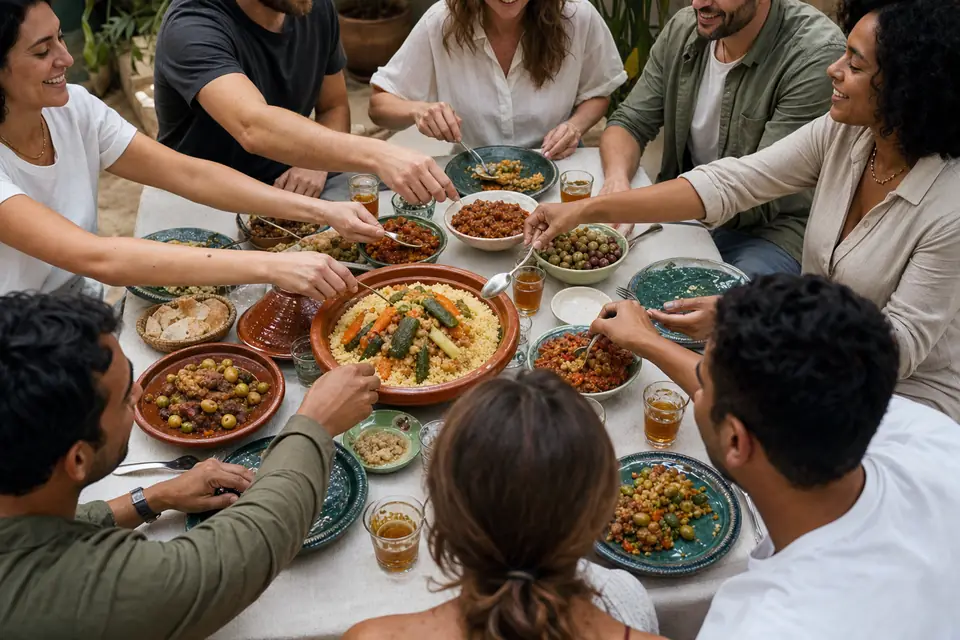
How Moroccans use black pepper
Black pepper is a foundation spice, added early with the other ground spices when the meat and onions first go into the pot, so its warmth infuses the whole sauce. Moroccan cuisine is aromatic rather than hot — the warmth you feel in a classic tagine is usually pepper and ginger, not chilli. Pepper also seasons kefta mince, marinades, harira soup and the raw spice rub for grilled meats. Freshly ground from a mill or crushed in a mortar, it is worlds better than the grey pre-ground dust.
The best Moroccan recipes with black pepper
Kefta (spiced mince) for tagine or skewers — pepper, cumin, paprika, onion and herbs. Chicken and lamb tagines — pepper in the base spice mix with ginger and turmeric. Harira — the Ramadan soup relies on pepper for its gentle warmth. Mechoui and grilled meats — a simple rub of salt, cumin and black pepper. Chermoula — pepper rounds out the coriander, cumin and paprika marinade for fish. In each, pepper is the base note you notice only when it is missing.
How much black pepper to use, and grinding it fresh
Season with a confident but not heavy hand — roughly half a teaspoon of freshly ground pepper for a family tagine, added at the start and adjusted at the end. Because Moroccan dishes cook long and slow, pepper mellows, so a little more than you would use in a quick sauté is right. Always grind it fresh: whole peppercorns keep their aromatic oils for years, while pre-ground pepper is stale within weeks. In the souk, buy plump black peppercorns and grind as you go.
Cook's tips
- Add black pepper early, with the other ground spices, so it infuses the whole sauce.
- Grind fresh from whole peppercorns — pre-ground pepper loses its warmth quickly.
- Remember Moroccan warmth is pepper-and-ginger, not chilli; reach for pepper before harissa.
- Long slow cooking mellows pepper, so season a touch more generously than for a quick dish.
- Keep whole peppercorns in a sealed jar; they stay good for years.
Questions about cooking with Black Pepper
Is Moroccan food spicy-hot?
Rarely. The warmth in most tagines comes from black pepper and ginger, not chilli. Fiery heat comes from harissa or chilli served on the side, so diners add it to taste.
How much black pepper goes in a tagine?
About half a teaspoon of freshly ground pepper for a family-sized tagine, added at the start with the other ground spices and adjusted at the end.
Why grind pepper fresh?
Whole peppercorns hold their aromatic oils for years; once ground, pepper stales within weeks. Fresh-ground pepper is noticeably warmer and more fragrant, which matters in a spice-led cuisine.
Is black pepper in ras el hanout?
Almost always. Black pepper is one of the core warming spices in a good ras el hanout blend, alongside ginger, cinnamon, cardamom and a dozen or more others.
Can I use white pepper instead?
You can, but black pepper is traditional and more aromatic. White pepper appears occasionally in pale sauces or milk-based dishes where black flecks would look out of place.
Cook these dishes with a local in Marrakech
Learn to handle black pepper the Moroccan way in a hands-on cooking class, or taste it across the medina on a guided food tour.