How-to guide
How to Make Harcha — Moroccan Semolina Griddle Bread
Harcha is a coarse semolina bread cooked flat on a dry or lightly oiled griddle, with a crumbly, slightly gritty texture that is closer to a savoury shortbread than a yeasted loaf. There is no proving involved — the semolina is bound with butter and milk, patted into rounds, and cooked until golden on both sides, usually eaten warm at breakfast with jam or cheese.
About 40 minutes
Step by step
- 1
Mix the dry ingredients
Combine fine and coarse semolina in a bowl with a little baking powder, sugar and salt, mixing well so the two textures of semolina are evenly distributed.
- 2
Work in the butter
Rub softened butter or a neutral oil into the semolina mixture with your fingertips until it resembles damp, coarse crumbs, similar to making shortbread pastry.
- 3
Bring together with milk
Gradually add warm milk, mixing until the dough just comes together into a soft, slightly sticky mass. Avoid overworking it — a light touch keeps the crumb tender.
- 4
Rest briefly
Let the dough rest for 10 minutes to allow the semolina to absorb the liquid fully, which makes it easier to shape into rounds.
- 5
Shape into rounds
Divide the dough into portions and pat each one out on a semolina-dusted surface into a round about 1.5cm thick, taking care not to roll it too thin.
- 6
Cook on a griddle
Cook the rounds on a dry or very lightly oiled griddle or heavy pan over medium-low heat for about 5-6 minutes per side, until golden brown spots appear and the centre is cooked through.
- 7
Serve warm
Serve harcha warm, split and spread with butter and honey or jam, or alongside a wedge of soft cheese, in the classic breakfast style.
Common mistakes to avoid
- Rolling the dough too thin, resulting in a dry, biscuit-like harcha instead of a soft, crumbly one.
- Cooking over too high a heat, which browns the outside before the semolina inside is fully cooked.
- Using only fine semolina without any coarse semolina, losing the characteristic gritty texture.
- Overworking the dough once the milk is added, which can toughen the final bread.
- Serving harcha cold — it is at its best warm, straight from the griddle.
Tips from the kitchen
- A mix of fine and coarse semolina gives the best balance of texture — coarse alone can be too gritty.
- Keep the griddle heat moderate and patient; harcha needs time to cook through without burning.
- Harcha freezes well uncooked as shaped rounds — cook straight from frozen, allowing a little extra time.
- Try filling harcha with a savoury cheese mixture before cooking for a stuffed variation.
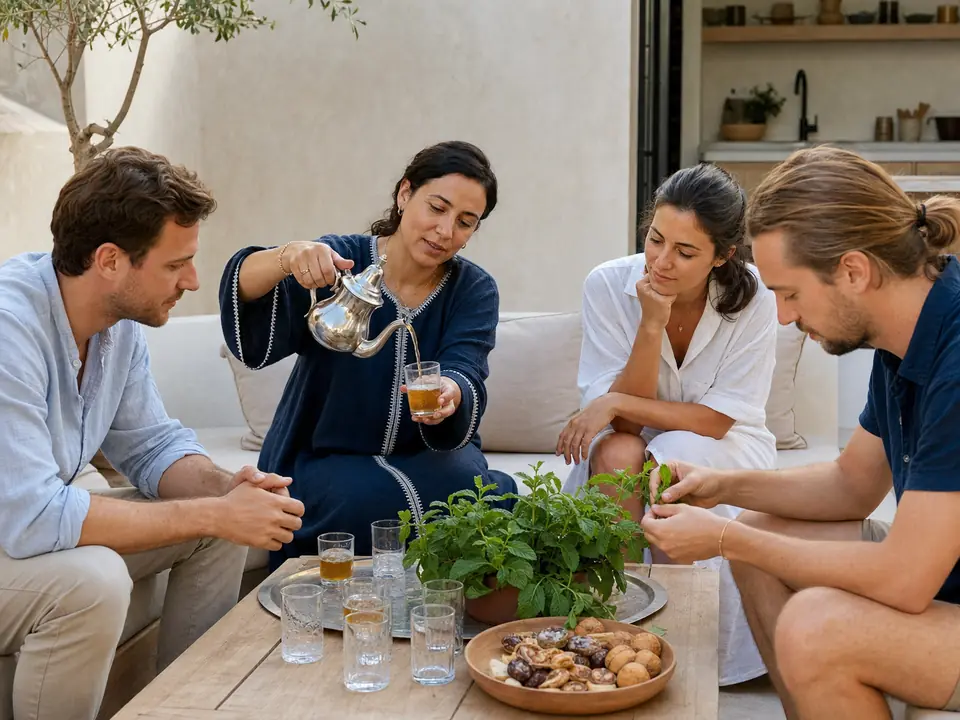
- Pair with mint tea for a classic Moroccan breakfast spread — see our bread recipes for more.
Questions
Why is harcha cooked on a griddle instead of baked?
Harcha belongs to a family of Moroccan breads traditionally cooked on a flat griddle rather than in an oven, giving it a distinctive crust and quicker cooking time without needing yeast or proving.
What semolina should I use for harcha?
A combination of fine and coarse semolina gives the classic texture — the coarse grain provides the characteristic crumb, while the fine semolina helps bind everything together.
What do you eat harcha with?
Harcha is typically served warm at breakfast, split and spread with butter and honey or jam, or alongside soft cheese and a glass of mint tea.
Can harcha be frozen?
Yes, uncooked shaped rounds freeze well. Cook them directly from frozen on the griddle, adding a couple of extra minutes per side to ensure the centre cooks through.
Learn it hands-on in Marrakech
Reading is one thing; doing it beside a local host is another. Book a Marrakech cooking class, or explore the medina on a guided food tour.