How-to guide
How to Choose a Cooking Class in Marrakech — What Makes a Good One
A good cooking class is one of the best things you can do in Marrakech: you come away able to make a proper tagine and couscous at home, not just with a nice lunch. But classes vary enormously, from genuine hands-on tuition in a family home to a demonstration where you mostly watch and eat. Knowing what to ask before you book makes all the difference. This guide covers the features that separate a real learning experience from a photo opportunity. Compare options on our cooking classes index before you commit.
About 30 minutes to decide
Step by step
- 1
Decide what you want to learn
Be clear whether you want to master one or two dishes properly or sample many. A focused class on tagine, couscous and bread teaches transferable skills, while a whirlwind of ten dishes often means you watch more than you cook. Match the menu to the dishes you actually want to make at home.
- 2
Insist on hands-on time
The best classes are hands-on: you chop, blend the spices, build the tagine and shape the bread yourself, with a cook guiding you. Ask directly how much you will do versus watch. A demonstration can be enjoyable but you will remember far less of the technique.
- 3
Ask about the market visit
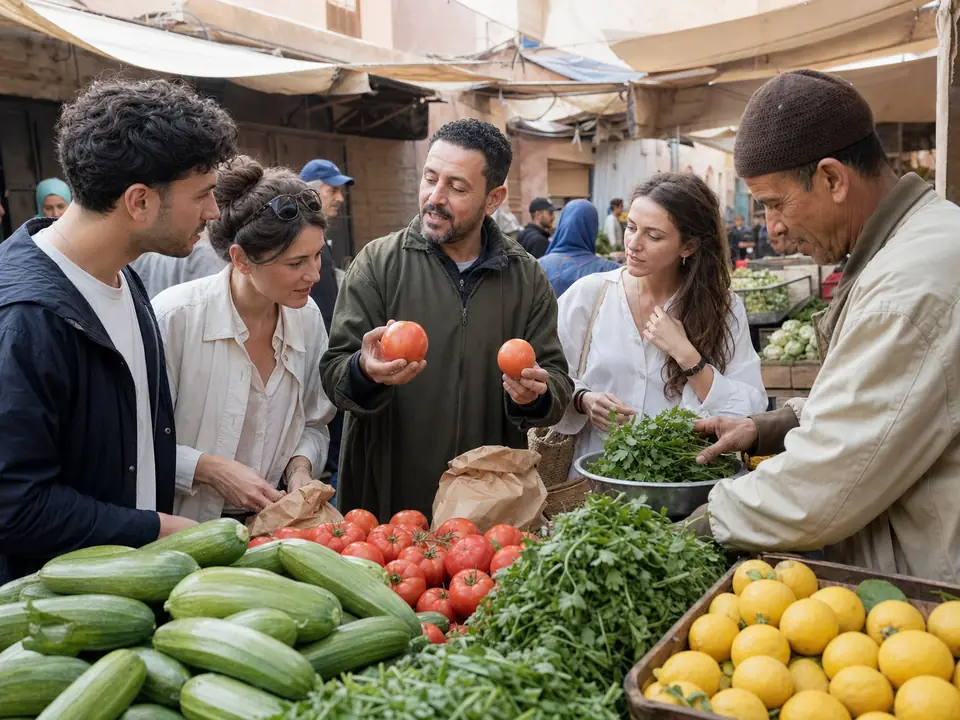
Many classes begin with a walk through the souk to buy the day's produce, herbs and spices. This is genuinely useful for learning ingredients and how to choose them. Check whether it is included, how long it lasts, and whether the cost of ingredients is covered in the price.
- 4
Check the group size
Smaller groups mean more attention and more time actually cooking. Ask the maximum number of participants; a handful of people around one work surface is ideal, whereas a large group can leave you queuing for a turn. Private or small-group classes cost more but teach more.
- 5
Confirm dietary needs and menu
If you are vegetarian, vegan or have allergies, confirm the class can adapt before booking, not on the day. A flexible cook will happily swap a meat tagine for a vegetable one. Ask for the exact menu so you know which dishes and techniques are covered.
- 6
Weigh up the price and what's included
Compare what each price actually includes: the market tour, ingredients, a recipe booklet to take home, and the meal you cook. A typical group class runs to a few hundred MAD per person; private classes cost more. The cheapest option is not a bargain if you barely touch a knife.
Common mistakes to avoid
- Booking a 'class' that turns out to be a demonstration you mostly watch.
- Choosing on price alone and ending up in a large, impersonal group.
- Not confirming vegetarian, vegan or allergy needs until you arrive.
- Overlooking whether ingredients and the market tour are included in the quoted price.
- Trying to cover too many dishes, so you learn none of them properly.
Tips from the kitchen
- Ask whether you take home a recipe card or booklet — it hugely increases what you retain.
- A morning class that includes the market at its freshest is often the pick of the day.
- Smaller groups or a private session are worth the extra MAD if you truly want to learn.
- Wear closed shoes and bring an appetite — you eat everything you cook.
- Confirm the meeting point and whether pick-up from the medina is included.
Questions
How much does a cooking class in Marrakech cost?
Group classes typically run to a few hundred MAD per person, usually including a market visit, ingredients and the meal you cook. Private or small-group classes cost more. Always check exactly what the price covers, as a very cheap class may be a demonstration with little hands-on cooking.
Are cooking classes hands-on or demonstrations?
It varies, which is why you should ask before booking. The best classes are genuinely hands-on — you chop, mix the spices and build the dishes yourself. Others are demonstrations where a cook prepares everything while you watch and then eat. Confirm which you are getting for the skills you want.
Can cooking classes cater to vegetarians or allergies?
Most can, but confirm when you book rather than on the day. Moroccan cooking is naturally rich in vegetable dishes, so swapping a meat tagine for a vegetable or legume one is usually easy. Flag nut, gluten or other allergies clearly so the cook can adjust the menu safely.
Do cooking classes include a market tour?
Many do, starting with a guided walk through the souk to buy the day's ingredients. It is one of the most useful parts, teaching you how to pick spices, herbs and produce. Check whether the tour and the ingredients bought on it are included in the class price.
Learn it hands-on in Marrakech
Reading is one thing; doing it beside a local host is another. Book a Marrakech cooking class, or explore the medina on a guided food tour.