How-to guide
How to Balance Sweet and Savoury in Moroccan Cooking
The sweet-savoury axis is what makes Moroccan food taste Moroccan — caramelised onions, prunes and honey against lamb; cinnamon dusted over a chicken pastilla; apricots in a beef tagine. Done well it is layered and grown-up. Done badly it tastes like pudding served with meat. The skill is in restraint and contrast, letting sweetness sit against salt, acid and warm spice rather than dominating. This guide explains how the balance works and how to keep it in check.
About 10 minutes to read
Step by step
- 1
Understand the four anchors
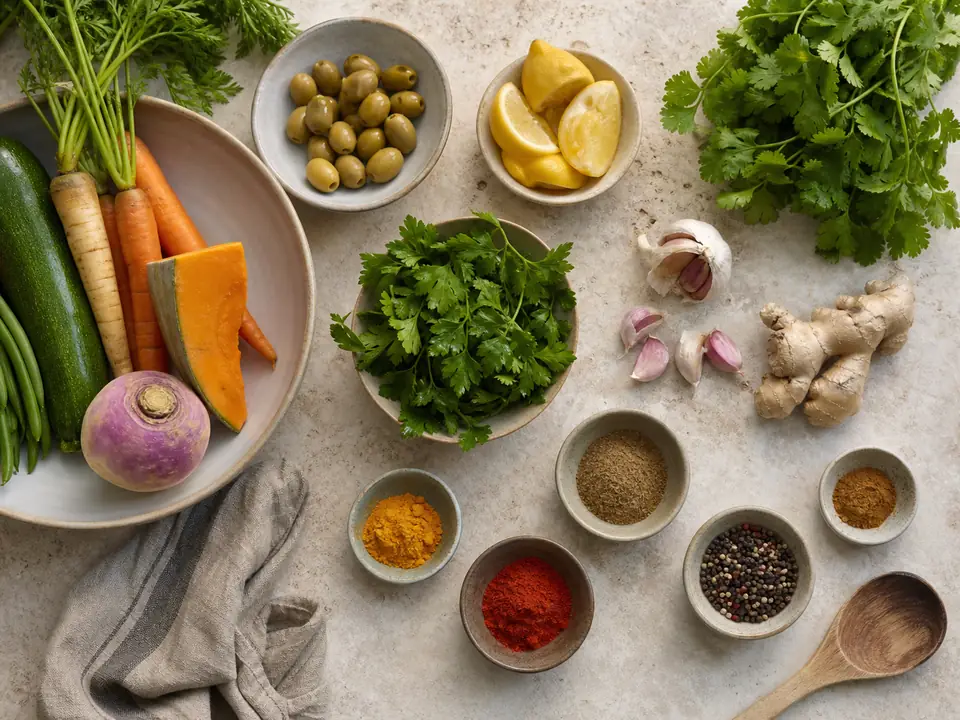
Most Moroccan savoury-sweet dishes balance four things: sweetness (honey, dried fruit, caramelised onion), salt (often from preserved lemon or olives), acid (lemon, tomato) and warm spice (cinnamon, ginger, ras el hanout). A dish tastes 'off' usually because one of the four is missing, not because there is too much sugar.
- 2
Build sweetness in layers, late
Add concentrated sweeteners like honey towards the end of cooking, tasting as you go, rather than all at once at the start. Onions cooked slowly to a jammy sweetness give a rounder, less sugary result than a spoon of honey does.
- 3
Anchor it with salt and acid
The reason a lamb-and-prune tagine isn't cloying is the salt and savoury depth underneath. If a dish is tipping towards dessert, the fix is usually more salt, a squeeze of lemon, or a few chopped olives — not less fruit.
- 4
Use cinnamon as seasoning, not flavour
In savoury Moroccan cooking cinnamon is a background warmth, often just a stick in the pot or a light dusting at the end. A heavy hand turns a tagine into apple pie. Start with less than you think.
- 5
Taste against the starch
Judge the balance with a mouthful of bread or couscous, not on its own. The plain starch is what the dish is actually eaten with, and a sauce that seems too sweet alone often lands perfectly against neutral couscous.
Common mistakes to avoid
- Adding honey at the start where it can't be adjusted and may catch and burn.
- Treating cinnamon as a main flavour rather than a warm background note.
- Fixing an over-sweet dish by removing fruit instead of adding salt and acid.
- Tasting the sauce alone rather than against the couscous or bread it's served with.
Tips from the kitchen
- Slow-caramelised onions give a deeper, less obvious sweetness than sugar or honey.
- Preserved lemon and olives are your counterweight — keep them on hand to rescue a dish that drifts too sweet.
- Toast the dried fruit briefly in the pan's fat to concentrate it before adding.
- A final dusting of toasted sesame or crushed almonds adds savoury contrast to sweet tagines.
Questions
Why do Moroccans put fruit and cinnamon in savoury dishes?
It is a hallmark of the cuisine, rooted in centuries of trade in dried fruit, nuts and warm spices. Balanced against salt, acid and slow-cooked meat, the sweetness reads as depth and warmth rather than dessert.
My tagine tastes too sweet — how do I fix it?
Add salt, a squeeze of lemon, or a few chopped preserved lemon and olives rather than trying to remove the fruit. The savoury and sour anchors are usually what's missing when a dish tips too sweet.
How much cinnamon should go in a savoury tagine?
Very little — often a single stick simmered in the pot, or a light dusting at the end. Cinnamon is a background warmth in savoury Moroccan cooking, not a headline flavour.
Learn it hands-on in Marrakech
Reading is one thing; doing it beside a local host is another. Book a Marrakech cooking class, or explore the medina on a guided food tour.