Regional traditions
Essaouira's Seafood Traditions
Essaouira sits on Morocco's Atlantic coast, buffeted by the trade winds that once made it a strategic port and now make it a magnet for wind-surfers. But for the food-minded, Essaouira's draw is its fish — grilled to order in the harbour, sold glistening from the morning catch, and prepared with the charmoula-led simplicity that characterises the best Moroccan coastal cooking.
- Read
- 7 min
- Topic
- Regional traditions
- Updated
- 20 July 2026
At a glance
- Essaouira's cuisine centres on Atlantic seafood — sardines, sea bream, sole, shrimp and octopus.
- Fish is typically marinated in charmoula and grilled over charcoal.
- The port's history as a trading hub shaped its cosmopolitan food culture.
A port with a layered past
Essaouira — known as Mogador under Portuguese and European names — has been a port and trading post for centuries. Phoenicians, Romans, Portuguese, and European merchants all used its harbour, and in the 18th century Sultan Mohammed III rebuilt it as a royal port and centre of trade. Jewish, Amazigh, Arab and European communities lived and traded there, and this layering of cultures left its mark on the food.
But it is the Atlantic that dominates the table. The cold Canary Current that runs along this coast is rich in marine life, and fishing has always been central to Essaouira's economy and diet.
The harbour grill and beyond
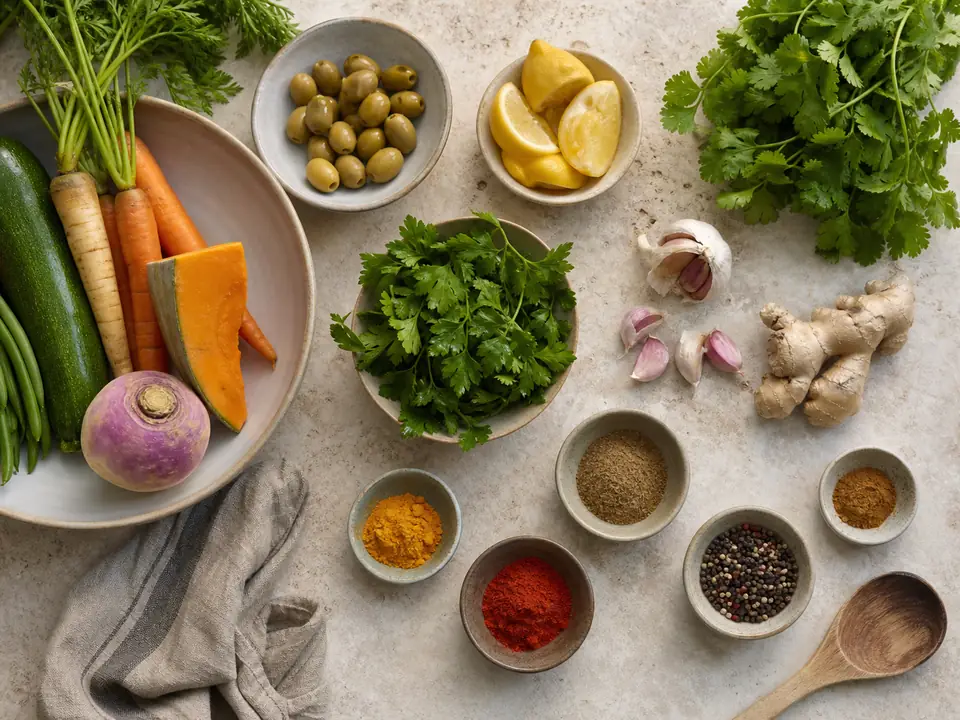
The most famous eating experience in Essaouira is the open-air fish grill at the harbour, where stalls display the morning's catch on ice and cook your selection over charcoal while you wait. Sardines, sea bream, sole, shrimp, calamari and octopus are the staples, and charmoula — the herb-and-spice marinade of coriander, garlic, cumin and lemon — is the default seasoning.
Beyond the harbour, Essaouira's restaurants and home cooks prepare tagines of fish with preserved lemon and olives, seafood pastilla (a variation of the classic pigeon pie), and soups and stews built on the morning catch. The city's proximity to the argan-producing Souss region also brings argan oil into the kitchen.
- Sardines: the most plentiful fish, grilled whole and eaten with bread.
- Seafood tagine: fish braised with preserved lemon, olives and tomato.
- Seafood pastilla: a coastal variation with fish or mixed seafood replacing poultry.
Fishing, trade and the future
Essaouira's sardine fleet remains active, though overfishing along the Atlantic coast is a concern shared by many Moroccan ports. The city has also become a significant tourist destination, and its food scene increasingly caters to visitors — but the underlying relationship between port, market and table remains intact, and the quality of the fish, eaten within hours of landing, is difficult to match.
For the broader history of Moroccan coastal food, see fish and coastal cuisine. For Portuguese influence on the coast, see Portuguese influence on coastal Morocco.
Frequently asked questions
What seafood is Essaouira known for?
Essaouira is known for sardines, sea bream, sole, shrimp, calamari and octopus — all caught from the Atlantic and typically grilled over charcoal with charmoula marinade. The harbour fish grill is the city's most famous eating experience.
Is Essaouira a good food destination?
Yes. The combination of ultra-fresh Atlantic seafood, a historic port atmosphere, and proximity to the argan-producing Souss region makes Essaouira one of Morocco's most rewarding food destinations, particularly for fish lovers.
What is seafood pastilla?
Seafood pastilla is a coastal variation of the classic Moroccan pie, using fish or mixed seafood in place of pigeon or chicken. It is a speciality of Essaouira and other Atlantic port cities, combining crisp pastry with a seafood filling seasoned with herbs and vermicelli.