Ingredients & trade
Dried Fruits and Nuts in Moroccan Cuisine
Walk through a Moroccan spice souk and you will find stalls piled with almonds, walnuts, prunes, dried apricots, raisins and figs — ingredients that are not peripheral to the cuisine but central to it. They sweeten tagines, fill pastries, stud couscous and anchor the sweet-savoury pairings that give Moroccan food its most distinctive character. Their presence reflects centuries of trade, cultivation and cultural exchange.
- Read
- 7 min
- Topic
- Ingredients & trade
- Updated
- 20 July 2026
At a glance
- Dried fruits and nuts are structural ingredients in Moroccan cooking, not garnishes.
- Almonds are the most versatile — used in pastries, tagines, amlou and as a standalone snack.
- The sweet-savoury pairing of meat with prunes, apricots or raisins is a hallmark of the cuisine.
Cultivation and trade
Morocco has long been both a producer and a crossroads for dried fruits and nuts. Almonds grow across the country, particularly in the Tafraout region of the Anti-Atlas and the Souss. Walnuts thrive in the cooler Atlas valleys. Figs and grapes (dried as raisins) have been cultivated since antiquity. Prunes and dried apricots, while partly imported, have been integrated into the cuisine for centuries — their arrival linked to the caravan and maritime trade that connected Morocco to the wider Mediterranean and the East.
The souk remains the primary marketplace for these ingredients, and quality — size, freshness, origin — is a matter of considerable local knowledge and pride.
In the tagine and on the couscous
The most celebrated use of dried fruits in Moroccan cooking is in the sweet-savoury tagine: lamb with prunes and almonds, chicken with apricots and caramelised onions, beef with raisins and cinnamon. These combinations owe much to the Andalusi and medieval Arab culinary traditions that valued the interplay of sweet and savoury, and they remain among the most admired dishes in the repertoire.
Dried fruits also appear in festive couscous — scattered over the mounded grain as decoration and flavouring — and in soups and stews where their sweetness balances spice and acidity.
- Lamb with prunes: a classic sweet-savoury tagine, often with sesame and cinnamon.
- Chicken with almonds and apricots: a refined preparation for guests and celebrations.
- Festive couscous: topped with caramelised onions, raisins, chickpeas and often almonds.
Pastries and confections
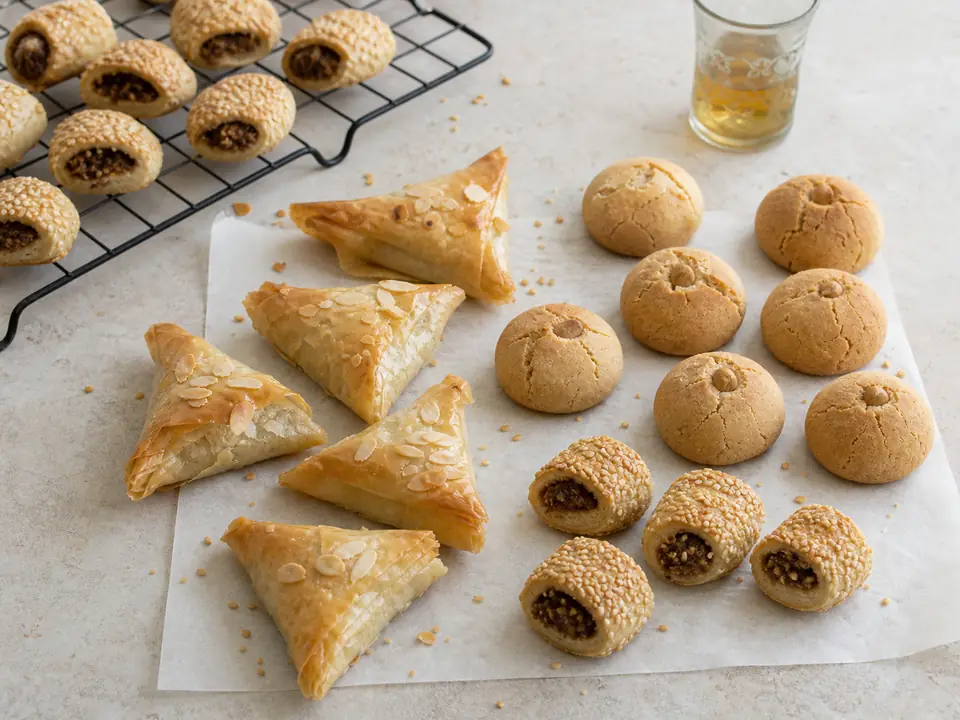
Nuts — especially almonds — are the backbone of Moroccan pastry-making. Almond paste fills kaab el ghazal (gazelle horns) and briouats; ground almonds combine with honey and argan oil to make amlou, the Amazigh spread; and whole fried almonds crown pastilla. Walnuts fill some regional pastries, and sesame seeds (though technically a seed) play a supporting role throughout.
For more on the almond's place in the cuisine, see almonds in Moroccan cuisine.
Frequently asked questions
Why do Moroccan tagines contain dried fruit?
The pairing of meat with dried fruit (prunes, apricots, raisins) reflects a medieval Arab and Andalusi taste for sweet-savoury combinations that took deep root in Moroccan cooking. The fruit adds sweetness, acidity and textural contrast to the slow-braised meat.
Where are almonds grown in Morocco?
Almonds are cultivated across Morocco, with the Tafraout region of the Anti-Atlas and the Souss valley being particularly important growing areas. Morocco is a significant almond producer.
What is amlou?
Amlou is an Amazigh (Berber) paste made from roasted almonds ground with argan oil and honey. It is a speciality of the Souss region of southwestern Morocco and is often eaten for breakfast with bread.