Food culture
Spring and Autumn Eating in Morocco
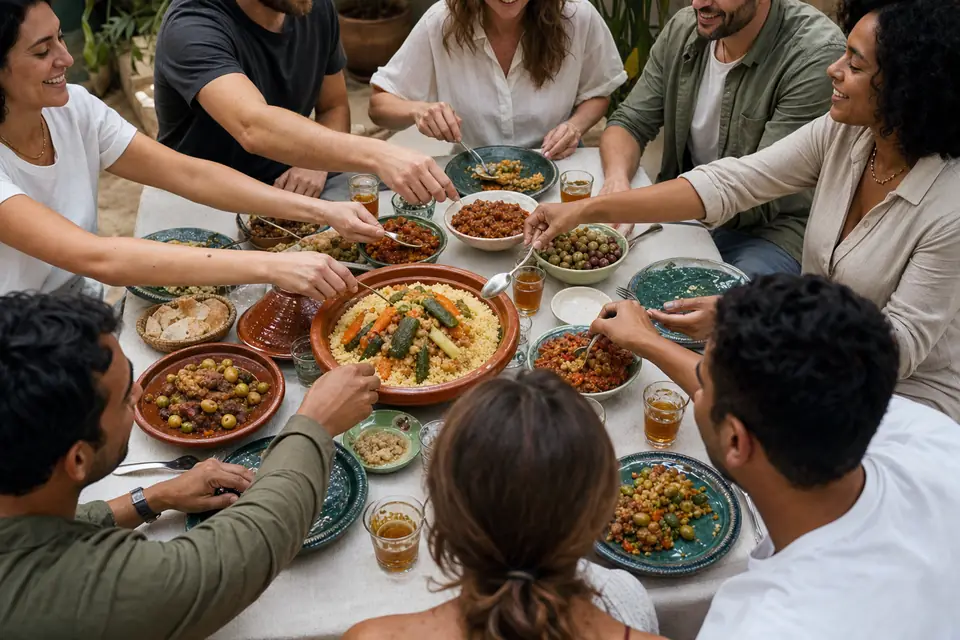
If summer is about survival in the heat and winter about warmth, spring and autumn are when Morocco simply eats best. The weather is mild, the markets are abundant, and the great harvests fall in these windows — spring greens and early vegetables on one side, dates, olives and new-season oil on the other. For a food traveller, the shoulder seasons are the ones to aim for.
- Read
- 7 min
- Topic
- Food culture
- Updated
- 20 July 2026
At a glance
- Spring brings tender greens, artichokes, broad beans and early stone fruit.
- Autumn is harvest time — dates, olives, new olive oil, figs and grapes.
- Mild weather means both light and slow cooking are on the table.
- The shoulder seasons are the best time to visit for food and comfort.
Spring: greens and early vegetables
Spring wakes the markets with green things — young broad beans (fèves), fresh peas, artichokes, tender herbs, wild greens for bakoula, and the first apricots and cherries by late spring. Tagines lighten with peas and artichokes; the wild-mallow salad bakoula and other greens are at their best. It is a bright, gentle season on the plate after winter's heaviness.
Autumn: the great harvests
Autumn is when the pantry is refilled. The date harvest comes in from the Draa and Tafilalt palm groves; olives are picked and the first new olive oil is pressed — grassy, peppery and prized; figs and grapes finish; and quince and pomegranates arrive. It is the best moment to buy dates and oil at their freshest and to taste new-season produce at its peak.
- New-season olive oil: bright and peppery, just pressed.
- Fresh dates: straight from the autumn harvest; see our dates guide.
- Figs, grapes, pomegranates: late-season abundance.
- Olives: newly cured, at Meknes markets and beyond.
Cooking in mild weather
Because the temperature is comfortable, both styles of cooking sit happily on the table: you can enjoy a long slow tagine or a light grilled-and-salad lunch without fighting the weather. Markets are at their fullest and most varied, making these the ideal months for market tours and cooking classes. Our seasonal eating guide maps the wider calendar.
Best seasons to visit for food
For most food travellers, spring (roughly March–May) and autumn (September–November) are the sweet spot — pleasant weather for walking souks and markets, abundant seasonal produce, and neither the crush of summer heat nor the chill of winter. If you can choose when to come for the food, come now. Compare with summer and winter eating.
Frequently asked questions
When is the best time to visit Morocco for food?
Spring (roughly March to May) and autumn (September to November). The weather is mild for walking markets and souks, seasonal produce is abundant, and the great date and olive harvests fall in autumn. These shoulder seasons avoid both summer's heat and winter's chill.
What is in season in spring in Morocco?
Tender green vegetables — young broad beans, peas, artichokes — fresh herbs and wild greens for salads like bakoula, and the first apricots and cherries by late spring. Tagines lighten with peas and artichokes as the season warms.
When is the olive and date harvest in Morocco?
In autumn. Olives are picked and the first new olive oil is pressed — bright and peppery — while dates come in from the southern palm groves. Autumn is the best time to buy both at their freshest, along with figs, grapes and pomegranates.
Is new-season Moroccan olive oil worth seeking out?
Yes. Freshly pressed autumn oil is grassy, green and peppery, quite different from older stock, and prized by Moroccan cooks. Meknes and the olive-growing regions are the best places to buy it just after the harvest.