Food culture
Outdoor Eating and Picnics in Morocco
Eating outdoors is not a novelty in Morocco — it is woven into the culture, from the weekend family picnic by a river to the rooftop terrace at sunset, the desert camp under the stars, and the shepherd's meal in the hills. The climate invites it and the tradition embraces it. This guide covers the shapes outdoor eating takes across Morocco and how a visitor can share in them.
- Read
- 7 min
- Topic
- Food culture
- Updated
- 20 July 2026
At a glance
- The weekend family picnic, especially by water, is a beloved tradition.
- Rooftop terraces are Morocco's answer to al-fresco dining, morning to night.
- Desert camps serve tagine and bread under the stars.
- Outdoor eating shifts with the climate and the region.
The family picnic tradition
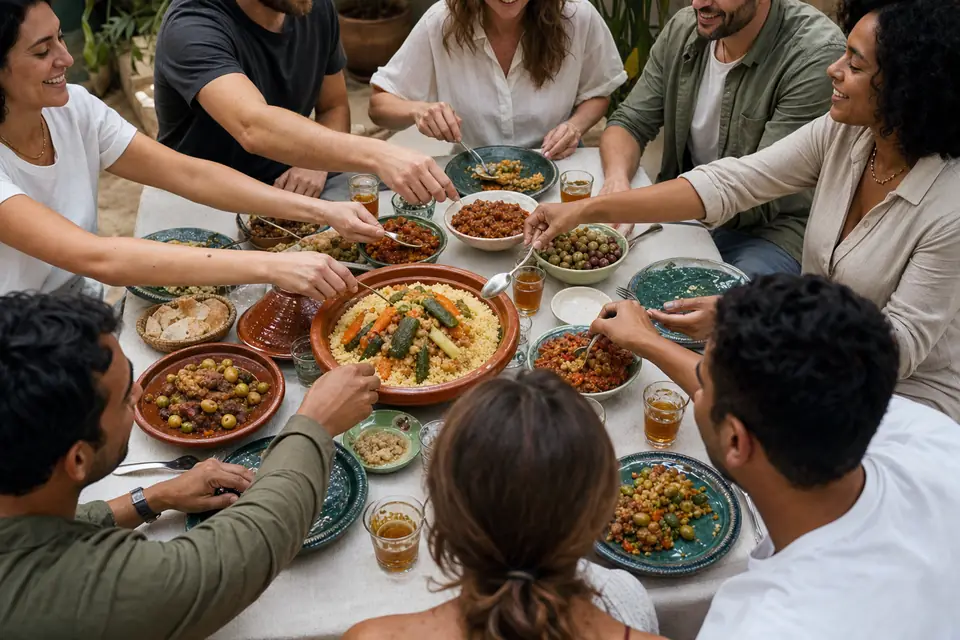
On weekends and holidays, Moroccan families head out to eat outdoors in numbers — to riverbanks, forests, gardens and the edges of towns. These are not sandwiches-on-a-blanket affairs but proper spreads: cushions and rugs laid out, tea brewed on a portable stove, tagines and salads, bread, fruit and endless glasses of mint tea. Rivers and green valleys, like the Ourika near Marrakech, fill up on a hot Sunday. It is one of the most relaxed, welcoming windows into Moroccan family life.
Rooftops and terraces
In the cities, the rooftop is the outdoor dining room. Riads open onto roof terraces for breakfast in the morning sun and dinner under the stars; cafés stack terraces above the squares; and the medina's heat makes the cool of a rooftop the natural place to eat in the evening. A sunset dinner on a Marrakech rooftop, with the call to prayer and the mountains beyond, is a quintessential outdoor meal.
- Riad rooftops: breakfast and dinner in the open air.
- Café terraces: tea and snacks above the squares.
- Garden restaurants: dining among palms and fountains.
- Beach and port grills: seafood eaten by the sea.
Desert, mountain and coast
Outside the cities, the landscape shapes the meal. In the Sahara, desert camps serve tagine and bread baked in the sand around a fire under extraordinary night skies. In the Atlas, mountain guesthouses and shepherds eat simply outdoors in the cool air. On the coast, the port grills of Essaouira and Agadir and the beach shacks are outdoor eating at its freshest. Each region offers its own version of the open-air meal.
How to join in
Pack a market picnic and head for a green or riverside spot; book a riad or restaurant with a rooftop; or take a desert or mountain trip where meals are served outdoors. Bring shade and water in summer, take your litter away, and accept invitations warmly — Moroccan picnickers are famously generous and may well wave you over to share tea. For Marrakech specifics, see our picnic spots guide.
Frequently asked questions
Do Moroccans eat outdoors often?
Yes — outdoor eating is woven into the culture. Weekend and holiday family picnics, especially by rivers and in green valleys, are a beloved tradition, and rooftop terraces serve as the cities' open-air dining rooms. Desert camps and mountain and coastal spots add their own outdoor meals.
What is a Moroccan family picnic like?
Far more than sandwiches — families lay out cushions and rugs, brew tea on a portable stove, and bring tagines, salads, bread and fruit for a full spread. Rivers and green valleys fill with these gatherings on hot weekends, and picnickers are famously generous to passers-by.
Where is the best outdoor dining in Moroccan cities?
On the rooftops. Riads serve breakfast and dinner on their roof terraces, cafés stack terraces above the squares, and the medina's evening cool makes a rooftop the natural place to eat. A sunset dinner on a Marrakech rooftop is a classic outdoor meal.
Can visitors join Moroccan outdoor eating?
Easily. Pack a market picnic for a green or riverside spot, book a rooftop restaurant, or take a desert or mountain trip where meals are served outdoors. Bring shade and water in summer, take litter away, and accept the frequent invitations to share tea warmly.