Class type
Vegetarian & Vegan Cooking Class in Marrakech
Moroccan food is unexpectedly kind to vegetarians and vegans — a cuisine built on vegetables, pulses, olive oil and spice, where the meat is often optional. A dedicated plant-based class leans into that, teaching vegetable tagines, the seven-vegetable couscous and a whole table of cooked and raw salads without any compromise on flavour.
- Duration
- 3–4 hours
- Group size
- Small group or private (2–10)
- Level
- All levels
- Price
- Custom quote from our team
Email confirmation within 24 hours · 30% deposit confirms your booking · Privacy policy
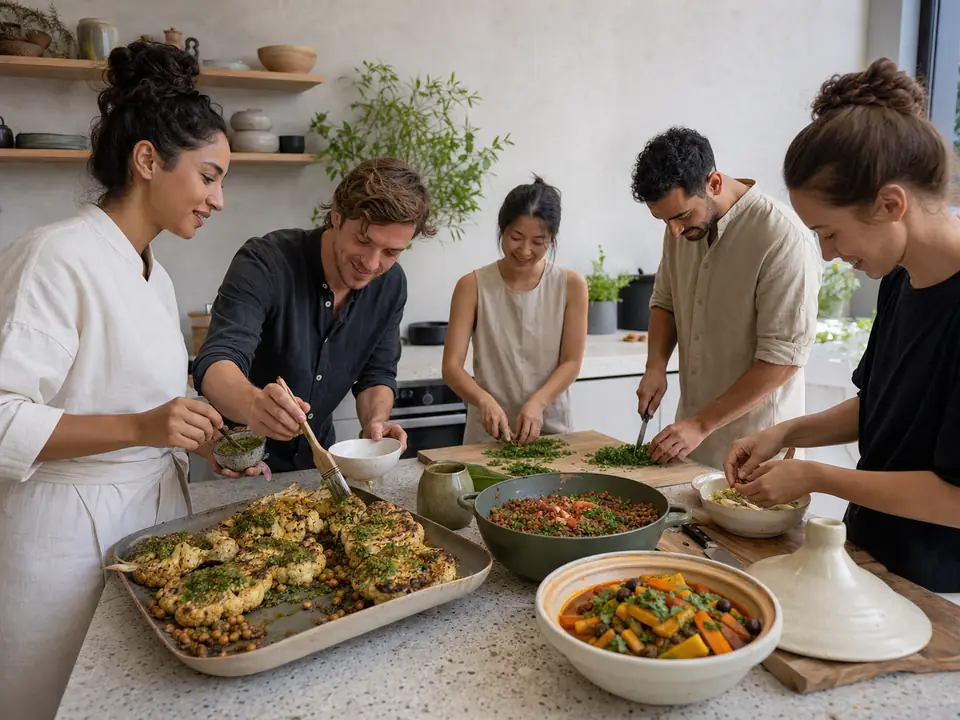
What this class covers
The backbone is the vegetable tagine and the seven-vegetable couscous, both naturally meat-free and both built on the same aromatic spice base as their meaty cousins. You learn how depth comes from onions, spices, preserved lemon and slow cooking rather than from meat.
The salad course is where Moroccan vegetarian cooking really shines: zaalouk (smoky aubergine), taktouka (pepper and tomato), carrot-and-cumin, beetroot, and lentil salads, most of them vegan as they stand. A good host also covers how to keep dishes vegan by swapping butter and smen for olive oil.
Because the cuisine is so produce-led, you rarely feel you are eating a compromised version of anything — this is simply how a lot of Morocco eats day to day.
What you'll cook
- Vegetable tagine — Seasonal vegetables braised with the classic spice base and preserved lemon.
- Seven-vegetable couscous — The Friday classic, kept fully plant-based.
- Moroccan salad spread — Zaalouk, taktouka, carrot-cumin and lentil salads — mostly naturally vegan.
- Mint tea and fruit — A light, plant-based finish.
How the class runs & how long it takes
A typical session runs about 3–4 hours. Here is the usual shape of the day:
- 1
Spice & swaps
Learn the spice base and how to keep everything vegan (oil for butter/smen).
- 2
Salads
Cook and chop the mezze spread that opens the meal.
- 3
Mains
Build a vegetable tagine and/or steam couscous.
- 4
Eat
Sit down to a full plant-based Moroccan table.
What to expect
Expect real, flavour-forward cooking, not a token meat-free version — much of Moroccan home food is vegetable-led anyway.
Expect the host to handle vegan swaps easily; flag strict vegan needs (butter, smen, honey) when you book.
Usually included
- Seasonal vegetables, pulses and spices
- Cooking session
- The plant-based meal you make
- Recipes
Who this class suits
- Vegetarians and vegans
- Anyone wanting lighter, produce-led cooking
- Cooks who want a repertoire of Moroccan salads
- Mixed groups (dishes suit everyone)
How to choose the right class
- Specify vegan vs vegetarian when booking so butter, smen and honey can be swapped.
- Confirm the class covers both a tagine and the salad spread for variety.
- Ask about couscous if you want the seven-vegetable classic.
- Flag any additional allergies (nuts appear in some salads and sweets).
Frequently asked questions
Is Moroccan food good for vegetarians and vegans?
Very. It is built on vegetables, pulses, olive oil and spice, with meat often optional. Vegetable tagines, seven-vegetable couscous and the salad spread are naturally veg-friendly, and most salads are vegan as they stand.
Can a Marrakech cooking class be fully vegan?
Yes. Ask when you book so the host swaps butter and smen for olive oil and skips honey. The core dishes adapt easily because so much Moroccan home cooking is already plant-based.
What vegan Moroccan dishes will I learn?
Typically a vegetable tagine, seven-vegetable couscous, and salads like zaalouk (smoky aubergine), taktouka (pepper and tomato) and carrot-cumin — most of which are vegan without changes.
Try the recipes at home
Booked, or just browsing? These free step-by-step recipes cover the dishes this class teaches: