Casablanca-Settat
Food in Settat
Chaouia plains agriculture, grilled meat, cured olives, wheat and bread
- Population
- about 140,000
- Region
- Casablanca-Settat
- Best time
- Spring and autumn for mild weather and the fullest markets; the olive harvest in late autumn is a good time for local oil and cured olives.
Settat is the capital of the Chaouia, the broad, fertile agricultural plain that stretches inland from Casablanca. This is one of Morocco's breadbaskets -- a landscape of wheat and barley fields, olive groves, orchards and grazing land -- and Settat is its market and university town, a busy, workaday place that most travellers pass through on the road south from Casablanca to Marrakech. Its food is farm-country food: grilled meat, cured olives, good bread and the honest cooking of a region that grows much of what the big cities eat.
Because the Chaouia is grain and livestock country, Settat's table leans toward meat and bread. Grilled lamb and beef, kefta skewers and rotisserie chicken are everyday staples, and the plains supply the wheat for the semolina bread that accompanies every meal. Olives and olive oil from local groves are a point of regional pride, cured and cracked in many styles. Tagines and couscous follow the classic Moroccan template, made with vegetables and pulses from the surrounding farms. It is unshowy, generous cooking, the food of a productive agricultural heartland rather than a tourist destination.
Settat rewards the traveller who treats it as a real Moroccan market town. Its weekly souk brings in produce, livestock and olives from across the Chaouia, its grill houses serve fresh, cheap meat, and its cafes fill with students from the local university. Stop here on the long drive between Casablanca and Marrakech, and you get an honest taste of the farm country that feeds much of central Morocco.
Signature dishes of Settat
These are the dishes that define Settat's food identity -- the plates that locals are proud of and visitors should seek out.
Grilled lamb and beef
Fresh meat from the surrounding grazing lands, grilled over charcoal and seasoned with cumin and salt -- the heart of Chaouia eating.
Kefta skewers
Spiced minced-meat skewers grilled over coals, an everyday grill-house staple served with bread and salad.
Cured and cracked olives
Olives from local Chaouia groves, cured green, black and violet in many styles, a regional point of pride.
Couscous with seven vegetables
The Friday couscous, piled with vegetables and pulses from the surrounding farms.
Chicken tagine with preserved lemon and olives
The classic Moroccan tagine, made with local chicken, preserved lemon and Chaouia olives.
Semolina country bread
Dense wheat-and-semolina loaves from the grain plains, baked to scoop up every dish.
Where to eat in Settat
Every city has its food neighbourhoods -- the streets, quarters and markets where locals eat and where you should too.
Town centre and main avenue
Grill houses, rotisseries, tagine restaurants and cafes serving the everyday food of the plains.
Central souk and weekly market
Chaouia produce, olives, grains, livestock and everyday goods, busiest on market day.
University quarter
Cafes, sandwich shops and cheap eateries catering to students of Settat's well-known university.
Kasbah and old town
The historic core with traditional bakeries, olive stalls and neighbourhood grill spots.
The cooking identity of Settat
Settat cooks the food of the Chaouia plains: grain, meat and olives. As a wheat-and-barley heartland, it leans on excellent semolina bread and on grilled and roasted meat from the surrounding grazing lands -- lamb, beef, kefta and chicken cooked simply over charcoal with cumin and salt. Olives and olive oil from local groves feature at every table, cured in many styles. Tagines and couscous follow the classic central-Moroccan template, made with vegetables and pulses grown right there in the plain. It is farm-country cooking: hearty, generous and unpretentious, built on the abundance of one of Morocco's most productive agricultural regions rather than on tourist polish.
Market guide
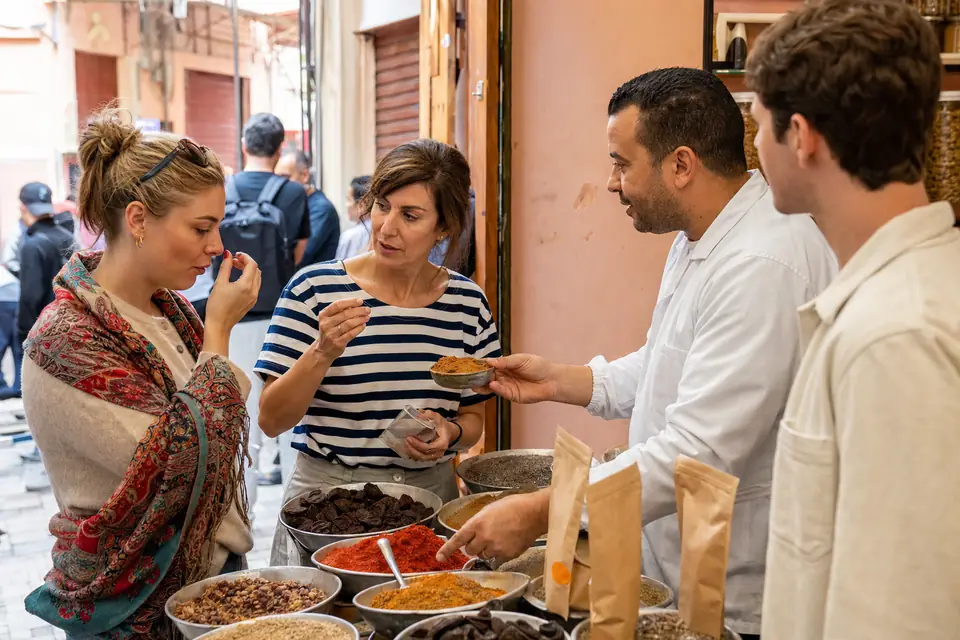
Settat's souk is a farm-country market. The weekly market and the central souk bring in the produce of the Chaouia -- grains, vegetables, pulses, orchard fruit and, above all, olives and olive oil in many cured styles -- along with livestock traded by farmers from across the plain. Grill houses and butchers supply the region's fresh meat, and traditional bakeries turn out the semolina bread the grain country is known for. Look for local olives and olive oil as the standout things to buy. As a working inland town rather than a tourist stop, Settat trades largely in cash, so carry small notes for the market.
Best time to visit for food
Spring and autumn for mild weather and the fullest markets; the olive harvest in late autumn is a good time for local oil and cured olives.
Food tips for Settat
- Eat at a grill house for fresh, cheap lamb, beef or kefta from the surrounding farms.
- Buy local olives and olive oil, a genuine specialty of the Chaouia plains.
- Time a visit for the weekly souk to see the region's produce and livestock trade.
- Break the Casablanca-to-Marrakech drive here for an honest, inexpensive lunch.
- Try the region's semolina country bread, a product of its wheat fields.
- Carry cash in small notes; this working town has limited card acceptance outside the centre.
Frequently asked questions about food in Settat
What is Settat known for?
It is the capital of the Chaouia, one of Morocco's most fertile agricultural plains, known for wheat, olives and livestock. Its food reflects that: grilled meat, cured olives, semolina bread and honest farm-country cooking. It is also a well-known university town.
Is Settat worth stopping at?
As a market town rather than a tourist destination, it is mainly a useful and authentic stop on the road between Casablanca and Marrakech. Its grill houses serve fresh, cheap meat, and its souk offers a real taste of the farming heartland.
What should I eat in Settat?
Grilled lamb, beef and kefta from the local grazing lands, cured Chaouia olives, couscous and tagines made with farm vegetables, and the region's semolina country bread. It is hearty, meat-and-bread agricultural cooking.
Are the olives from Settat good?
Yes. The Chaouia plains around Settat include productive olive groves, and locally cured olives and olive oil are a regional point of pride, sold in many styles at the souk. They make a good thing to buy.
How far is Settat from Casablanca?
It lies inland on the plains south of Casablanca, roughly an hour away by road, on the main route toward Marrakech. This makes it a common and convenient stop for travellers and truckers crossing the Chaouia.