Rabat-Sale-Kenitra
Food in Sale
Grilled sardines, sea urchins, medina bakeries, corsair heritage
- Population
- about 900,000
- Region
- Rabat-Sale-Kenitra
- Best time
- October to April, when the weather is mild, sardines are at their best and sea urchins are in season along the estuary.
Sale sits on the north bank of the Bou Regreg estuary, staring across the water at the capital, Rabat. For centuries the two cities were rivals rather than partners -- Sale was the base of the Sallee Rovers, the corsairs whose raids on Atlantic shipping made the town notorious in the seventeenth century. That maritime, slightly defiant character still shapes how Sale eats. This is a working city, less polished than its neighbour, where food is generous, ocean-fresh and priced for locals rather than tourists.
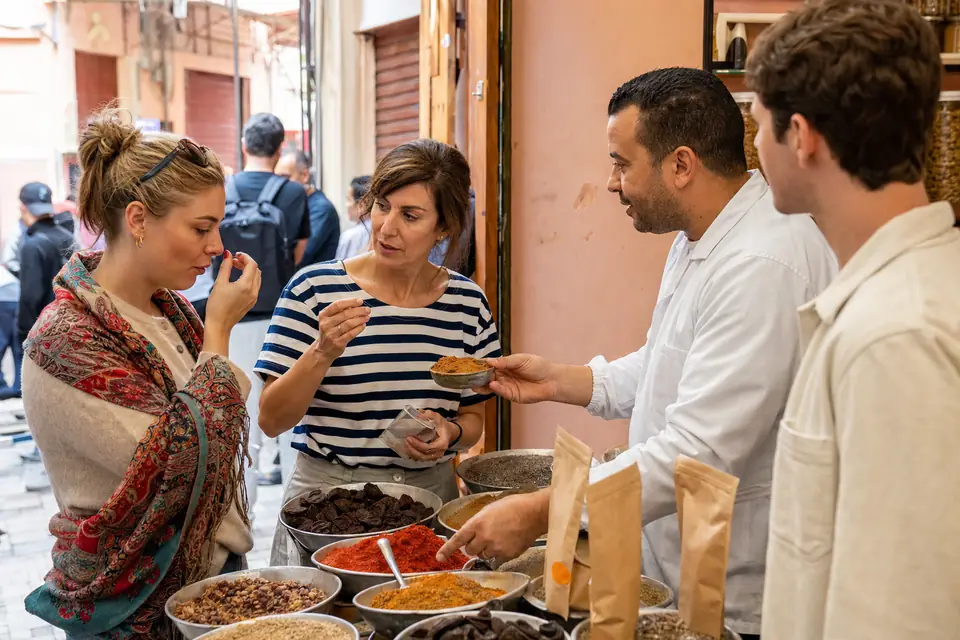
The heart of Sale's food culture is its walled medina, entered through the great gate of Bab Lamrisa. Inside, communal wood-fired bakeries (ferrans) turn out round khobz loaves all morning, spice sellers weigh out cumin and paprika by the scoopful, and small counter kitchens serve tagine and harira to tradesmen. Down at the fishing harbour and along the estuary, the day's catch comes in cheap and plentiful: sardines above all, but also sea bream, sole, prawns and, for those who know to ask, spiny sea urchins cracked open and eaten raw with a squeeze of lemon.
Sale rewards visitors who treat it as a real Moroccan town rather than a museum. The weekly souks, the honest grill houses near the medina gates, and the riverside cafes that fill on Friday afternoons all show a city that cooks for itself first. Cross the Bou Regreg from Rabat by the tram or a small rowing boat, and you step into a food scene that is rougher, cheaper and in many ways more authentic than the capital's.
Signature dishes of Sale
These are the dishes that define Sale's food identity -- the plates that locals are proud of and visitors should seek out.
Grilled sardines (sardines mchermla)
Fresh sardines butterflied, coated in chermoula of coriander, garlic, cumin and paprika, then grilled over charcoal. The everyday king of Sale's harbour cooking.
Sea urchins (oursins)
Spiny urchins cracked open at the water's edge and eaten raw with lemon in the cooler months. A prized coastal delicacy along the Bou Regreg mouth.
Fried whiting and small fish (friture)
A mixed fry of small Atlantic fish dusted in seasoned flour and flash-fried, served with cumin, salt and bread. Classic cheap harbour eating.
Harira
The tomato, lentil and chickpea soup thickened with flour and herbs, sold from medina counters year-round and above all in Ramadan.
Khobz dar (home bread)
Dense semolina loaves baked in the neighbourhood ferran, carried home warm to scoop up tagine and salad.
Chicken tagine with preserved lemon and olives
The Rabat-Sale standard: chicken braised slowly with saffron, ginger, preserved lemon and violet olives.
Where to eat in Sale
Every city has its food neighbourhoods -- the streets, quarters and markets where locals eat and where you should too.
Medina (Bab Lamrisa & Bab Bou Haja)
Communal bakeries, spice stalls, cheap tagine counters and pastry shops packed inside the old walls.
Fishing harbour and estuary front
Landing point for the day's catch; simple grills and fry stalls serving sardines and mixed fish at the freshest and cheapest.
Bab Fes and the central souk
Weekly market energy with produce, olives, preserved lemons and street snacks aimed squarely at locals.
Tabriquet and Hay Salam
Sprawling residential districts with rotisseries, sandwich shops and family grill houses well off the tourist map.
Bou Regreg marina side
Modern riverside cafes and seafood terraces facing Rabat, busiest on Friday afternoons and weekends.
The cooking identity of Sale
Sale's kitchen is coastal, thrifty and Andalusian at its roots -- the town absorbed waves of Muslim and Jewish families expelled from Spain, and their taste for chermoula-marinated fish, olives and preserved lemon still defines local cooking. Because the fishing harbour is so close, seafood is treated simply: grilled or fried at speed, seasoned with cumin, paprika, garlic and coriander rather than dressed up. Tagines follow the Rabat-Sale style, leaning on saffron, ginger and preserved lemon rather than heavy sweetness. And the medina's communal bakeries anchor daily life, since most families still send their bread and slow-cooked dishes to the ferran to bake in shared wood ovens.
Market guide
Start inside the medina, where the covered lanes near Bab Lamrisa hold spice merchants, olive and preserved-lemon stalls, and dried-fruit sellers piling up dates and figs. The neighbourhood ferran (wood-fired bakery) is worth seeking out just to watch trays of dough and sealed tagine pots go in and out. For fish, the harbour and its adjoining stalls sell the morning catch at prices well below Rabat's restaurants -- point at what is fresh and have it grilled. The larger weekly souk brings in produce, honey and cheese from the surrounding countryside. Throughout, expect to pay in cash and in small notes; card acceptance is rare outside the marina cafes.
Best time to visit for food
October to April, when the weather is mild, sardines are at their best and sea urchins are in season along the estuary.
Food tips for Sale
- Cross from Rabat on the tram or a small rowing boat across the Bou Regreg -- both are cheap and the boat ride is a local ritual.
- Eat fish at the harbour rather than the marina if you want the freshest catch at the lowest price.
- Ask for sea urchins (oursins) only in the cooler months; they are a winter treat and not always available.
- Buy bread from a medina ferran in the morning when the loaves are still warm.
- Carry small change; most medina and harbour vendors do not take cards.
- Combine Sale with a half-day in Rabat -- the two cities are minutes apart and eat very differently.
Frequently asked questions about food in Sale
Is Sale worth visiting for food if I am staying in Rabat?
Yes. Sale is only a tram ride or a short boat crossing away and offers cheaper, more local eating than the capital. Its harbour sardines, medina bakeries and honest grill houses are a genuine contrast to Rabat's more polished scene.
What is the must-try dish in Sale?
Charcoal-grilled sardines coated in chermoula. They come off the boats within hours, cost very little at the harbour stalls, and capture the town's Atlantic character better than anything else.
Are sea urchins really eaten in Sale?
Yes, in the cooler months. Locals crack spiny urchins open at the estuary mouth and eat the roe raw with lemon. It is a seasonal treat rather than a restaurant staple, so ask around near the harbour.
How much does a meal cost in Sale?
Very little. A plate of grilled or fried fish with bread and salad at a harbour stall runs roughly 30-60 MAD, and a tagine lunch in the medina 40-70 MAD. Sale is noticeably cheaper than tourist-facing Rabat.
Is Sale safe and easy to explore for visitors?
Sale is a busy working city and perfectly visitable by day. The medina is compact and walkable, the tram links directly to Rabat, and the harbour and market areas are lively. As anywhere, keep an eye on valuables in crowds.