Guelmim-Oued Noun
Food in Guelmim
Camel market, camel meat, Saharan and nomad cooking, dates
- Population
- about 120,000
- Region
- Guelmim-Oued Noun
- Best time
- October to April for tolerable desert temperatures; the Saturday camel market runs year-round, and autumn brings the date harvest.
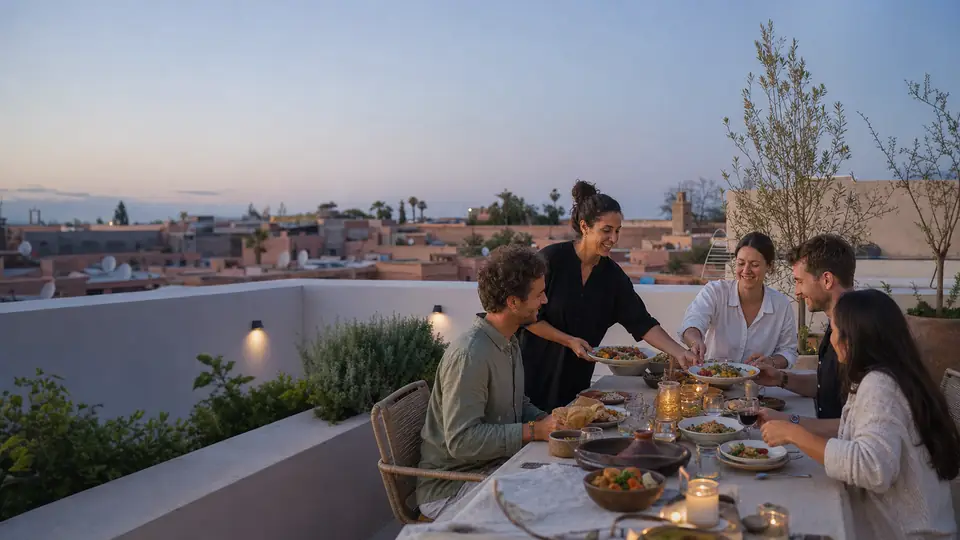
Guelmim is known across Morocco as the gateway to the Sahara, the point where the settled north gives way to the vast desert and the culture of the nomadic south. It is the historic capital of the Oued Noun region, an old caravan crossroads, and its most famous institution is its camel market -- the Saturday souk where dromedaries change hands and where the desert's economy comes into town. That Saharan identity runs through everything, including the food, which is closer to the cooking of the nomads and the western Sahara than to the tagine culture of the imperial cities.
Camel is the signature here. Dromedary meat, lean and distinctive, is sold in the souk and cooked in tagines, grilled as skewers, or dried, and it is one of the things travellers most associate with Guelmim. Around it, the food is Saharan and Sahrawi in character: heavily reliant on dates from the surrounding oases, on bread cooked simply, on the sweet mint tea rituals that structure desert hospitality, and on the resourceful use of scarce ingredients. Goat and lamb feature too, and the nearby oasis of Asrir and the palm groves supply dates and garden produce.
For the traveller, Guelmim is a threshold town, more about culture and trade than sights, but its camel souk, its Saharan food and its position on the road south toward the desert and the coast make it a distinctive stop. Come for the Saturday market, taste camel for the first time, and experience the shift from Moroccan to Saharan life that this town embodies.
Signature dishes of Guelmim
These are the dishes that define Guelmim's food identity -- the plates that locals are proud of and visitors should seek out.
Camel (dromedary) tagine
Lean camel meat braised long and slow with onion and spices until tender -- the town's signature dish.
Grilled camel skewers
Skewers of camel meat grilled over charcoal and seasoned with cumin and salt, sold in the souk.
Saharan dates
Dates from the surrounding oases, a desert staple eaten with tea and cooked into dishes.
Goat or lamb tagine
Slow-cooked meat with onion, tomato and dried spices, the everyday tagine of the south.
Desert bread
Simple bread, sometimes baked in sand or ashes in the nomad tradition, central to every meal.
Sweet Saharan mint tea
Strong, very sweet mint tea poured high and served in rounds, the heart of desert hospitality.
Where to eat in Guelmim
Every city has its food neighbourhoods -- the streets, quarters and markets where locals eat and where you should too.
Camel market (Saturday souk)
The famous weekly market where dromedaries are traded and Saharan life comes to town; grills and food stalls nearby.
Central souk and main avenue
Date stalls, spice and grocery vendors, grill houses and tagine restaurants along the town's spine.
Asrir oasis
Palm groves and gardens near town supplying dates and produce, with a rural, oasis atmosphere.
Town centre cafes
Cafes for mint tea and simple meals, gathering points in this Saharan crossroads town.
The cooking identity of Guelmim
Guelmim cooks Saharan and Sahrawi food, distinct from the tagine culture of the north. Camel is the defining ingredient -- braised in tagines, grilled as skewers, or dried -- and its lean, particular flavour marks the local table. Around it, the cooking is desert cooking: reliant on dates, on bread sometimes baked in sand or ashes, on goat and lamb, and on the resourceful use of what the arid land and oases provide. The rituals of sweet mint tea, poured high and served in rounds, structure hospitality here as strongly as anywhere in Morocco. Spice is dried and warming -- cumin, ginger, pepper -- rather than fresh and abundant, suited to a land of scarcity and long distances.
Market guide
The Saturday camel market is the event that defines Guelmim, and though it is primarily a livestock market, the surrounding souk sells the food of the desert: dates from the local oases, dried and fresh, along with grains, dried meat, spices, henna and Saharan goods. Camel meat is sold by butchers and cooked at nearby grills and eateries. Dates are the standout thing to buy, at their best after the autumn harvest. The nearby Asrir oasis supplies garden produce and palm-grove dates. As a Saharan crossroads far from the big cities, Guelmim runs on cash, so carry small notes for the souk.
Best time to visit for food
October to April for tolerable desert temperatures; the Saturday camel market runs year-round, and autumn brings the date harvest.
Food tips for Guelmim
- Come on Saturday for the famous camel market, the town's defining spectacle.
- Try camel meat -- in a tagine or grilled as skewers -- as the local specialty you will not find everywhere.
- Buy dates from the souk, especially after the autumn harvest.
- Accept mint tea when offered; the tea ritual is central to hospitality in this Saharan town.
- Visit the nearby Asrir oasis to see the palm groves and gardens that feed the region.
- Carry cash in small notes; this remote southern town has limited card acceptance.
Frequently asked questions about food in Guelmim
What is Guelmim famous for?
It is known as the gateway to the Sahara and for its camel market, the Saturday souk where dromedaries are traded. Food-wise it is associated with camel meat and the Saharan, nomad-influenced cooking of Morocco's deep south.
Can you eat camel in Guelmim?
Yes, and it is the local specialty. Dromedary meat is sold in the souk and served in slow-cooked tagines, grilled as skewers, or dried. It is one of the main reasons food-curious travellers stop here.
When is the camel market in Guelmim?
The main camel and livestock market is held on Saturday. It is the town's best-known event, drawing traders and nomads from across the region, and the surrounding souk sells dates, spices and Saharan goods.
How is Saharan food different from northern Moroccan food?
It relies more on camel meat, dates and simple desert bread, uses dried warming spices rather than fresh abundance, and centres hospitality on sweet mint tea. It reflects a land of scarcity and nomad tradition rather than the orchard-and-garden richness of the north.
Is Guelmim worth visiting?
It is more of a cultural threshold than a sightseeing town, but its camel market, Saharan food and position at the edge of the desert make it a distinctive stop, especially on the way south toward the coast at Sidi Ifni or deeper into the Sahara.