Fes-Meknes
Food in Azrou
Amazigh mountain cooking, cedar forest, trout, honey, apples
- Population
- about 55,000
- Region
- Fes-Meknes
- Best time
- Late spring through autumn for green forests, orchard fruit and comfortable walking; winter brings cold and occasional snow but cosy tagine weather.
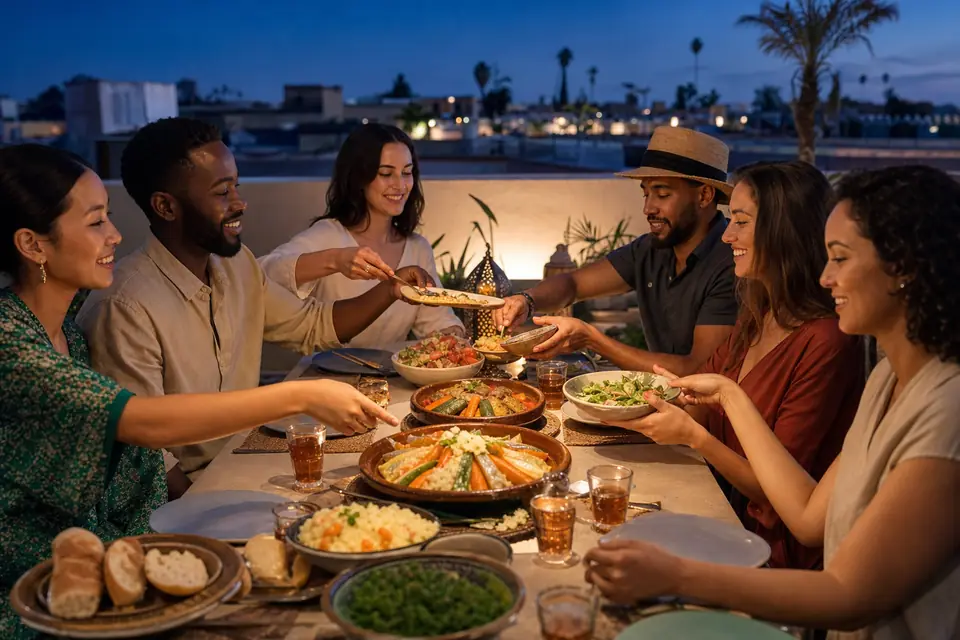
Azrou sits high in the Middle Atlas, its name meaning rock in Tamazight, a reference to the great volcanic outcrop at its centre. This is a green, cool, forested town, surrounded by the famous cedar woods where Barbary macaques live among Morocco's largest cedars. It is a deeply Amazigh place, a market town for the Berber villages of the mountains, and its food reflects that: hearty, unfussy, built on what the highlands provide -- meat, dairy, honey, apples and the trout of cold mountain streams.
The cooking here is mountain cooking. Tagines are rich and warming, often of lamb or the local goat, cooked simply with onion, tomato and herbs rather than the elaborate sweet-savoury constructions of the imperial-city kitchens. Couscous is a Friday ritual. In the surrounding rivers and stocked lakes, trout has become a regional specialty, grilled or fried and served fresh. The forests and orchards yield honey, walnuts and the apples for which the wider region is known, while sheep and goats give the milk for fresh cheeses and butter.
Azrou is quieter and more workaday than nearby Ifrane, the Alpine-style resort town, and that is part of its appeal. Its Tuesday souk pulls in villagers from across the mountains, its cedar forest is a short walk or drive away, and its restaurants serve honest highland food at fair prices. For travellers crossing the Middle Atlas between Fes and the south, it is an authentic and comfortable place to stop and eat.
Signature dishes of Azrou
These are the dishes that define Azrou's food identity -- the plates that locals are proud of and visitors should seek out.
Mountain trout
Fresh trout from the cold streams and stocked lakes of the Middle Atlas, grilled or pan-fried and served simply with lemon.
Lamb or goat tagine
A warming highland tagine cooked with onion, tomato and mountain herbs -- straightforward Amazigh home cooking for the cold.
Couscous with seven vegetables
The Friday couscous, piled with root vegetables and pumpkin suited to the mountain climate.
Berber tagine of vegetables
Sliced seasonal vegetables layered in a cone and steamed with olive oil and cumin, a simple village staple.
Mountain honey and walnuts
Aromatic Middle Atlas honey eaten with local walnuts and fresh bread, a classic highland breakfast.
Fresh apples in season
Crisp apples from the surrounding orchards, one of the region's key crops, eaten fresh or cooked with meat.
Where to eat in Azrou
Every city has its food neighbourhoods -- the streets, quarters and markets where locals eat and where you should too.
Central souk and the great rock
The town's core around its landmark outcrop, with grill houses, tagine counters and produce stalls.
Tuesday weekly souk
The big regional market where mountain villagers sell produce, honey, cheese, livestock and crafts.
Cedar forest road
Roadside stops toward the cedars and Ifrane serving trout, tagines and mountain fare with forest views.
Artisan cooperative area
Known for carpets and woodwork, with nearby cafes and simple eateries for a break.
The cooking identity of Azrou
Azrou cooks the food of the Middle Atlas Amazigh: warming, hearty and product-led rather than elaborate. Tagines of lamb and goat are built on onion, tomato and mountain herbs, without the heavy sweet-savoury layering of the imperial cities. Trout from cold rivers and stocked lakes is a genuine local specialty, cooked plainly to let its freshness show. The forests and orchards supply honey, walnuts and apples, which appear at breakfast, in preserves and sometimes cooked with meat. Sheep and goat dairy gives fresh butter and cheese. This is cold-climate cooking meant to sustain, generous with fat and flavour and rooted in what the highlands grow.
Market guide
The Tuesday souk is the event to plan around: villagers descend from across the Middle Atlas to sell orchard fruit, mountain honey, fresh cheese, walnuts, olives, live animals and handicrafts, and it is the best window on the region's produce. In town, the daily central market and its surrounding stalls cover spices, vegetables, bread and everyday needs. Look especially for the honey, which the mountains produce in aromatic varieties, and for apples and walnuts in autumn. Azrou is also a carpet and woodcraft centre, so a market visit easily pairs shopping with food. Bring cash in small notes.
Best time to visit for food
Late spring through autumn for green forests, orchard fruit and comfortable walking; winter brings cold and occasional snow but cosy tagine weather.
Food tips for Azrou
- Try the local trout -- it is a Middle Atlas specialty and best eaten fresh and simply cooked.
- Time your visit for the Tuesday souk to see the region's produce and crafts at their liveliest.
- Buy mountain honey and, in autumn, apples and walnuts direct from the market.
- Drive or walk to the cedar forest to see Morocco's great cedars and the Barbary macaques.
- Dress warmly outside summer; Azrou sits at altitude and gets genuinely cold.
- Use Azrou as a calmer, cheaper base than Ifrane for exploring the Middle Atlas.
Frequently asked questions about food in Azrou
What food is Azrou known for?
Hearty Middle Atlas Amazigh cooking: lamb and goat tagines, couscous, and above all fresh mountain trout. The surrounding forests and orchards also supply prized honey, walnuts and apples.
Can you really eat trout in the Middle Atlas?
Yes. The cold rivers and stocked lakes around Azrou and the wider Middle Atlas support trout, which has become a regional specialty. It is usually grilled or pan-fried and served fresh, a welcome change from the meat-heavy mountain menu.
Is Azrou or Ifrane better to visit?
They offer different things. Ifrane is a manicured, Alpine-style resort town; Azrou is a more authentic, workaday Amazigh market town with a great weekly souk and easy access to the cedar forest. Many travellers see both, as they are close together.
What is special about the Azrou cedar forest?
It holds some of Morocco's largest and oldest cedars and is home to Barbary macaques, the wild monkeys of the Middle Atlas. It is a short trip from town and a highlight of the region.
When is the Azrou souk?
The main weekly souk is on Tuesday, when villagers from across the mountains come to sell fruit, honey, cheese, livestock and crafts. It is the best day to experience the region's produce and trade.