Couscous & grains
How to Cook Freekeh the Moroccan Way
Freekeh (farik) is one of the oldest grains in North African cooking — young green durum wheat harvested early, then roasted over fire so the straw and chaff burn away while the moist, immature kernel survives, taking on a distinctive smoky, nutty flavour. It cooks like a robust pilaf and pairs beautifully with the warm spices of Moroccan cooking, standing up to slow-braised lamb, roasted vegetables and the sharp punch of harissa.
- Difficulty
- Easy
- Active time
- 10 min prep, 25 min cook
- Yields
- A side or base for 4
- Best tool
- A heavy saucepan with a tight lid
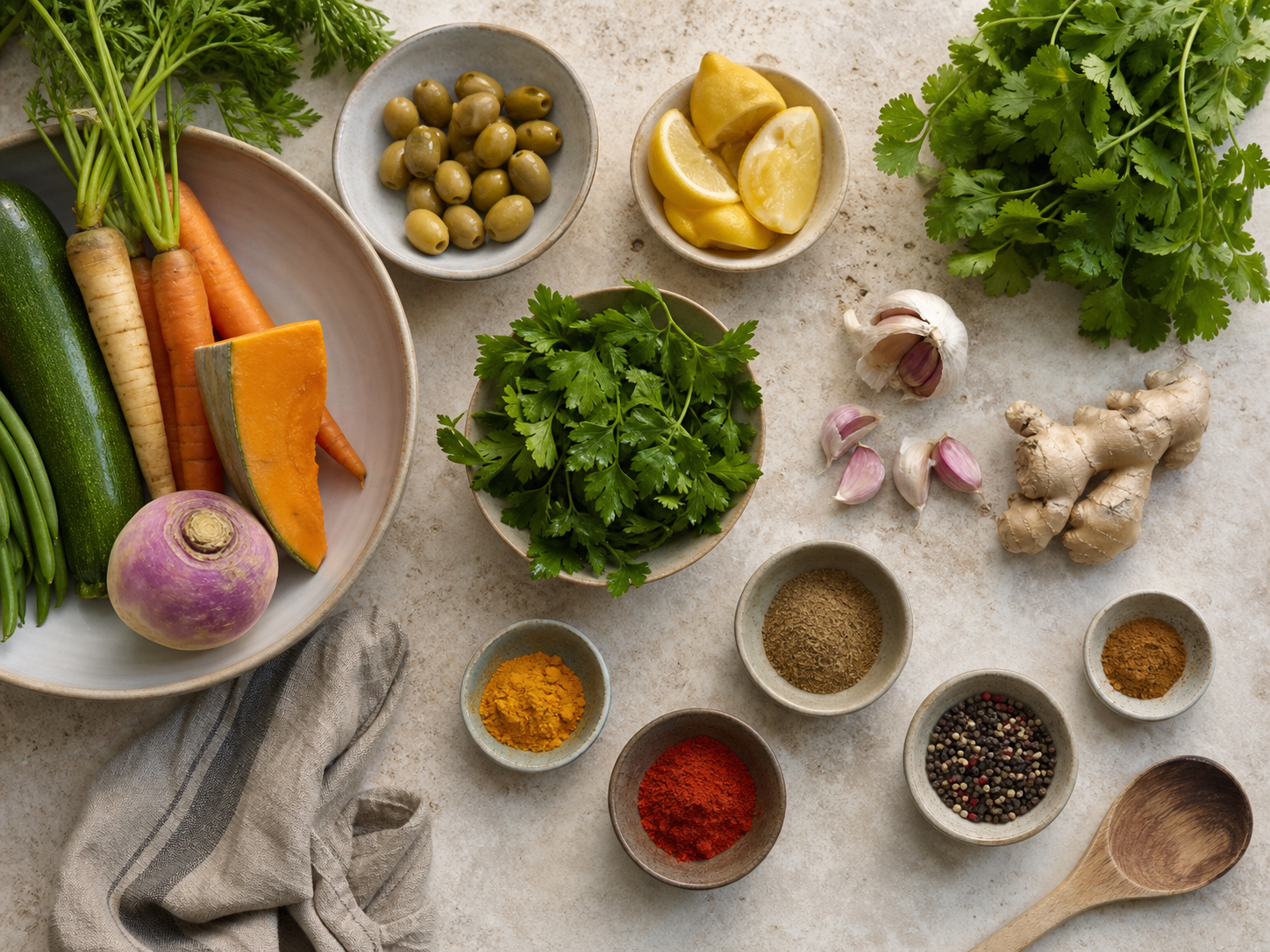
What you need
- Cracked freekeh (whole freekeh takes longer — cracked is more practical)
- Butter or olive oil
- Onion, garlic, cumin, cinnamon, salt
- Chicken or vegetable broth
- A heavy saucepan with a tight-fitting lid
Why it matters
Freekeh occupies the space between rice and couscous in the Moroccan grain repertoire: chewier and smokier than either, with a higher protein and fibre content than mature wheat. Its roasted flavour needs very little help — it is already deeply savoury from the fire — so a simple pilaf method in spiced broth is enough to produce a side dish that holds its own next to a rich tagine.
The key is treating it as a pilaf, not a porridge: toast it in fat first to set the starches, add broth, cover, and let it absorb until each grain is tender but still chewy at the centre. Overcooking turns it soft and muddy; the right bite is firm but yielding, like a good risotto al dente.
Step-by-step method
-
Rinse the freekeh
Put the cracked freekeh in a sieve and rinse under cold water, picking out any small stones or chaff. Drain well. This removes surface dust and any excess smokiness.
-
Toast in butter
Melt a knob of butter or warm olive oil in a heavy saucepan over medium heat. Add the drained freekeh and stir for 2-3 minutes until it smells toasted and the grains are coated in fat. This sets the surface starch and helps the grains stay separate.
-
Soften aromatics
Push the grain to the side and add finely diced onion and a clove of garlic. Cook for a minute until fragrant, then add ground cumin, a pinch of cinnamon and salt.
-
Add broth and cover
Pour in broth at a ratio of about two parts liquid to one part cracked freekeh. Bring to a boil, stir once, then turn the heat to the lowest setting and cover with the tight-fitting lid.
-
Cook undisturbed
Let it steam for 15-20 minutes without lifting the lid. The grain absorbs the broth gradually and evenly when left alone.
-
Check, fluff and rest
After 15 minutes, check: the liquid should be absorbed and the grains tender but with a firm, chewy centre. If still wet, cover and cook 5 more minutes. When done, remove from heat, fluff with a fork and let it rest covered for 5 minutes.
-
Serve
Spoon alongside a tagine, scatter with fresh herbs, or use as a warm grain base for roasted vegetables and a drizzle of argan oil.
Common mistakes
- Boiling it like pasta. Draining freekeh after boiling washes away the smoky flavour and leaves it waterlogged. Use the absorption method to capture everything.
- Skipping the toast. Without an initial toast in fat, the grains release their starch too quickly and clump into porridge.
- Too much liquid. Excess broth makes it mushy. Stick to the 2:1 ratio for cracked freekeh and adjust once you know your brand.
- Stirring during the cook. Stirring releases starch and makes the grain sticky. Set it, cover it, leave it.
- Overcooking. Freekeh should have a slight chewy bite at the centre. Mushy freekeh has lost its character.
Tips
Whole freekeh takes 40-45 minutes by the same method and has a more robust chew — soak it for an hour first to speed things up.
Cold freekeh tossed with chopped herbs, preserved lemon, olive oil and toasted almonds makes an excellent grain salad.
The smoky flavour pairs particularly well with harissa — stir a spoonful through the finished grain.
Recipes and dishes that use this
Keep exploring
Frequently asked questions
What is freekeh?
Freekeh (farik) is young green durum wheat harvested early and roasted over fire. The flame burns the straw and chaff while the moist kernel survives, developing a distinctive smoky, nutty flavour.
How do you cook cracked freekeh?
Toast it in butter, add spiced broth at a 2:1 ratio, cover with a tight lid and cook on low heat for 15-20 minutes until the liquid is absorbed and the grains are tender but chewy.
Is freekeh the same as bulgur?
No. Both are wheat, but bulgur is made from mature, parboiled wheat, while freekeh is young green wheat roasted over fire. Freekeh has a smokier flavour and chewier texture.