Couscous & grains
How to Roll Couscous by Hand
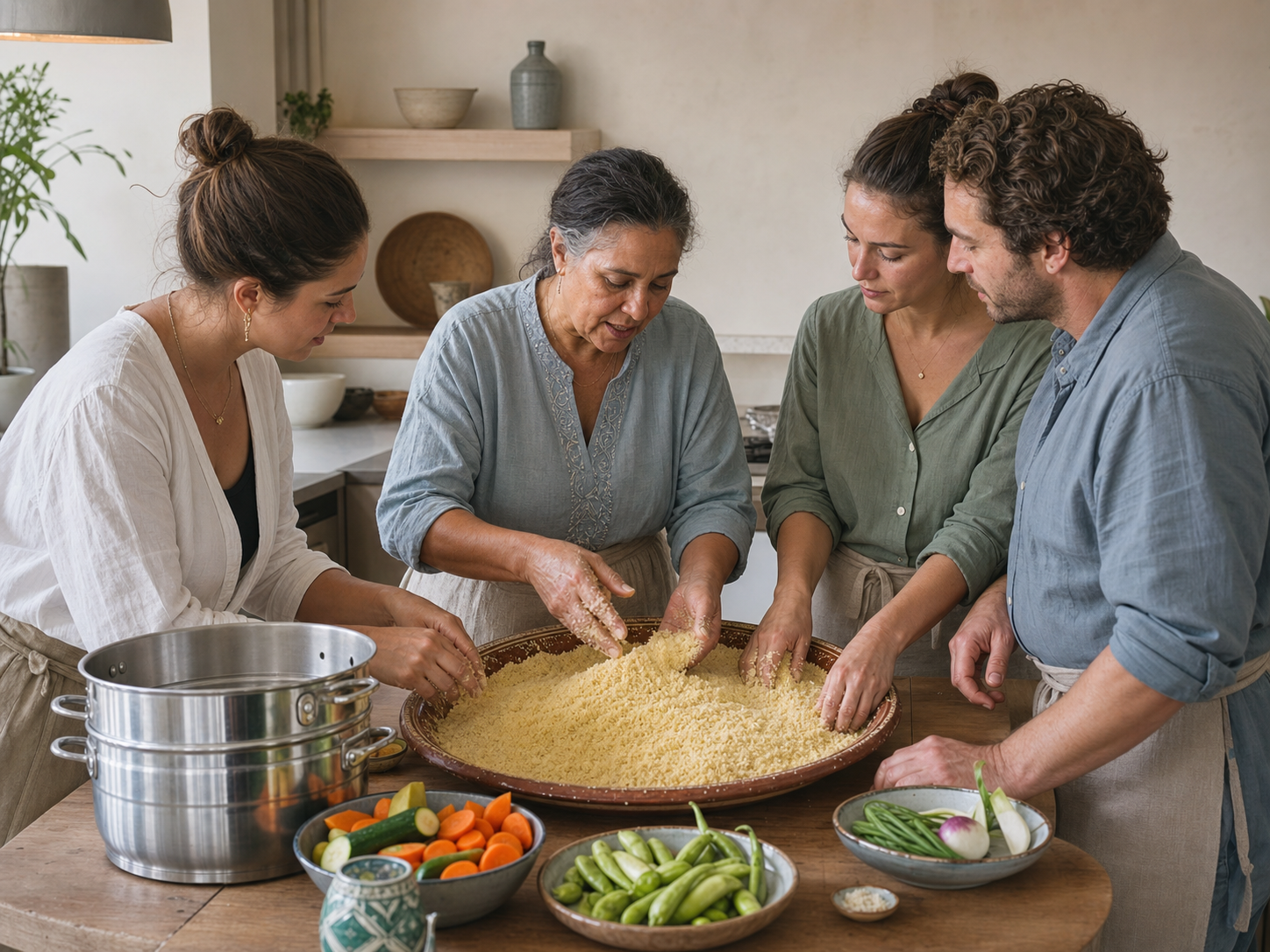
Hand-rolling couscous is one of the oldest grain techniques in North Africa — a communal, rhythmic art where semolina, a little flour and salted water are worked between the palms in a wide shallow bowl until tiny, even granules form, each one a miniature bead of steamed-ready pasta. It takes practice and patience, but the result steams lighter and absorbs broth more deeply than any factory couscous, and it is a deeply satisfying skill to learn.
- Difficulty
- Advanced
- Active time
- 1-2 hr for a batch, plus drying
- Yields
- Couscous for 6-8
- Best tool
- A wide, shallow wooden or metal bowl (gsaa)
What you need
- Medium or coarse semolina (not fine semolina flour)
- A little plain flour, for binding
- Salted water in a bowl, for sprinkling
- A wide, shallow bowl — the traditional gsaa is ideal
- A fine-mesh sieve to grade the granules
Why it matters
Factory couscous is extruded and pre-steamed: uniform, convenient, and missing the slight irregularity that gives hand-rolled grain its charm. Each hand-made granule has a slightly rough surface that catches broth and butter, and an uneven shape that creates air pockets when steamed. That is why grandmother's couscous is always described as lighter than anything from a box.
The technique itself is Amazigh (Berber) in origin and still practised communally across rural Morocco. Women gather around a large gsaa, sprinkle semolina with salted water, and rub in a steady circular motion, rolling the wet grains into larger and larger beads, sieving out the fines and re-rolling until the batch is uniform. It is meditative, social and deeply tied to Friday and feast-day cooking.
Step-by-step method
-
Prepare the semolina
Spread medium or coarse semolina in the gsaa. Add a handful of plain flour — about one part flour to ten parts semolina — and toss to combine. The flour gives the granules a little more binding strength.
-
Sprinkle lightly with salted water
Dip your fingertips into salted water and flick droplets over the semolina — not a pour, a scatter. Too much water at once makes lumps; too little and nothing sticks. Aim for a fine mist.
-
Rub in a circular motion
With your palms flat and fingers spread, rub the dampened semolina in steady circular motions across the bowl. The friction rolls tiny granules together. Continue for several minutes until small beads begin to form.
-
Sprinkle and rub again
Add another scatter of water and keep rubbing. The granules grow with each pass. The motion is rhythmic and relaxed — not pressing hard, just steady flat circles. The grains should feel like coarse sand.
-
Sieve for size
Shake the rolled grains through a fine-mesh sieve. What falls through goes back in the bowl for re-rolling; what stays on top is the right size. Return the fines, sprinkle, rub, sieve again. Repeat until the batch is uniform.
-
Dry the grains
Spread the finished couscous on a clean cloth or tray in a single layer and let it air-dry completely — several hours, or overnight in a warm, dry room. Fully dried hand-rolled couscous stores for months in a sealed jar.
-
Steam before serving
Steam the dried couscous in a couscoussier using the three-lift method, exactly as you would good-quality dry couscous. Hand-rolled grain absorbs more butter and broth, so be generous.
Common mistakes
- Pouring water instead of sprinkling. A steady pour creates paste and lumps. Flick droplets with your fingertips for an even, gradual hydration.
- Pressing too hard. Heavy hands crush the forming granules. The motion is flat, light and circular — you are rolling, not kneading.
- Skipping the sieving. Without sieving, you get a mix of tiny dust and large clumps that cook unevenly. Sieve and re-roll the fines for uniform grains.
- Using fine semolina flour. Fine flour makes paste, not grains. You need the gritty bite of medium or coarse semolina for the beads to form.
- Not drying properly. Damp couscous clumps in storage and goes mouldy. Dry it fully before jarring.
- Expecting perfection on the first try. Hand-rolling is a skill that improves with practice. First batches will be uneven — that is normal and they will still taste wonderful.
Tips
Watch a Moroccan grandmother if you ever get the chance — the speed and rhythm are mesmerising and teach the technique faster than any written instruction.
A large gsaa makes rolling much easier: the grains need room to move and separate as they form.
Hand-rolled couscous makes a beautiful gift, especially stored in a cloth bag with a handwritten label.
Recipes and dishes that use this
Keep exploring
Frequently asked questions
Can you make couscous from scratch?
Yes — traditional couscous is hand-rolled from semolina, a little flour and salted water, rubbed in a wide bowl until tiny granules form, sieved for size, dried and then steamed. It takes practice but the texture is superior.
What semolina do you use for hand-rolled couscous?
Medium or coarse semolina — never fine semolina flour, which makes paste. The gritty texture of coarser semolina is what lets the granules form.
How long does hand-rolled couscous keep?
Fully dried, it keeps for months in a sealed jar at room temperature, just like any dried pasta. It is a traditional way to store the grain between harvests.