Grains, flour & pulses · الشعرية · sha'riya
Moroccan Vermicelli (Sha'riya)
The thin toasted noodles that go into harira, soups and the sweet seffa medfouna celebration dish
Sha'riya — thin vermicelli noodles — is one of the most used pantry staples in Morocco. It goes into harira as the starchy element that gives the soup body, into chicken soups as a comfort addition, and into seffa medfouna as the sweet base of one of Morocco's most spectacular celebration dishes. The key Moroccan technique is to toast the vermicelli in a dry pan or in butter before cooking — this adds a nutty, caramelised depth that raw noodles lack.
- Darija
- sha'riya
- Type
- Thin wheat noodles (0.8–1.2 mm)
- Key step
- Toasted before cooking
- Main uses
- Harira, seffa, soups
What it is
Sha'riya is standard thin vermicelli — wheat noodles about 1 mm in diameter, broken into short lengths (3–5 cm). In Morocco, it is sold in small cellophane packages at every grocery and souk stall. The same product exists in Italian, Middle Eastern and Asian cuisines, but the Moroccan use is distinctive: the noodles are almost always toasted dry or in butter before they go into liquid, which transforms their flavour.
For harira, the vermicelli goes in during the last 10 minutes of cooking, adding body and starch to the soup. For seffa, the noodles are steamed (like couscous), buttered, sugared and piled into a dome with roast chicken hidden underneath — a spectacular presentation dish.
In the Moroccan kitchen
In harira, a handful of toasted sha'riya goes into the pot during the last few minutes, thickening the soup and adding a subtle nutty flavour. It partially dissolves, contributing to harira's silky body.
In seffa medfouna, vermicelli replaces couscous as the base — it is steamed, buttered, sweetened with icing sugar and cinnamon, and formed into a dome over a whole roast chicken. The sweet-savoury contrast is one of the defining flavours of Moroccan feasting.
As a simple soup, sha'riya is toasted in butter, covered with chicken broth, simmered until tender and served with a squeeze of lemon — Morocco's answer to chicken noodle soup, and the food given to anyone who is ill or recovering.
- Harira — toasted vermicelli added in the last 10 minutes
- Seffa medfouna — steamed and sweetened as a base for roast chicken
- Chicken noodle soup — toasted in butter, simmered in broth
- Dessert seffa — sweet vermicelli with butter, sugar and almonds
- Stuffing — some cooks use sha'riya in poultry stuffing with nuts and raisins
How to choose & store
Buy standard thin vermicelli (about 1 mm diameter) — the thicker 'angel hair' or 'capellini' works but takes longer to cook. Break into 3–5 cm lengths before toasting.
Avoid pre-toasted or pre-seasoned varieties — the point is to toast it yourself for maximum flavour control.
Storage — Dried vermicelli keeps indefinitely in a dry cupboard. Once toasted, use within a week as the oils from toasting can go stale.
Buying it in Marrakech
What to look for at the stall — and how to buy well without invented prices to anchor you.
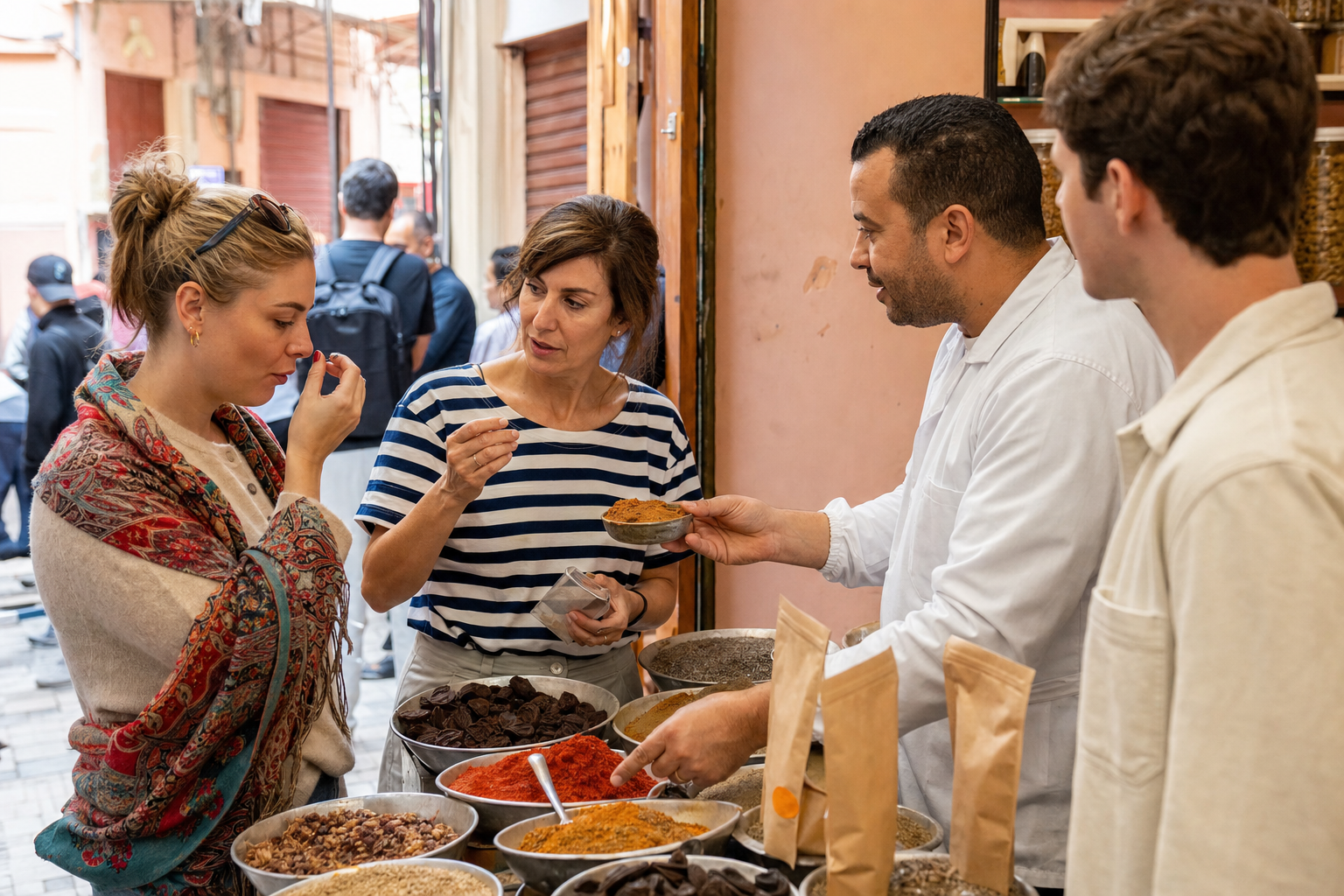
- Every grocery stall and small supermarket in Marrakech stocks sha'riya in small cellophane packages. It is one of the cheapest pantry items available.
- Some stalls sell handmade sha'riya, which is slightly thicker and more irregular — worth trying if you find it.
Substitutes
- Angel hair pasta — similar thickness, works if broken short
- Fine egg noodles — slightly richer, good in chicken soup versions
- Rice vermicelli — gluten-free alternative, different texture
Frequently asked questions
Why do you toast vermicelli before cooking?
Toasting caramelises the wheat starches, adding a nutty depth of flavour that raw noodles lack. It also firms the noodles slightly so they hold their shape better during cooking rather than dissolving into mush.
How much sha'riya goes into harira?
About one handful (50 g) per large pot of harira for 8–10 people. Too much makes the soup overly thick and starchy.
Is seffa the same as couscous?
Seffa can be made with either couscous or vermicelli. Seffa medfouna (literally 'buried seffa') traditionally uses vermicelli steamed and sweetened, with a roast chicken hidden inside the dome. The couscous version is a simpler, everyday variant.