Grains, flour & pulses · الفرينة · frina (fine flour) / السميدة · smida (semolina) / الدقيق الكامل · dqiq kamel (whole wheat)
Moroccan Flour Types
Fine white flour, semolina and whole wheat — the three grains behind Morocco's breads, pastries and couscous
Three flours anchor the Moroccan kitchen: fine white flour (frina) for everyday bread and pastries, semolina (smida) for couscous, harcha and some breads, and whole wheat (dqiq kamel) for country-style khobz and the hearty breads of the Amazigh countryside. Understanding which goes where — and how they behave differently — is the foundation of Moroccan baking and grain cooking.
- Fine flour
- frina — bread, pastries, msemen
- Semolina
- smida — couscous, harcha, some breads
- Whole wheat
- dqiq kamel — country bread, barley blends
- Barley flour
- belboula — barley couscous, porridge
What it is
Fine white flour (frina) is the everyday flour of the Moroccan kitchen — the base for khobz (daily bread), msemen, rghaif, warqa pastry sheets and most Moroccan pastries. It is a soft-wheat flour, lower in protein than bread flour, which gives Moroccan breads their characteristically tender, slightly chewy crumb.
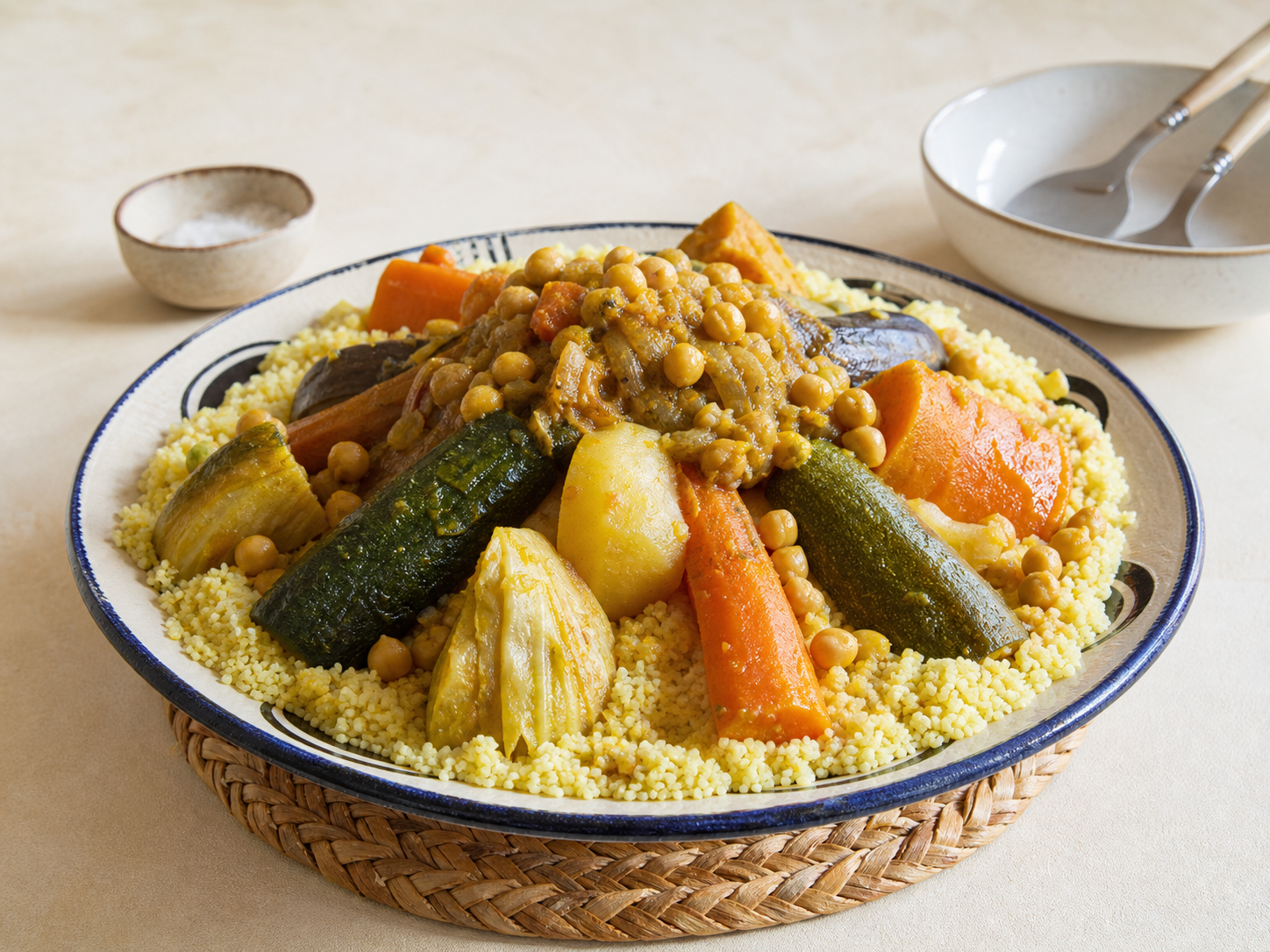
Semolina (smida) is ground from durum wheat — the hard, golden wheat — and is the grain for hand-rolled couscous, for harcha (semolina griddle bread) and for some festive breads. Fine semolina produces smooth, delicate couscous; coarser grades (closer to a grit) are used for thicker couscous styles and for harcha's sandy, crunchy texture.
Whole-wheat flour (dqiq kamel) retains the bran and germ and produces a denser, more flavourful bread. In the Amazigh countryside, it is the default bread flour, and in cities it is used for 'country-style' khobz. Barley flour (belboula) is a separate category — used for barley couscous and barley porridge, particularly in the mountains and the Souss. It is nuttier, denser and gluten-poor compared to wheat.
In the Moroccan kitchen
Fine flour goes into almost all Moroccan baking. The daily khobz — round, crusty loaves that every Moroccan family either bakes at home or buys from the neighbourhood ferran (bakery oven) — is made from fine flour, salt, yeast, a little sugar and water. The same flour is the base for msemen (folded, layered griddle bread), rghaif (similar, but thinner), beghrir (honeycomb pancakes) and the delicate warqa pastry sheets used in b'stilla.
Semolina is rolled by hand with water to form the tiny granules of couscous — an hours-long process in traditional kitchens, though most families now use packaged, pre-steamed couscous for weekday cooking and save handmade for Friday and festivals. Semolina also goes into harcha (a thick, crunchy griddle bread), into some cakes and biscuits, and into the dough for makrout (semolina date cookies).
Whole-wheat flour is mixed with fine flour (or used alone) for a heartier bread. Some bakers blend it with barley flour for a country-style loaf with a nutty, slightly bitter edge. Barley flour on its own makes a dense, crumbly dough that is harder to work but produces bread with a deep, toasted grain flavour.
- Fine flour — khobz, msemen, rghaif, beghrir, warqa, Moroccan pastries
- Semolina — hand-rolled couscous, harcha, makrout
- Whole wheat — country-style khobz, hearty breads
- Barley flour — barley couscous (belboula), mountain bread, porridge
How to choose & store
For fine flour: Moroccan baking uses a soft-wheat flour. If buying outside Morocco, look for all-purpose flour rather than strong bread flour — the lower protein content gives the right texture. In Marrakech, frina is sold by the kilo at every market grocer.
For semolina: choose the grade to match the use. Fine semolina for couscous and cakes; medium-coarse for harcha and makrout. In the souk, smida is sold in bulk — ask for fine or coarse as needed.
For whole wheat and barley: buy from bulk-grain sellers in the medina or the Gueliz market. Freshly milled is always better — look for flour with a sweet, nutty aroma and no musty smell.
Storage — Store all flours in a sealed container in a cool, dry place. Fine flour and semolina keep for several months. Whole-wheat and barley flours, which retain their oily bran and germ, go rancid faster — use within two months or refrigerate.
Buying it in Marrakech
What to look for at the stall — and how to buy well without invented prices to anchor you.
- All flour types are available in bulk at the Gueliz market, medina grocers and neighbourhood shops.
- Buy by the kilo — it is cheap and available year-round.
- Ask for smida mhersha (fine semolina) for couscous or smida khashra (coarse) for harcha — the grade matters.
- Barley flour may require asking specifically at a grain seller or Amazigh food stall.
- A cooking class that covers bread-making or couscous will teach you to work with these flours hands-on.
Substitutes
- For fine flour: all-purpose flour from any country works. Do not use strong bread flour — the higher protein makes Moroccan breads too chewy.
- For semolina: durum-wheat semolina from Italian or Middle Eastern suppliers is identical.
- For whole wheat: any stone-ground whole-wheat flour substitutes directly.
- For barley: barley flour from health-food stores works, though it may be finer-milled than the Moroccan village product.
Frequently asked questions
What flour is Moroccan khobz made from?
Primarily fine white flour (frina), sometimes mixed with a proportion of whole-wheat flour for a heartier loaf. The flour is soft-wheat, lower in protein than European bread flour, giving khobz its characteristic tender crumb.
What is the difference between semolina and regular flour?
Semolina is ground from hard durum wheat and has a sandy, granular texture. Regular flour is ground from soft wheat and is fine and powdery. Semolina is used for couscous and harcha; fine flour for bread and pastries.
Can I make couscous from regular flour?
No — couscous requires semolina. The hard, granular texture of durum-wheat semolina is what allows the tiny couscous granules to form and hold their shape during rolling and steaming. Fine flour would produce a paste.