- recipes
- techniques
- dishes
The Complete Guide to Moroccan Tagine: Types, Recipes, Techniques
The tagine is not a recipe; it is a method. Any combination of protein, vegetable, fruit, spice, olive oil and water, slow-cooked in a covered vessel until the sauce reduces and concentrates, is a tagine. There are hundreds of variations across Morocco, but understanding the method — low heat, tight lid, patience — lets you create any of them. This guide covers the method, the classic varieties, and how to choose the right one in a restaurant.
- Read
- 10 min
- Updated
- 23 July 2026
- Sections
- 4
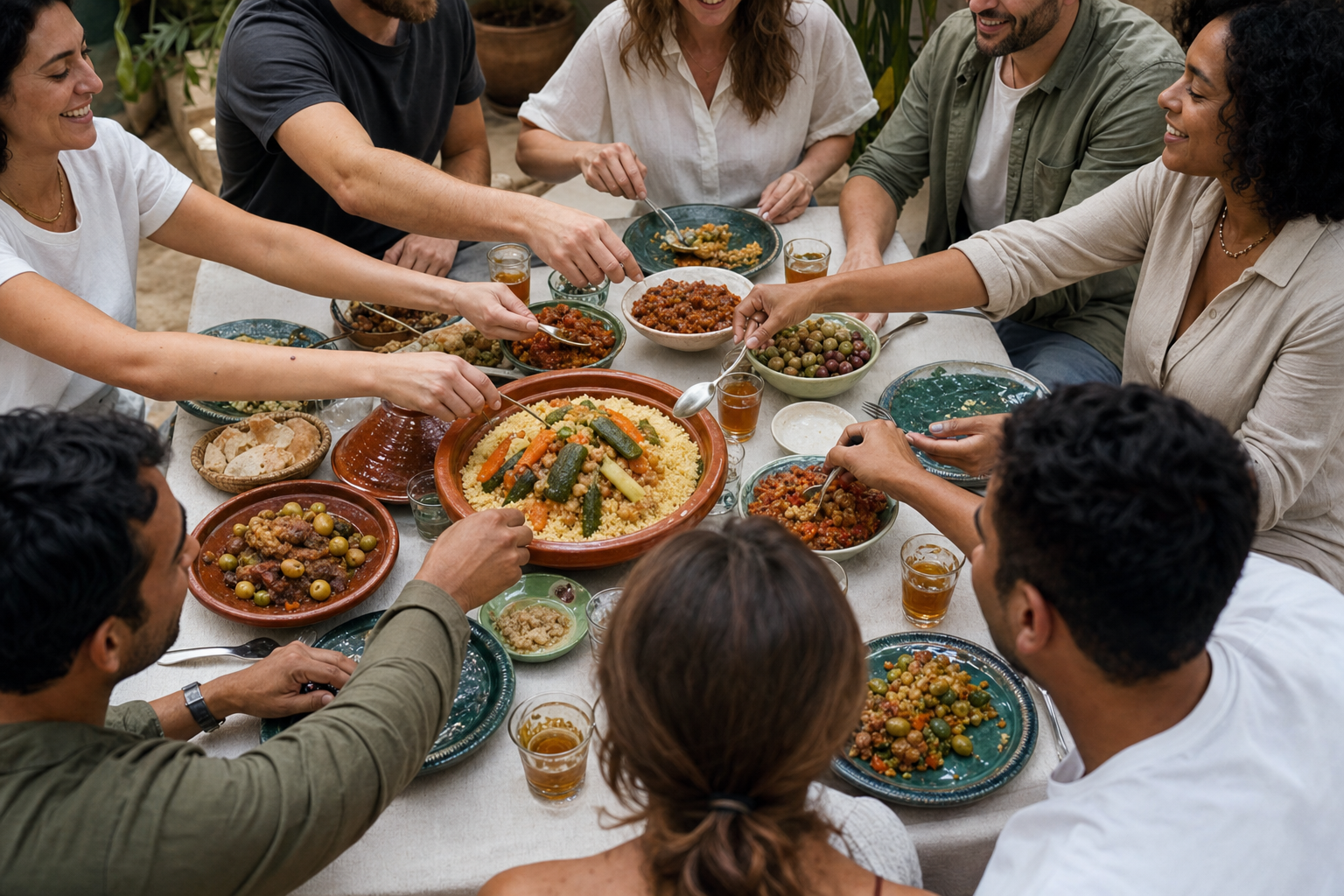
The tagine pot vs the tagine dish
The word 'tagine' refers to both the conical clay cooking vessel and the dish cooked in it. You do not need the vessel to make the dish — a Dutch oven works identically. The conical lid creates a self-basting cycle: steam rises, condenses on the cool lid, and drips back onto the food. A tight-fitting flat lid does the same thing.
If you do buy a tagine pot, season it before first use: soak in water overnight, then cook with a thin layer of oil on low heat for an hour. Never put a cold tagine on high heat — the thermal shock cracks it.
The 8 classic tagines
Every restaurant in Morocco offers some variation of these: chicken with preserved lemon and olives (the most popular), lamb with prunes and almonds (the sweetest), kefta with egg (the fastest), beef with artichokes, fish with chermoula, vegetable tagine, lamb with apricots, and chicken with almonds and onion confit.
- Chicken + preserved lemon + olives: the classic, citrusy and savoury
- Lamb + prunes + almonds: sweet-savoury, special occasions
- Kefta + tomato + egg: fast, hearty, the working person's tagine
- Fish + chermoula: coastal, herb-forward, lighter
- Vegetable: seasonal, naturally vegan, underrated
How to choose a tagine in a restaurant
Ask what is pre-cooked. Busy restaurants pre-cook tagines in the morning and reheat them — the sauce is deeper and the meat more tender. A tagine 'cooked to order' takes 1.5 hours and is fresher but more expensive.
The lamb tagine is usually the best test of a restaurant's quality: the meat should fall off the bone, the sauce should be thick and concentrated, and the prunes should be swollen and caramelised.
Making your first tagine at home
Start with chicken with preserved lemon. The technique: sauté onions in olive oil with cumin, turmeric, ginger, cinnamon and saffron. Add chicken, water, preserved lemon and olives. Cover. Cook on low for 1.5 hours. That is it. The patience is the technique.
Frequently asked questions
What is the best tagine for beginners to cook?
Chicken with preserved lemon and olives. It is forgiving, uses accessible ingredients, and produces an impressive result on the first attempt.
Do I need a tagine pot?
No. A Dutch oven or any heavy pot with a tight-fitting lid works just as well. The tagine pot is beautiful for presentation but functionally identical to a heavy covered pot.