- recipes
- cooking classes
Tagine Recipes and Cooking Classes
The tagine is both a dish and a vessel — a slow-braised stew of meat or vegetables cooked under a conical clay lid that traps steam and returns it to the pot. It is the dish every cooking class teaches, every recipe collection leads with, and every visitor to Morocco remembers. Learning to make a good tagine at home from a recipe is straightforward; learning to make a great one requires a cooking class, where you see and feel the technique that separates good from great.
- Read
- 8 min
- Updated
- 23 July 2026
- Sections
- 3
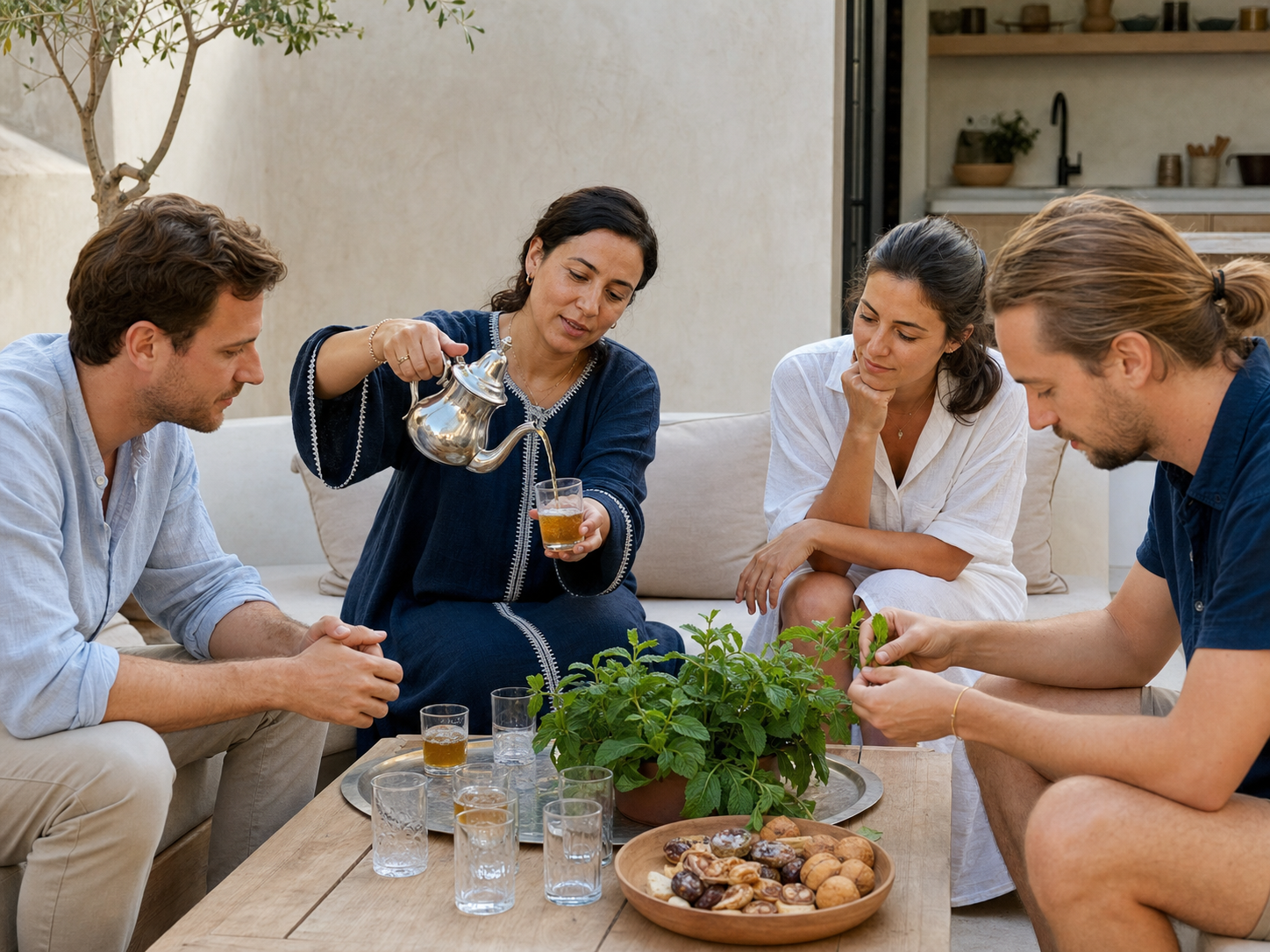
The anatomy of a tagine
Every tagine starts the same way: olive oil, sliced onions, and the spice base (cumin, ginger, turmeric, sometimes paprika and saffron) cooked low until the onions are soft and golden. The protein or vegetables go in next, layered with whatever defines the variation — preserved lemon and olives, prunes and almonds, apricots and cinnamon, tomatoes and peppers. A little water or stock, the lid goes on, and everything braises slowly for one to two hours.
The conical lid is not decorative — it is functional. Steam rises, condenses on the cool clay cone, and drips back down, self-basting the stew. This is why a tagine cooked in its pot tastes different from the same recipe in a Dutch oven: the moisture cycle is gentler and more even.
Tagine recipes to cook at home
Start with chicken tagine with preserved lemon and olives — it is the most iconic variation and the most forgiving for beginners. The preserved lemon does the heavy lifting on flavour, so even imperfect technique produces a good result. Move to lamb tagine with prunes and almonds for a sweeter, more complex profile, then try a seven-vegetable tagine to learn the vegetarian side.
You do not need a clay tagine pot to cook a tagine recipe at home. A heavy-bottomed pot with a tight lid (a Dutch oven or cast-iron casserole) works well. The clay pot improves the result, but it is not essential — technique and spicing matter more.
Tagine cooking classes in Marrakech
Every cooking class in Marrakech includes at least one tagine. The class advantage is calibration: you learn how low the heat should be (lower than you think), how much liquid to add (less than you think), and when the tagine is done (the onions should be melted, not just soft). A class also teaches the finishing — the arrangement of olives and preserved lemon on top, the fresh herbs, the way the dish is presented in the pot at the table.
For a deeper tagine education, book a class that covers two or three variations in one session, so you learn how the same base technique produces completely different dishes depending on the flavour combination.
Frequently asked questions
Do I need a tagine pot to make a tagine?
No. A heavy-bottomed pot with a tight-fitting lid works. A clay tagine pot improves the self-basting effect and the presentation, but the flavour comes from the spices, the slow braising and the ingredients, not the vessel.
What is the most popular tagine in Morocco?
Chicken tagine with preserved lemon and olives is the most widely made and the most commonly taught in cooking classes. Lamb tagine with prunes and almonds is the second. Both are excellent starting points for home cooks.