- recipes
- cooking classes
Moroccan Recipes and Cooking Classes
A recipe gives you the ingredients and the steps. A cooking class gives you the hands, the heat and the corrections. The two are not competitors — they are stages of the same learning. Most people who book a cooking class in Marrakech have already tried a tagine at home from a recipe; the class fills in everything the recipe could not convey: how the onions should smell before you add the spice, how thin the preserved lemon should be sliced, how much liquid to leave in the pot. And after the class, the recipe finally makes sense.
- Read
- 7 min
- Updated
- 23 July 2026
- Sections
- 3
What a recipe teaches you
A well-written Moroccan recipe gives you a reliable framework: the ingredient list, the sequence, the ratios. Our recipe pages include technique notes, spice substitutions and serving advice. For a dish like chicken tagine with preserved lemon, the recipe is enough to produce a good version at home — especially if you have the right ingredients.
Where a recipe falls short is in the sensory calibration: how golden is golden? How much saffron is a pinch? How do you know the onions are done? These are things a written recipe cannot fully convey, and they are exactly what a cooking class teaches.
What a cooking class adds
In a Marrakech cooking class, a cook stands next to you and adjusts your technique in real time. You see and smell the right moment to add each ingredient. You learn the base — the chermoula, the onion-oil-spice foundation, the layering order — by doing it once under supervision, and that single session rewires every recipe you read afterward.
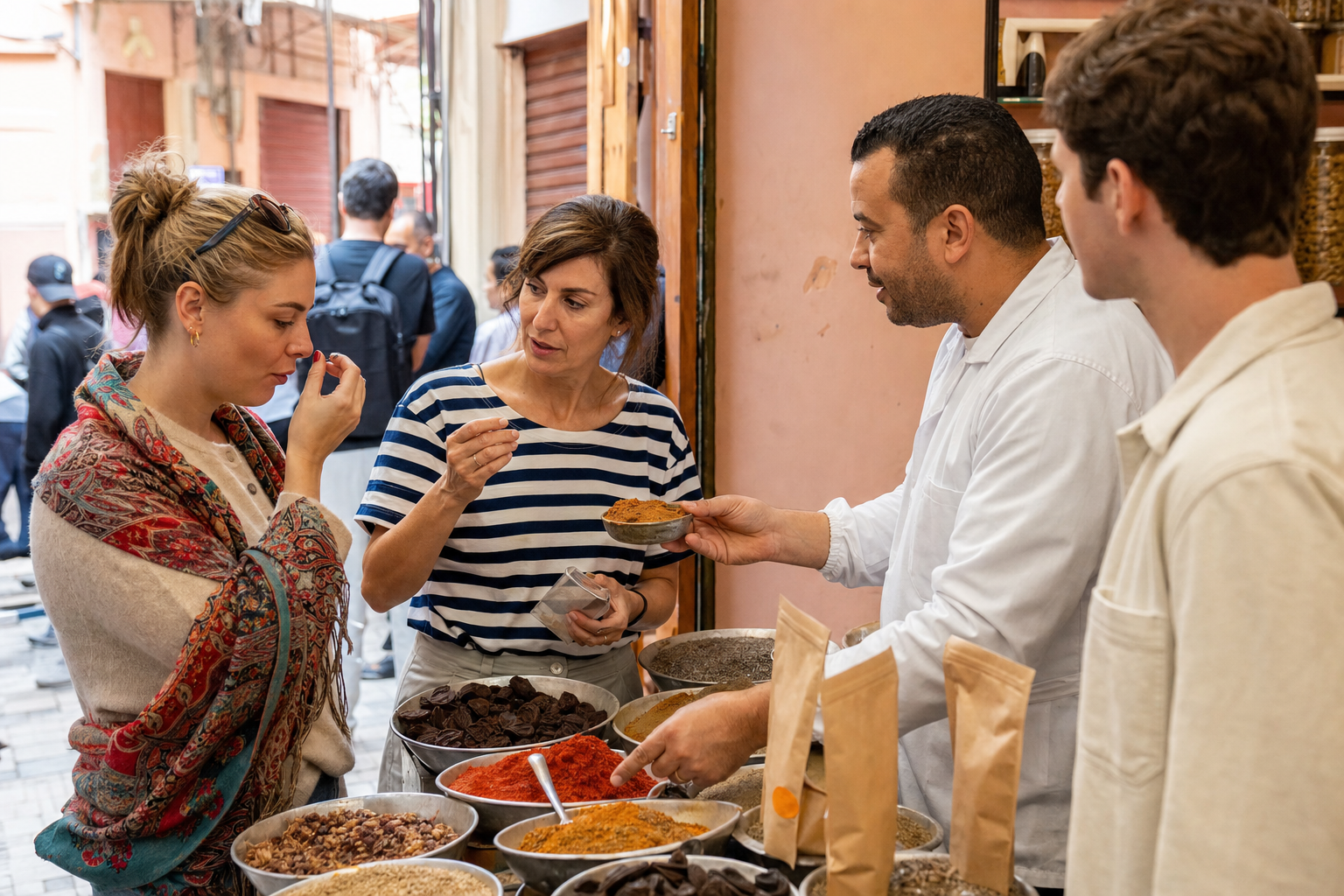
The best classes also include a market visit, which teaches you to recognise good-quality saffron, cumin and ras el hanout by sight and smell — knowledge that directly improves your shopping at home.
A practical learning path
Before your trip, cook one or two Moroccan recipes at home: a harira and a simple vegetable tagine are good starting points. Note what confused you — that becomes your question list for the class. During the class, pay attention to the things you could not see in a recipe: the cook's speed, the flame height, the amount of oil. After you return, cook the class recipes at home within a week while muscle memory is fresh, then branch out to more ambitious dishes.
- Start with harira or a basic tagine at home before the trip
- Use the class to calibrate your technique on heat, timing and spice
- Cook the class recipes within a week of returning home
- Then try more complex recipes: pastilla, rfissa, seffa with confidence
Frequently asked questions
Do I need cooking experience before a Moroccan cooking class?
No. Classes are designed for complete beginners. But if you have tried even one recipe at home, you will get more from the class because you arrive with specific questions about technique.
Will I get recipes to take home from a cooking class?
Almost all Marrakech cooking classes give you printed or emailed recipe cards for the dishes you cooked. You can also find tested versions of the same dishes in our recipe collection.