- recipes
- cooking classes
Moroccan Bread and Baking Classes
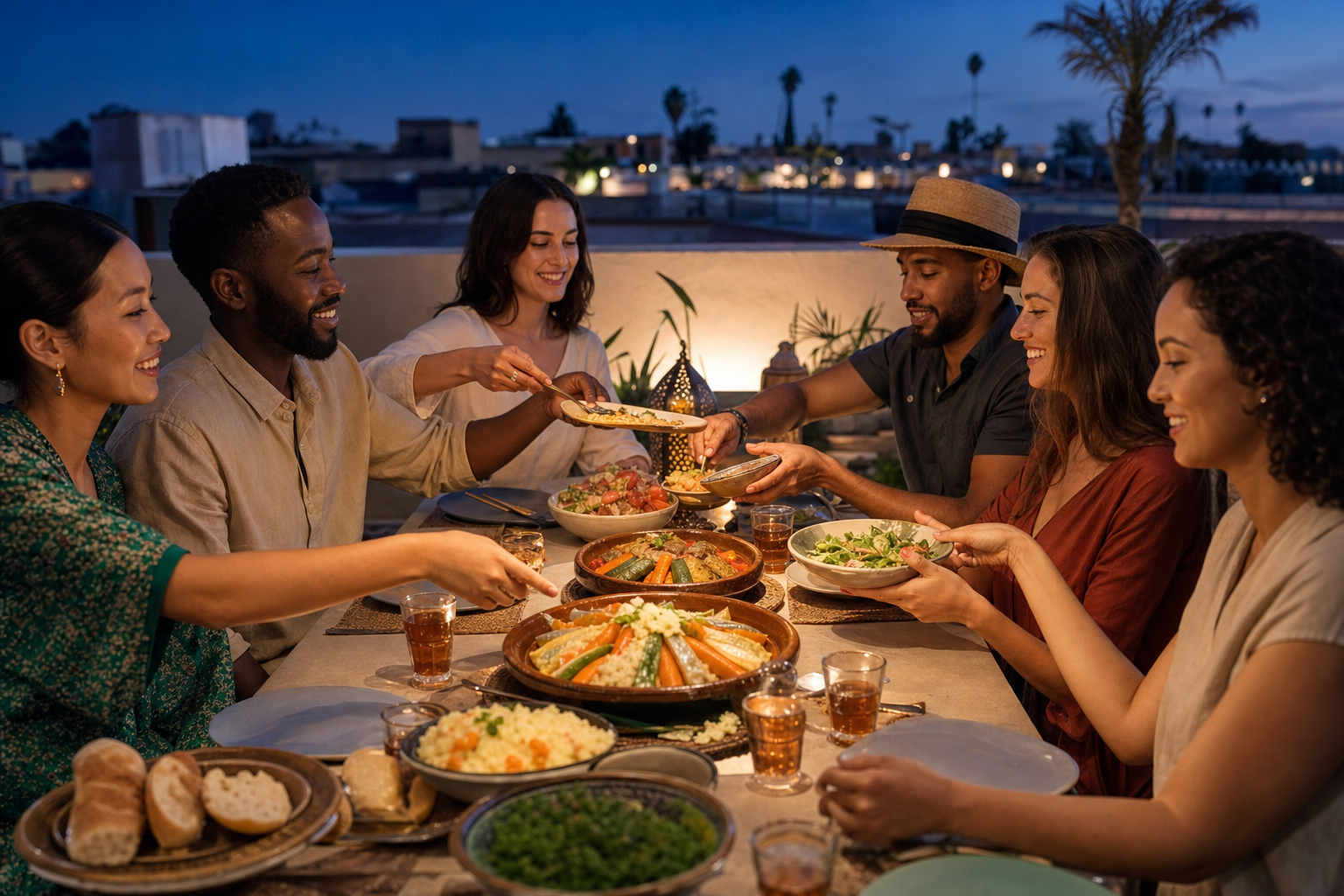
In Morocco, bread is not a side dish — it is the utensil. A round of khobz is torn into pieces and used to scoop tagine, pinch couscous, mop salads and push food onto a shared fork-less plate. Every household bakes or buys bread daily, and the variety goes far beyond the standard round loaf: laminated msemen, spongy baghrir, crisp rghaif, semolina harcha. Learning to make even one of these transforms your understanding of Moroccan food.
- Read
- 8 min
- Updated
- 23 July 2026
- Sections
- 3
The breads of Morocco
Moroccan bread divides roughly into two families: oven breads and griddle breads. Khobz — the round, slightly dense loaf baked in a communal wood oven (ferran) — is the daily staple. Griddle breads are the breakfast and snack family: msemen (square, laminated, flaky), baghrir (the thousand-hole pancake), rghaif (folded and stuffed), and harcha (semolina griddle cake). Each has a distinct texture and role in the meal.
- Khobz — round oven bread, the everyday table loaf, torn by hand and shared
- Msemen — square laminated flatbread, folded and pan-fried, flaky like a savoury crepe
- Baghrir — yeasted semolina pancake with a thousand tiny holes, soaked in butter and honey
- Rghaif — thin stretched dough folded around fillings (khlii, onion, herbs)
- Harcha — thick semolina griddle cake, crisp outside, soft inside, eaten with jam or cheese
- Batbout — small puffed rounds cooked on a griddle, split like pita
Bread in a cooking class
Most Marrakech cooking classes include at least one bread, usually khobz or msemen. A dedicated bread and baking class goes further: you make three or four varieties in a single session, learning the dough handling, the folding technique for msemen, and the griddle temperature for baghrir. Bread is the most immediately useful skill you can learn — you will make msemen at home within days of returning.
The laminating technique for msemen is difficult to learn from a recipe alone. Watching and feeling the dough stretch, fold and oil under a cook's guidance is worth more than any video. This is one case where the class genuinely teaches something the recipe page cannot.
Baking Moroccan bread at home
Msemen and baghrir are the easiest to reproduce at home because they cook on a flat griddle or non-stick pan — no special equipment needed. Our recipe pages include step-by-step instructions for each bread. Khobz requires high heat (ideally a very hot oven with a baking stone) but the dough itself is simple. Start with msemen: it is forgiving, fast, and addictive.
Frequently asked questions
Can I learn to make Moroccan bread in a cooking class?
Yes. Most general cooking classes include one bread (usually khobz or msemen). For a deeper session covering multiple bread types, look for a dedicated bread and baking class — several riad kitchens in the Medina offer them.
What is the easiest Moroccan bread to make at home?
Msemen. The dough is simple (flour, semolina, water, salt, oil), the laminating technique takes one practice session to learn, and it cooks in a flat pan in about three minutes per piece. It is also the most impressive to serve.