Moroccan · Regional Specialties
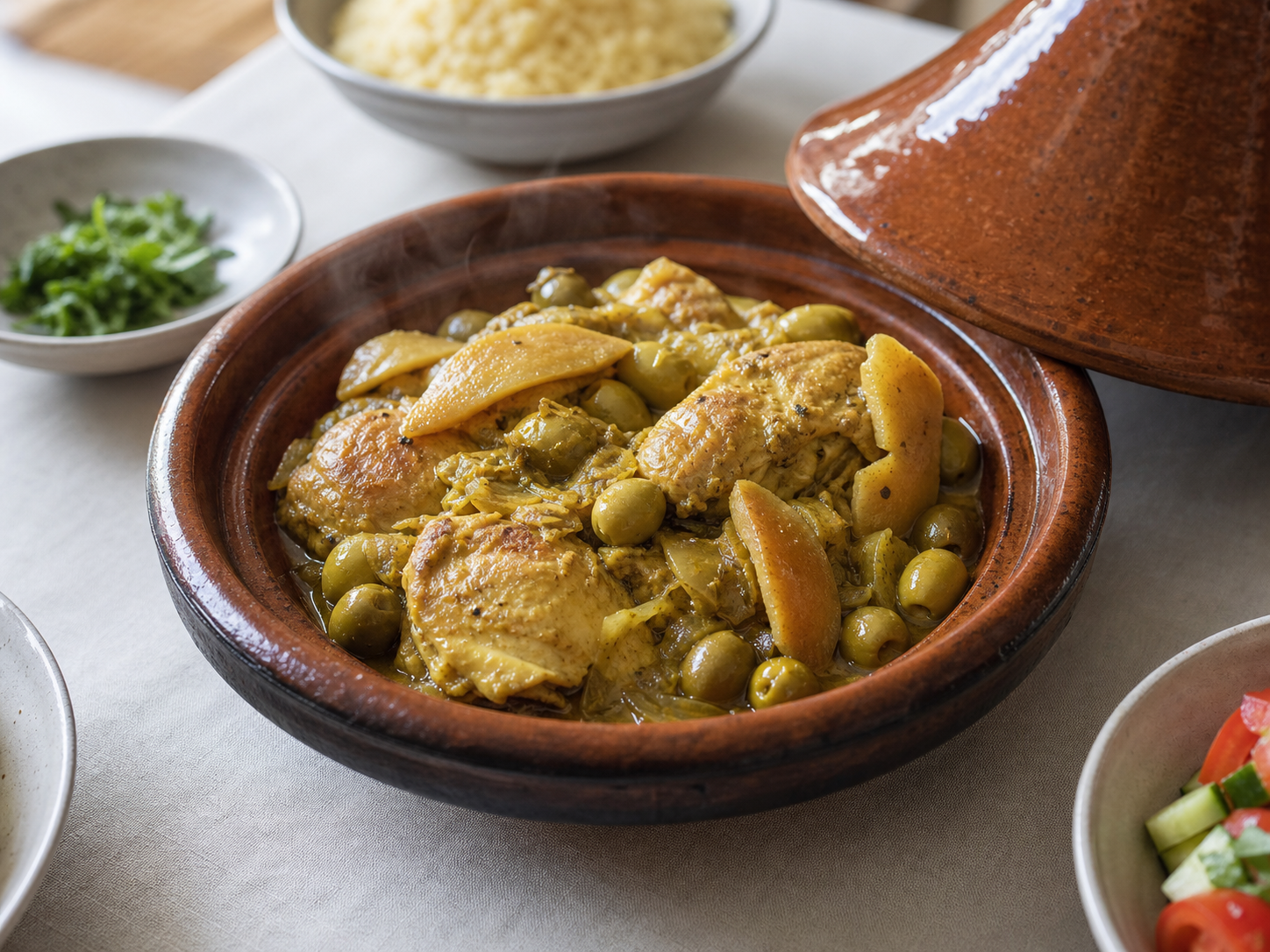
One-Pot Chicken with Preserved Lemon and Olives
This is the streamlined, everyday version of Morocco's most famous tagine — chicken with preserved lemons and olives, adapted for a single pot and a weeknight timeline. While the traditional tagine version requires a clay pot and gentle heat, this one-pot variation uses a Dutch oven or deep skillet to achieve similar depth of flavour in less time. The preserved lemons still provide their distinctive salty-sour punch, the olives add brininess, and the saffron-ginger sauce ties everything together. It is not a shortcut that sacrifices quality — it is a practical adaptation that Moroccan home cooks use daily.
- Prep
- 10 min
- Cook
- 50 min
- Total
- 60 min
- Serves
- 4
- Level
- Easy
Ingredients
- 8 chicken thighs, bone-in
- 2 large onions, thinly sliced
- 1/2 tsp saffron threads
- 1 tsp ground ginger
- 1/2 tsp ground turmeric
- 3 tbsp olive oil
- 1 preserved lemon, rind only, cut into strips
- 150 g green olives
- 1 small bunch fresh coriander, chopped
- Juice of half a lemon
- Salt and pepper to taste
Method
-
Sear and build the base
Heat olive oil in a Dutch oven over medium-high heat. Season the chicken thighs with salt, pepper, ginger, turmeric, and saffron. Sear skin-side down for 5 minutes until golden. Remove and set aside.
-
Cook the onions
In the same pot, add the sliced onions with a pinch of salt. Cook over medium heat for 8-10 minutes until softened and starting to caramelize, scraping up the browned bits from the chicken.
-
Braise
Return the chicken to the pot, nestling it into the onions. Add 150 ml water. Cover tightly and cook on low heat for 30 minutes until the chicken is cooked through and the onions have melted into a sauce.
-
Add preserved lemon and olives
Scatter the preserved lemon strips and olives over the chicken. Cover and cook for another 5 minutes. Squeeze lemon juice over the top and scatter with chopped coriander.
-
Serve
Bring the pot to the table and serve with crusty bread, couscous, or steamed rice.
Chef's tips
- Searing the chicken first is the key difference from the traditional tagine method — it adds a depth of flavour that compensates for the shorter cooking time.
- Use both green and purple olives for visual variety if you have them.
- This recipe doubles easily for a crowd and reheats well the next day.
Frequently asked questions
How is this different from a traditional tagine?
The traditional tagine cooks everything together from the start over very gentle heat for a longer time, with no searing step. This one-pot version sears the chicken first for colour, uses slightly higher heat, and finishes faster. The flavour is similar but the texture of the chicken differs — crispier skin in this version, more meltingly soft in the traditional.
Do I need a tagine pot?
No. This version is specifically designed for a Dutch oven, heavy casserole, or deep skillet with a lid. That is the whole point — authentic flavours without specialised equipment.