Ramadan & holy days
Ramadan Iftar Menu Ideas — What to Cook for Breaking the Fast
Planning iftar for thirty evenings is a challenge every Moroccan household faces during Ramadan. The core never changes — dates, milk, harira — but the supporting dishes rotate night by night. This guide provides practical menu ideas that balance tradition with variety, simplicity with generosity, and nutrition with the comfort food that Ramadan demands.
- Core trio
- Dates, milk, harira
- Sweet constant
- Chebakia
- Bread
- Harcha, msemen, or baghrir
- Meal structure
- 3 courses over 2+ hours
The iftar structure
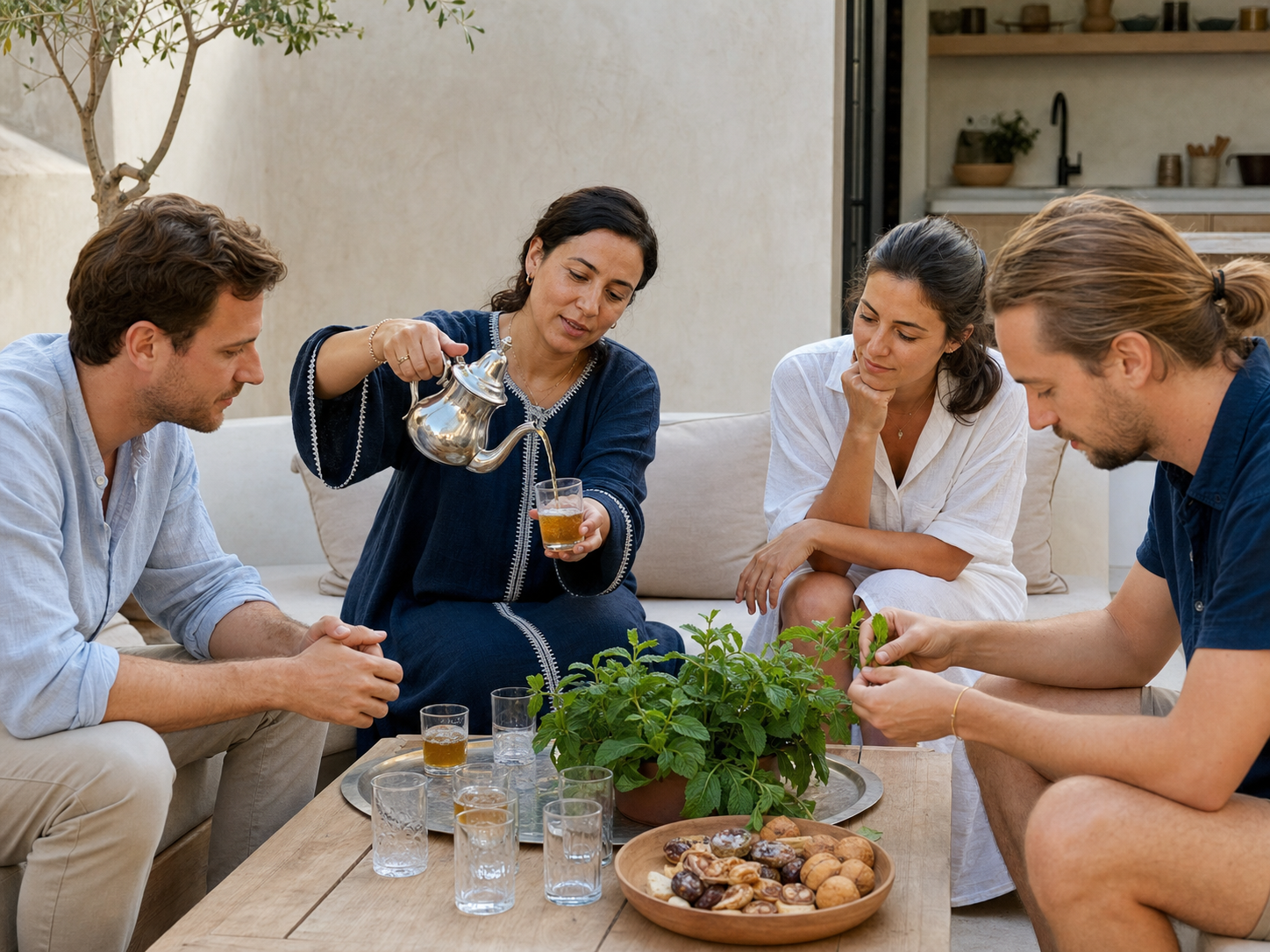
A Moroccan iftar follows a fixed structure. First: dates and milk (following the Prophetic tradition). Second: harira soup with chebakia and boiled eggs. Third: a main course (varies nightly — tagine, pastilla, briouats, grilled meat). Throughout: breads (harcha, msemen, baghrir), fresh juices, and mint tea. The meal is not eaten all at once; it unfolds over two or more hours as the family gathers.
Menu rotation ideas
The trick to thirty nights is rotating the third course while keeping the first two constant. Night 1: chicken pastilla. Night 2: lamb tagine with prunes. Night 3: fish chermoula. Night 4: kefta tagine with eggs. Night 5: vegetable briouats. Night 6: chicken rfissa. Night 7: couscous. Repeat with variations. The harira and chebakia remain every night — they are non-negotiable. Harira recipe.
The dishes of the occasion
The specific plates that belong to this moment in the Moroccan calendar.
Harira
The cornerstone: thick tomato-lentil-chickpea soup. Served every single night of Ramadan.
See the recipeBriouats
Fried pastry triangles filled with meat, cheese or almonds. A versatile iftar side.
See the recipeHarcha
Semolina griddle bread. Crisp outside, soft inside. The breakfast bread repurposed for iftar.
Frequently asked questions
How many courses is a Moroccan iftar?
Three, eaten over two or more hours: (1) dates and milk, (2) harira soup with chebakia, (3) a main course that varies nightly. Bread and tea flow throughout.
What is the most important dish at iftar?
Harira. It is non-negotiable. A Moroccan iftar without harira is not really an iftar. Chebakia is the second constant.