Hosting & hospitality
Corporate Retreat Cooking in Marrakech
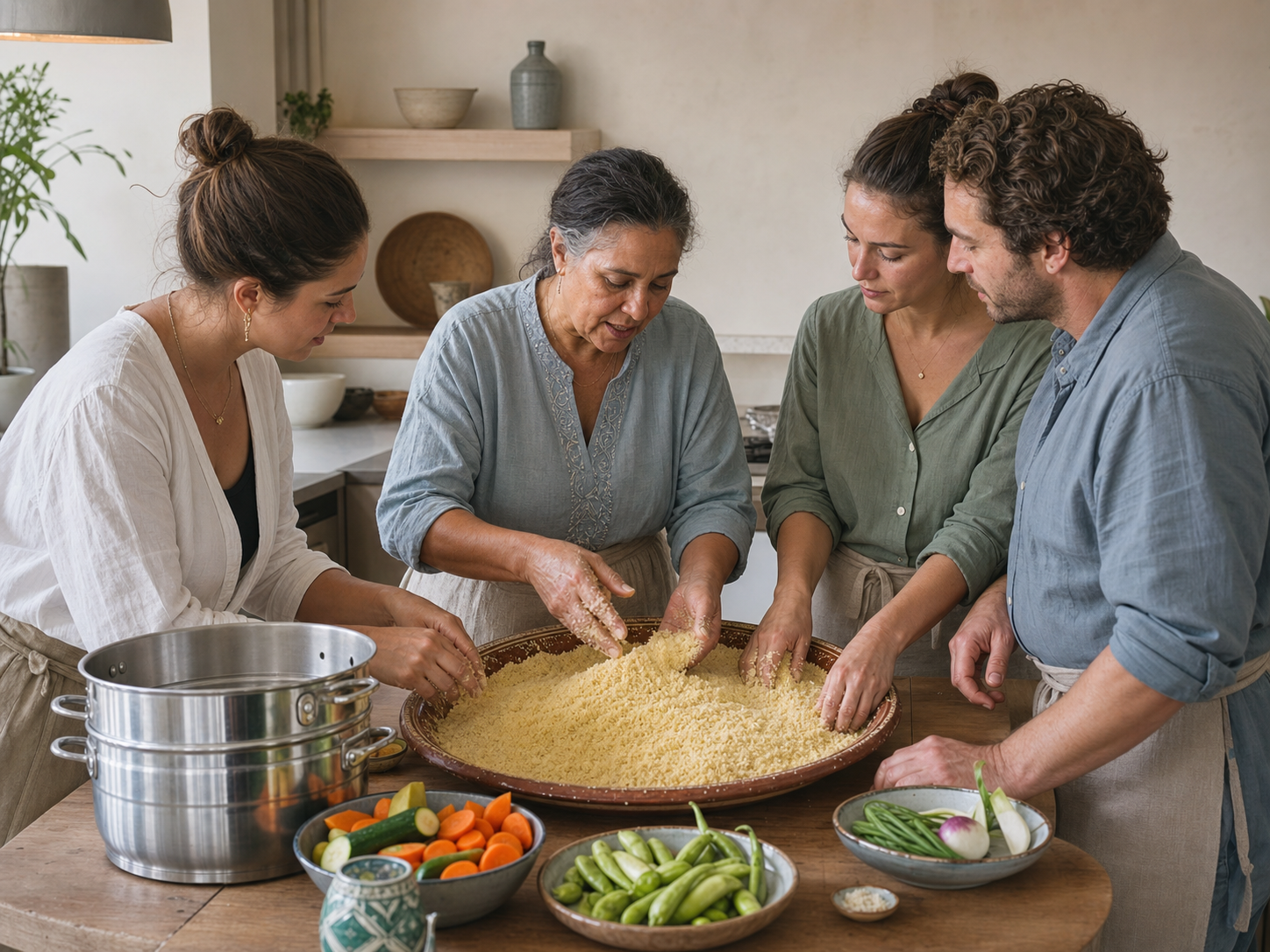
Marrakech has become a premier destination for corporate retreats, and a group cooking class is one of the strongest team-building activities on offer. It is collaborative by nature — you must communicate, divide tasks and work together — and it ends with the whole team eating a Moroccan feast they made from scratch. It is also cross-cultural, putting a team into an unfamiliar kitchen and market environment where everyone starts equal.
- Best for
- Teams of 8-30+
- Format
- Collaborative group cooking
- Duration
- 3-5 hours
- Outcome
- Shared Moroccan feast
At a glance
- Cooking classes are natural team-building: collaborative, communicative and cross-cultural.
- Schools can handle groups of eight to thirty or more with advance planning.
- Teams can compete (best tagine, best salad) or collaborate on a single feast.
- The shared meal at the end is a bonding moment that conference rooms cannot replicate.
Why cooking works for corporate teams
A cooking class puts a team into an unfamiliar environment where hierarchy matters less than collaboration. No one's job title helps them roll msemen dough or assemble a pastilla. People reveal different sides of themselves — the quiet colleague who turns out to be a confident cook, the leader who struggles with a tagine lid — and the result is genuine bonding that conference-room icebreakers rarely achieve.
The market visit adds a cultural dimension: navigating the souk together, bargaining for spices, making decisions as a group. And the shared meal at the end — eating what you have cooked, together, on a Marrakech rooftop — is a memory that lasts far longer than a PowerPoint presentation.
Format options for teams
Schools can structure the class to suit your team's goals.
- Team competition: sub-groups each cook a dish, then everyone votes on the best.
- Collaborative feast: the whole team works together on a multi-course meal.
- Market challenge: teams navigate the souk with a shopping list and a budget.
- Masterclass: a senior Moroccan cook leads a focused session on one technique (e.g. couscous).
- Farm-to-table: visit an organic garden before cooking with what you pick.
Logistics and booking
Contact cooking schools well in advance — corporate groups need larger kitchens and more advance planning than standard classes. Many schools partner with event coordinators who handle the full offsite. For groups of twenty or more, some venues offer outdoor setups in gardens or courtyards.
Pair the cooking class with a food tour on another day for a broader cultural immersion. For the team-meal traditions that inform the experience, see the Friday couscous tradition.
The dishes of the occasion
The specific plates that belong to this moment in the Moroccan calendar.
Moroccan salads
Divided among team members — each person makes a different salad.
Pastilla
A collaborative showpiece requiring multiple hands.
Frequently asked questions
How many people can a corporate cooking class accommodate?
Standard classes handle eight to fifteen. For larger groups (twenty to thirty-plus), schools can arrange dedicated venues with bigger kitchens, outdoor setups, or split the group into competing teams. Book well in advance for large parties.
How long does a corporate session take?
Three to five hours depending on format: a market visit adds time, as does a competition element. A streamlined session (cooking and eating only) runs about three hours; a full market-to-table experience with team challenges runs four to five.
Can you accommodate dietary restrictions?
Yes. Moroccan cuisine has strong vegetarian, vegan and gluten-free options. Inform the school of dietary requirements when booking and they will adapt the menu. Tagines, salads and couscous are naturally flexible.