Hosting & hospitality
Family Reunion Cooking in Marrakech
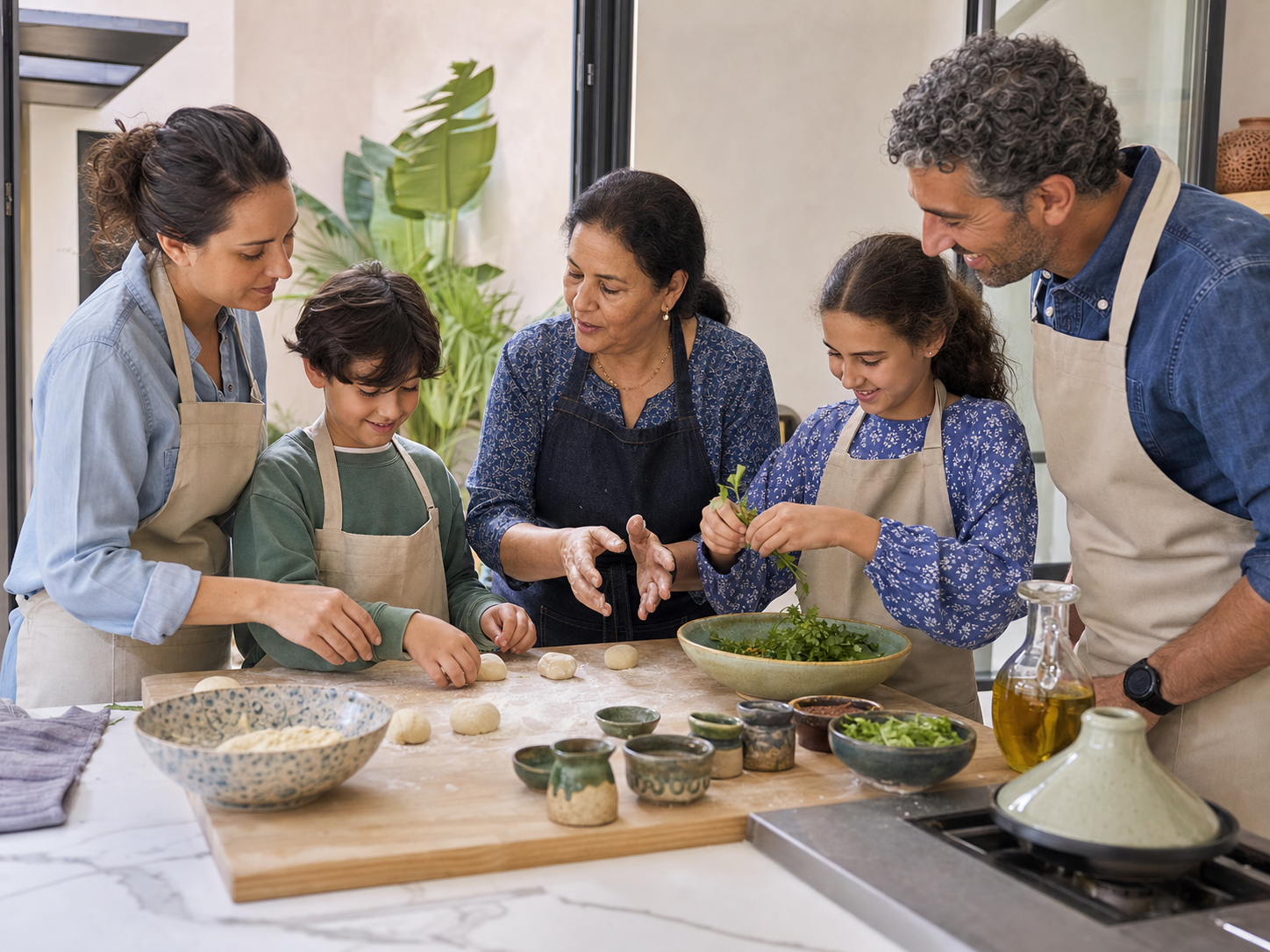
A family reunion is about bringing everyone together, and a cooking class does that in the most natural way possible. Grandparents, parents and children work side by side in a Marrakech kitchen — the youngest rolling dough, the eldest seasoning the tagine, everyone contributing to a shared meal. Moroccan food, with its communal platters and generous portions, is built for exactly this kind of gathering.
- Best for
- Multigenerational families
- Group size
- 6-20+
- Ages
- Children 5+ to grandparents
- Highlight
- Everyone cooks, everyone eats
At a glance
- Cooking classes naturally bridge generational gaps — everyone has a role.
- Moroccan communal dining (one platter, shared food) suits family gatherings perfectly.
- Schools can accommodate multigenerational groups with varied abilities.
- The shared meal at the end is the reunion moment itself.
Why cooking suits a family reunion
Cooking is the one activity that genuinely involves every age. Small children roll dough and stir. Teenagers handle the grill. Parents and grandparents season the tagine and share stories. The kitchen becomes a neutral ground where everyone works together toward a shared goal, and the conversation flows naturally. Moroccan cuisine helps: its communal eating style — everyone around one platter, eating from the same dish — mirrors the spirit of a reunion.
Many families find that the cooking class becomes the highlight of their trip — the activity everyone talks about afterward — because it created a moment of genuine togetherness.
What the family cooks together
A family reunion class divides tasks naturally across the group.
- Couscous: the communal dish — steamed by the group, shared from one platter.
- Tagine: one or two tagines, seasoned and assembled by the adults.
- Moroccan salads: each generation makes a different salad for the table.
- Pastries: children love shaping cookies and rolling dough.
- Mint tea: the closing ceremony, with the eldest often invited to pour.
Logistics for large families
Contact cooking schools directly with your family size, age range and any dietary needs. Most handle groups of eight to fifteen comfortably; larger families may need a venue with an outdoor kitchen or multiple cooking stations. Book well in advance, especially in peak season.
Pair the class with a family-friendly food tour on another day for a full food-focused reunion itinerary.
The dishes of the occasion
The specific plates that belong to this moment in the Moroccan calendar.
Moroccan salads
Each generation makes a different salad for the table.
Ghriba cookies
Easy to shape — perfect for children and grandparents alike.
Frequently asked questions
What ages can participate in a family cooking class?
Children from about five years old can participate with supervision. Tasks are adapted to age: small children roll dough and stir, teenagers grill, adults handle seasoning and knife work. Schools are experienced in managing mixed ages.
How many people can a family class accommodate?
Most schools handle eight to fifteen comfortably. For larger families of twenty or more, ask about venues with bigger kitchens or outdoor setups. Private sessions are standard for family groups.
Can you accommodate dietary restrictions within one family?
Yes. Moroccan cuisine has strong vegetarian, vegan and gluten-free options. Inform the school of all dietary needs when booking and they will adapt the menu so everyone eats together.