Plant-based · Medina & Gueliz
Vegan Food Tour of Marrakech
Moroccan cuisine is far more vegan-friendly than most visitors expect. The staple diet is built on grains, legumes, vegetables, olive oil and fruit — meat and dairy are valued precisely because they are not eaten at every meal. This tour navigates the Medina and Gueliz for the best plant-based eating in Marrakech, from the hearty lentil soups and vegetable tagines of the souks to the avocado smoothies and grain bowls of the Ville Nouvelle.
- Duration
- 2.5-3 hours
- Best time
- Late morning or late afternoon
- Pace
- Easy walking
- Area
- Medina & Gueliz
- Pickup
- Can be included in the quote
Overview
The foundation of Moroccan cooking is vegan by default. Bissara — a thick fava-bean soup drizzled with olive oil and cumin — is the national breakfast of the working class. Zaalouk, a smoky aubergine and tomato dip, is on every table. Vegetable tagines with seasonal produce (artichokes in spring, pumpkin in autumn, root vegetables in winter) are standard everyday eating, not a concession to dietary restrictions. The challenge for vegan visitors is not finding food but identifying which dishes contain hidden dairy or honey.
This tour maps the safest and most delicious vegan eating across the city. In the Medina, you taste bissara, zaalouk, taktouka (cooked pepper and tomato salad), olives, fresh bread, seasonal fruit and vegetable tagines — all naturally plant-based. In Gueliz, the route visits modern cafes that explicitly cater to vegan diners with smoothie bowls, grain salads and plant-milk lattes.
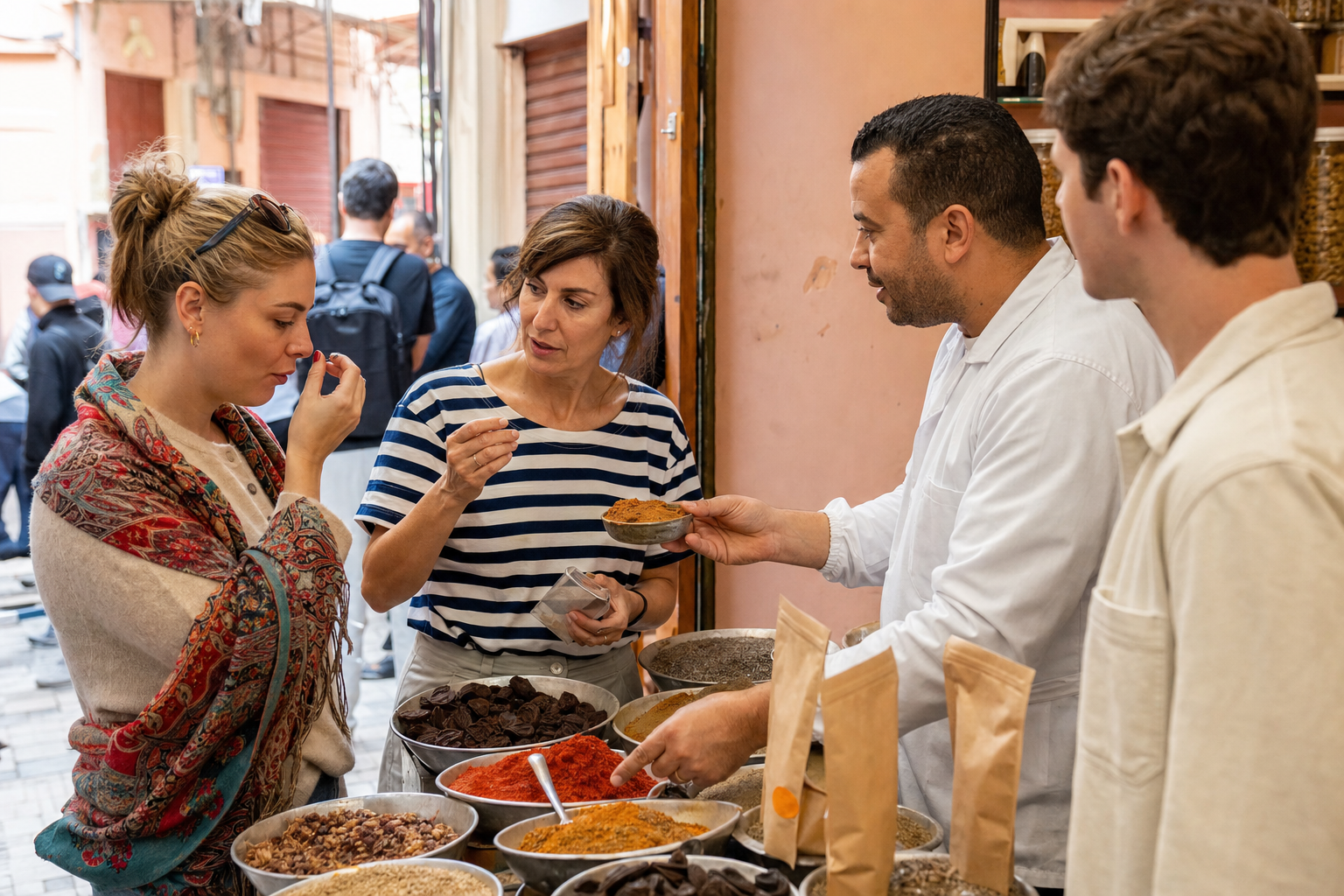
The guide handles the language barrier, checking ingredients in Darija and ensuring that no butter, ghee, honey or dairy has been added. This is the real value of a guided vegan tour: confidence that what you are eating is genuinely plant-based, without having to interrogate every vendor yourself.
What you'll taste
- Bissara — Thick fava-bean soup served in a bowl with a generous pour of olive oil, a shake of cumin and a sprinkle of paprika. Vegan, filling and deeply savoury.
- Zaalouk — Smoky roasted aubergine and tomato dip, served with bread. The charred flavour comes from cooking the aubergine directly over flame.
- Taktouka — Cooked pepper and tomato salad, sometimes with garlic and chilli. Another standard vegan dip eaten with bread.
- Vegetable tagine — A seasonal tagine of whatever is fresh: artichokes, courgettes, carrots, turnips, olives and preserved lemons, slow-cooked in olive oil.
- Olives and preserved lemons — The olive stalls are entirely plant-based. Preserved lemons are just lemons and salt, aged for weeks — a flavour bomb.
- Fresh fruit and juice — Oranges, pomegranates, prickly pear, dates and figs, depending on season. Juice stalls blend them to order.
- Amlou (argan butter) — Check that the version you are offered uses date syrup rather than honey. When made with date syrup, amlou — argan oil, almonds and sweetener — is a rich vegan spread.
The route
-
A bissara cart
Start at a morning bissara vendor near Bab Taghzout or in the Mellah. The thick green soup is ladled into a bowl and finished with oil and spice in front of you.
-
Souk Ableuh (olive souk)
Taste olives and preserved lemons — everything here is plant-based. Buy a bag of your favourites.
-
Vegetable tagine counter
A small Medina restaurant that serves vegetable tagines alongside the meat versions. The guide confirms no butter or animal stock has been used.
-
Bread oven (ferran)
Standard Moroccan khobz is flour, water, yeast and salt — vegan. Watch it come out of the oven and eat it warm with zaalouk or taktouka.
-
Dried-fruit and nut stalls
Dates, figs, almonds, walnuts and argan oil — all vegan, all sold loose from open sacks. A natural energy boost mid-tour.
-
Gueliz vegan-friendly cafe
Cross into the Ville Nouvelle for a smoothie bowl, a grain salad or a plant-milk coffee at one of Gueliz's modern cafes that cater to dietary preferences.
When to go & what it costs
Late morning is best for bissara (the vendors start early and run until the pot is empty) and the vegetable tagine counters (which peak at lunchtime). Late afternoon works if you want to start with the Gueliz cafe and work back into the Medina for an evening tagine. Avoid early morning for Gueliz stops, as the cafes open later than the Medina stalls.
Cost & cash: Vegan street food is among the cheapest eating in Marrakech. Guided vegan tours are priced similarly to standard food walks.
Insider tips
- Learn the Darija phrase 'bla lahm, bla hlib, bla zibda' (no meat, no milk, no butter) — it clarifies your needs instantly.
- Honey is used in many Moroccan sweets and some savoury dishes. If you avoid honey, ask specifically — most guides will check but not all vendors distinguish it from date syrup.
- Bring a reusable container if you want to take olives, preserved lemons or amlou back to your accommodation.
- Gueliz cafes are more accustomed to vegan requests than Medina stalls, but the Medina food is more interesting and often naturally vegan without needing to ask.
Etiquette & how to eat like a local
- Do not lecture vendors about veganism — simply state your needs and let the guide handle the communication. Moroccan food culture has its own logic and history around plant-based eating.
- If a vendor offers you something with dairy or honey by mistake, decline politely. Most vendors are happy to swap for a plant-based option.
- Taste-before-buying at olive and dried-fruit stalls is expected. The stalls are entirely vegan.
- Thank the cook in Arabic or French — the effort to accommodate you deserves acknowledgment.
Frequently asked questions
Is Moroccan food generally vegan-friendly?
More so than most visitors expect. The daily diet of most Moroccans is heavily plant-based: bread, legumes, vegetables, olive oil and fruit. Meat is eaten but not at every meal. The main items to watch for are butter (smen), dairy and honey in sweets.
Can I find vegan food at Jemaa el-Fnaa?
Yes, but it requires selectivity. The vegetable tagines, harira, salads and fruit stalls are vegan or easily adapted. The snail soup, grilled meats and many pastries are not. A guide helps navigate the options efficiently.
Are there dedicated vegan restaurants in Marrakech?
A handful in Gueliz and the new town, and a growing number of Medina restaurants that offer vegan menus alongside traditional ones. The scene is small but growing, especially among younger Marrakchi chefs.
What about vegan Moroccan pastries?
Traditional Moroccan pastries almost always contain butter and sometimes honey. Some modern patisseries in Gueliz offer vegan versions using plant-based fats and date syrup. The guide can direct you to the right shop.
Cook what you tasted
Loved something on the walk? Take it home. Learn the dish hands-on with a Marrakech chef, or follow a free step-by-step recipe.