Food + photography · Medina & souks
Photography Food Tour of Marrakech
Marrakech is one of the most photogenic food cities on earth: pyramids of saffron and paprika, steam rising from copper tagine pots, oil glistening on a griddle of msemen, the geometry of a zellige-tiled cafe counter. This tour is designed for people who want to eat well and photograph brilliantly, timing each stop for the best light and choosing locations where the visual drama matches the flavour. You taste everything you shoot.
- Duration
- 3-3.5 hours
- Best time
- Morning golden hour or late afternoon
- Pace
- Moderate, with photo pauses
- Area
- Medina & souks
- Pickup
- Can be included in the quote
Overview
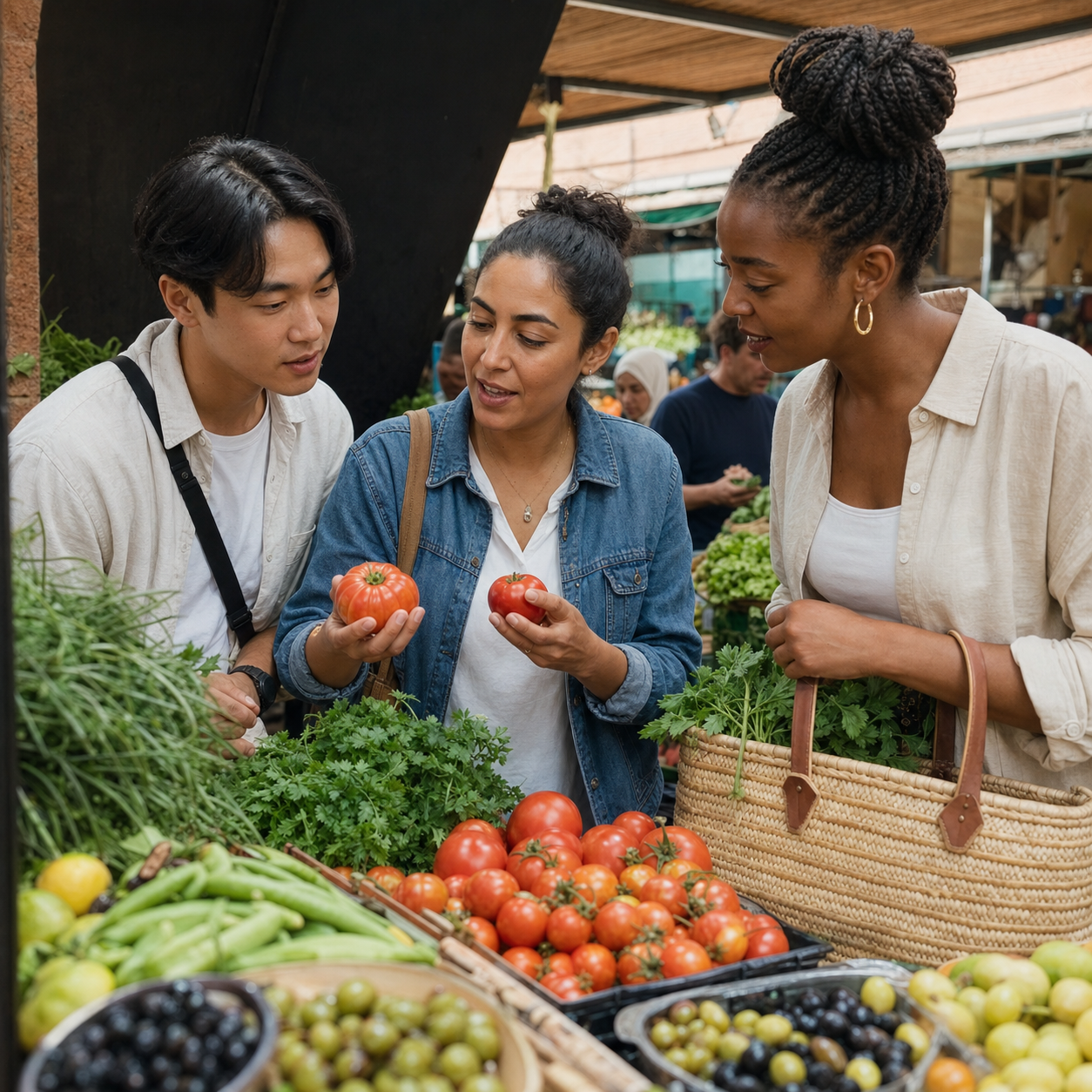
A photography food tour is a food tour first: you eat everything you see, and the tastings are substantial. But the route, timing and stop selection are optimised for the camera as well as the palate. Morning light in the covered souks creates shafts of gold that turn a spice pyramid into a still life. Late-afternoon sun hitting a copper tagine pot throws warm reflections onto the wall behind it. Steam from a harira pot backlit by a doorway becomes a photograph that tells the whole story of Moroccan food culture in one frame.
The guide knows where the light falls at each hour and sequences the stops accordingly: morning starts at the spice square when the sun angles through the awnings, moves to the bread ovens where flour dust catches the light, pauses at a juice stall where the oranges glow, and finishes at a rooftop cafe where the city panorama provides a natural backdrop for a final tea portrait.
You do not need professional equipment. A phone camera is fine — what matters is timing and position, which the guide provides. But if you bring a DSLR or mirrorless camera, the guide can advise on settings for tricky light conditions: dark souk interiors, contrasty midday sun, and the mixed warm-cool light of a lantern-lit evening stall.
What you'll taste
- Spice pyramids at Rahba Kedima — Taste cumin, ras el hanout and dried rosebuds while photographing the most iconic spice displays in the city.
- Msemen on the griddle — The act of cooking msemen — folding, pressing, flipping — is as photogenic as the finished bread. Eat it hot with honey.
- Tagine with steam — A tagine lifted at the table produces a cloud of fragrant steam. The photo opportunity lasts about three seconds; then you eat.
- Fresh orange juice being pressed — The halved oranges on the press, the stream of juice, the colourful pyramid of whole fruit — juice stalls are reliably photogenic.
- Olive and pickle pyramids — The colour contrast of green, black and purple olives with pink pickled turnips makes a striking still-life. Taste after shooting.
- Moroccan pastry display — Rows of golden cornes de gazelle, powdered ghriba and syrup-drenched chebakia in a glass case. The geometry is irresistible.
- Mint tea pour — The long pour from height is the signature Moroccan photo moment. Ask the server to pour slowly and position yourself at eye level.
The route
-
Rahba Kedima (spice square)
Start here when the morning light angles through the awnings and hits the spice pyramids. The vendors are used to photographers and will often arrange their display for you if you ask politely and buy something.
-
Souk Semmarine (covered souk)
The shafts of light through the lattice roof create dramatic chiaroscuro. Walk slowly and look for food vendors framed by the light.
-
A bread oven (ferran)
The flour dust, the glow of the oven, the baker's hands — a communal bread oven is intensely atmospheric. Ask permission before shooting inside.
-
A griddle cart
Position yourself so the steam and oil catch the backlight. The cook's hands folding msemen are the hero of this shot.
-
Olive and pickle stalls
The geometry of the pyramids and the colour range demand a wide shot and a macro detail. Taste as you compose.
-
Rooftop cafe
Finish on a rooftop for the panorama: the Koutoubia minaret, the Atlas Mountains, and your glass of mint tea as a foreground subject.
When to go & what it costs
The first two hours after sunrise and the last two hours before sunset produce the best light. A morning start catches the spice square at its most dramatic; a late-afternoon start gives you golden-hour rooftop shots. Midday is flat and harsh in the open but creates interesting contrast in the covered souks. The guide adjusts the route based on the season and the weather.
Cost & cash: Priced similarly to standard guided tours, sometimes with a small premium for a guide who understands photography composition and timing.
Insider tips
- Always ask before photographing a person or their stall. A smile, a greeting in Arabic, and buying something almost always gets you a yes.
- Shoot first, eat second at each stop — the food looks best in the first few seconds after it is served or uncovered.
- A phone with portrait mode handles the shallow depth-of-field work well. If using a camera, a 35mm or 50mm lens is most versatile in the narrow lanes.
- Back up your photos to the cloud at each wifi stop; losing a day of Marrakech food photography would be painful.
- Wear neutral clothing so you do not reflect colour onto the food in close-up shots.
Etiquette & how to eat like a local
- Never photograph children without their parents' explicit permission. In the souks, many vendors will say yes but some will say no — respect both answers immediately.
- Do not block a stall's customers while composing a shot. Step aside, let the transaction happen, then resume.
- If a vendor says no photos, put the camera away without argument. Some religious or cultural reasons are private and not your business.
- Buy something at every stall you photograph. The implicit deal is: you get a photo, they get a sale.
Frequently asked questions
Do I need a professional camera?
No. A modern phone camera produces excellent food and street photos. What matters is timing, light and composition, which the guide provides. A phone is also less intrusive in the souks, which means more natural shots.
Can I use the photos commercially?
Photos of food, stalls and architecture are generally fine for personal and editorial use. Photos of identifiable people require their consent for any use, commercial or otherwise. The guide can help you navigate model-release conversations if needed.
Is this tour suitable for beginners?
Yes. The guide explains basic composition, light direction and timing in simple terms. You do not need to know anything about photography in advance — just bring curiosity and a charged phone or camera.
What about drone photography?
Drone use in the Marrakech Medina is prohibited. Even outside the Medina, Moroccan drone regulations require a permit. Leave the drone at home and work with what is in front of you — the souks are more interesting at eye level anyway.
Cook what you tasted
Loved something on the walk? Take it home. Learn the dish hands-on with a Marrakech chef, or follow a free step-by-step recipe.