Taste then cook · Medina markets & a riad kitchen
Food Tour and Cooking Class Combo
The best way to understand Moroccan food is to taste it in the streets and then cook it yourself. This combo experience starts with a guided food walk through the Medina markets — tasting, shopping, learning about ingredients — and ends in a riad kitchen where you prepare a multi-course Moroccan meal using what you bought. You leave with a full stomach, a set of recipes and the muscle memory of rolling couscous, folding pastilla and balancing a tagine.
- Duration
- 4.5-5.5 hours total
- Best time
- Morning start (9-10am)
- Pace
- Moderate — walking then cooking
- Area
- Medina markets & a riad kitchen
- Pickup
- Can be included in the quote
Overview
A food tour shows you what Moroccan food tastes like. A cooking class teaches you how it works. The combo does both in sequence, and the connection between market and kitchen — choosing your own vegetables at a souk stall, then cutting them for your own tagine an hour later — is what makes the learning stick.
The tour portion takes about two hours and follows the market route: spice stalls for ras el hanout, olive sellers for preserved lemons, vegetable vendors for seasonal produce, a butcher for meat if needed. The guide explains what to look for, how to judge freshness, and how to negotiate (though prices for food are mostly fixed). You carry your ingredients in a basket to the cooking class venue.
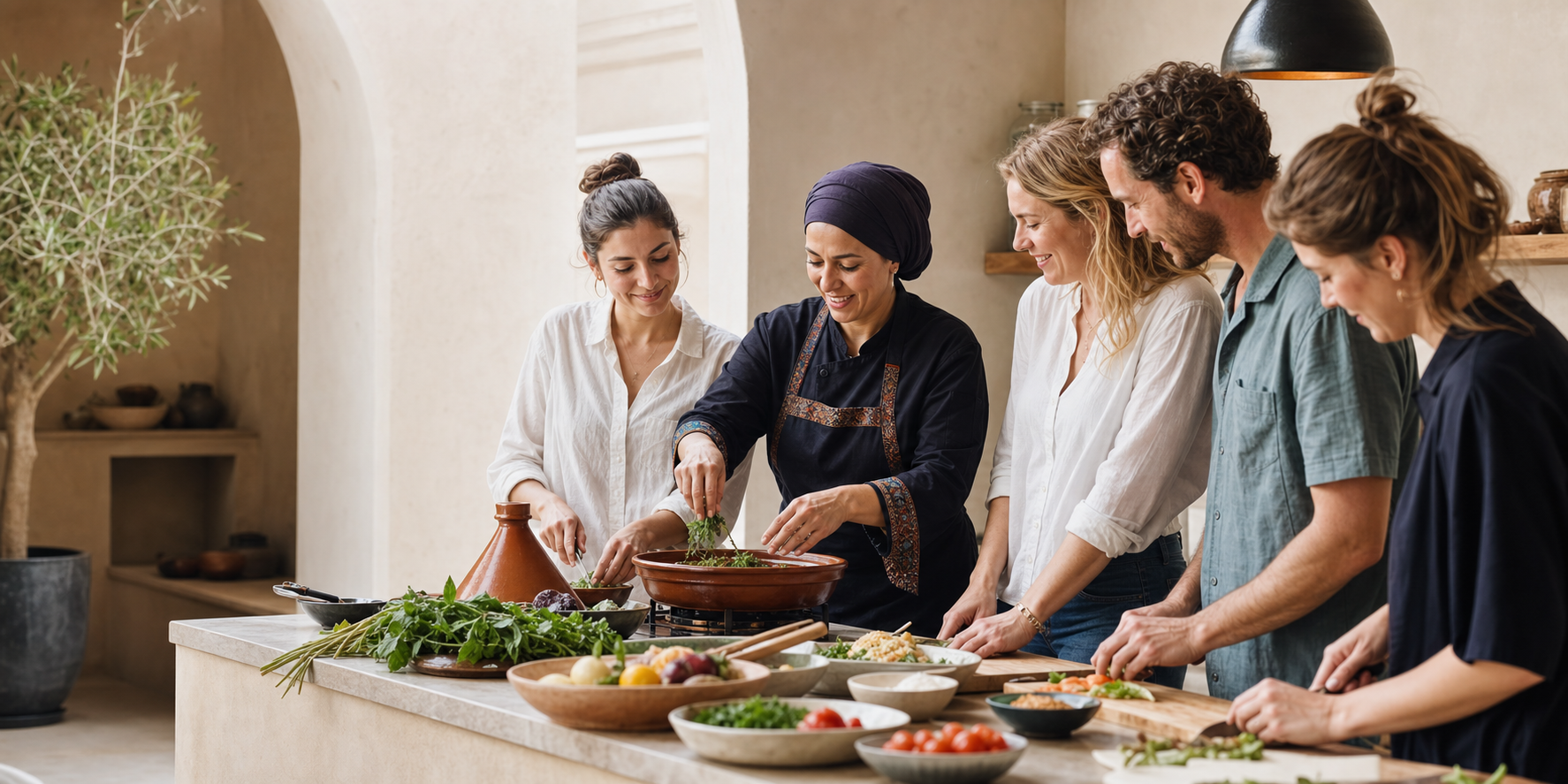
The cooking class takes another two and a half to three hours and covers a full Moroccan meal: typically a salad course (zaalouk or taktouka), a main (tagine, pastilla or couscous), and a dessert or tea. You cook in a traditional riad kitchen alongside other guests, guided by a cook who explains techniques, spice ratios and the cultural context of each dish. At the end, you sit down and eat what you made.
What you'll taste
- Market tastings during the tour — Spices, olives, bread, fresh juice and dried fruit tasted as you shop for your cooking ingredients.
- Zaalouk or taktouka (you cook it) — A salad course prepared from scratch: roasting aubergine or peppers, combining with tomato, seasoning with cumin and paprika.
- Tagine (you cook it) — A slow-cooked tagine assembled in a traditional earthenware pot: layering vegetables, meat or legumes, and spices.
- Hand-rolled couscous (you cook it) — If the class includes couscous, you learn the traditional hand-rolling technique — steaming the grain three times until it is light and fluffy.
- Moroccan bread (you bake it) — Kneading, shaping and baking khobz in the class kitchen. You eat it warm with your salad course.
- Mint tea (you brew it) — The class finishes with the tea ceremony: how to brew, how much sugar, and the long pour from height.
The route
-
Meeting point near the souks
The guide meets you at a central Medina location — near Jemaa el-Fnaa, the Mouassine fountain or your riad — and begins the market walk.
-
Spice stalls
Your first shopping stop: buying ras el hanout, cumin, paprika, turmeric and saffron for the recipes you will cook.
-
Vegetable and fruit vendors
Selecting seasonal vegetables, herbs and lemons for the tagine and salad courses. The guide helps you choose and negotiate.
-
Olive and preserved-lemon sellers
Buying preserved lemons and olives for the tagine. Tasting as you shop is expected and encouraged.
-
Bread oven or bakery
A brief stop to pick up fresh bread or to watch the baking process before you attempt it yourself in the class.
-
The riad kitchen
Arrive at the cooking class venue with your ingredients. Wash hands, tie on an apron, and the cooking begins.
-
The dining table
After cooking, sit down in the riad courtyard or salon and eat the meal you prepared. Tea and pastries finish the experience.
When to go & what it costs
Morning starts work best. Begin the market tour at 9 or 10am, shop for about two hours, arrive at the kitchen by noon, cook for two and a half hours, and sit down to eat your meal by 2:30 or 3pm. Afternoon starts are possible but the market vendors begin packing up by early afternoon and the best produce is gone. Some venues offer an evening combo: a sunset market walk followed by a dinner cooking class.
Cost & cash: Higher than a standalone food tour because it includes a full cooking class, ingredients and a sit-down meal at the end. Good value when compared to booking each separately.
Insider tips
- Wear clothes you do not mind getting splashed with olive oil or tomato — cooking is hands-on and aprons only cover so much.
- Bring a notebook or take photos of the recipes during the class. Most venues provide a printed recipe card, but your own notes capture the tips the cook mentions casually.
- If you have dietary restrictions, tell the venue at booking — the recipes can be adapted to vegetarian, vegan or allergy-safe versions.
- Do not eat a big breakfast. The market tastings and the cooked meal together are very filling.
- Ask the cook questions throughout. The best classes are conversations, not demonstrations.
Etiquette & how to eat like a local
- Arrive on time for the market walk. The guide is coordinating with the cooking class venue, and a late start compresses the whole schedule.
- In the market, let the guide handle the purchasing. They have relationships with specific vendors and get fair prices.
- In the kitchen, clean as you go and share the workspace with other guests. Cooking is communal in Morocco.
- Compliment the cook and the food sincerely — you are in someone's kitchen, often their home, and the effort is personal.
Frequently asked questions
Do I need cooking experience?
None at all. The classes are designed for beginners and the cook guides you through every step. If you can chop a vegetable and stir a pot, you can do this class. Experienced cooks will appreciate the spice-balancing and technique details.
What do I take home?
Recipes (printed or emailed), the spices you bought at the market (most guides help you buy a personal supply), and the skills to recreate the dishes. Some venues also give a small gift like a spice packet or a tagine pot.
Can children participate?
Yes. Children as young as five can help with simple tasks like washing vegetables, kneading bread and stirring. The cook adapts the tasks to the age. It is a popular family activity.
How does this compare to booking a food tour and a cooking class separately?
The combo is usually cheaper than separate bookings and more coherent: you shop for the ingredients you will cook, which creates a narrative thread from market to kitchen to table. Separate bookings work if you want different days or different areas.
Is the cooking class in a professional kitchen or a home?
It varies. Some venues use a dedicated teaching kitchen in a riad; others are in the cook's own home kitchen. Both formats work well. The home kitchens tend to be more intimate and atmospheric; the professional kitchens have more counter space and better equipment.
Cook what you tasted
Loved something on the walk? Take it home. Learn the dish hands-on with a Marrakech chef, or follow a free step-by-step recipe.