- guides
- recipes
- best
Moroccan Food for Special Diets: Gluten-Free, Dairy-Free and Allergy Guide
Moroccan food is naturally friendly to many dietary needs — tagines are often gluten-free, many dishes are dairy-free by default, and vegetable-forward salads dominate the meze course. But there are hidden traps: couscous contains gluten, amlou contains nuts, and cross-contamination in a busy souk kitchen is real. This guide maps the landscape for anyone with a dietary restriction.
- Read
- 8 min
- Updated
- 23 July 2026
- Sections
- 4
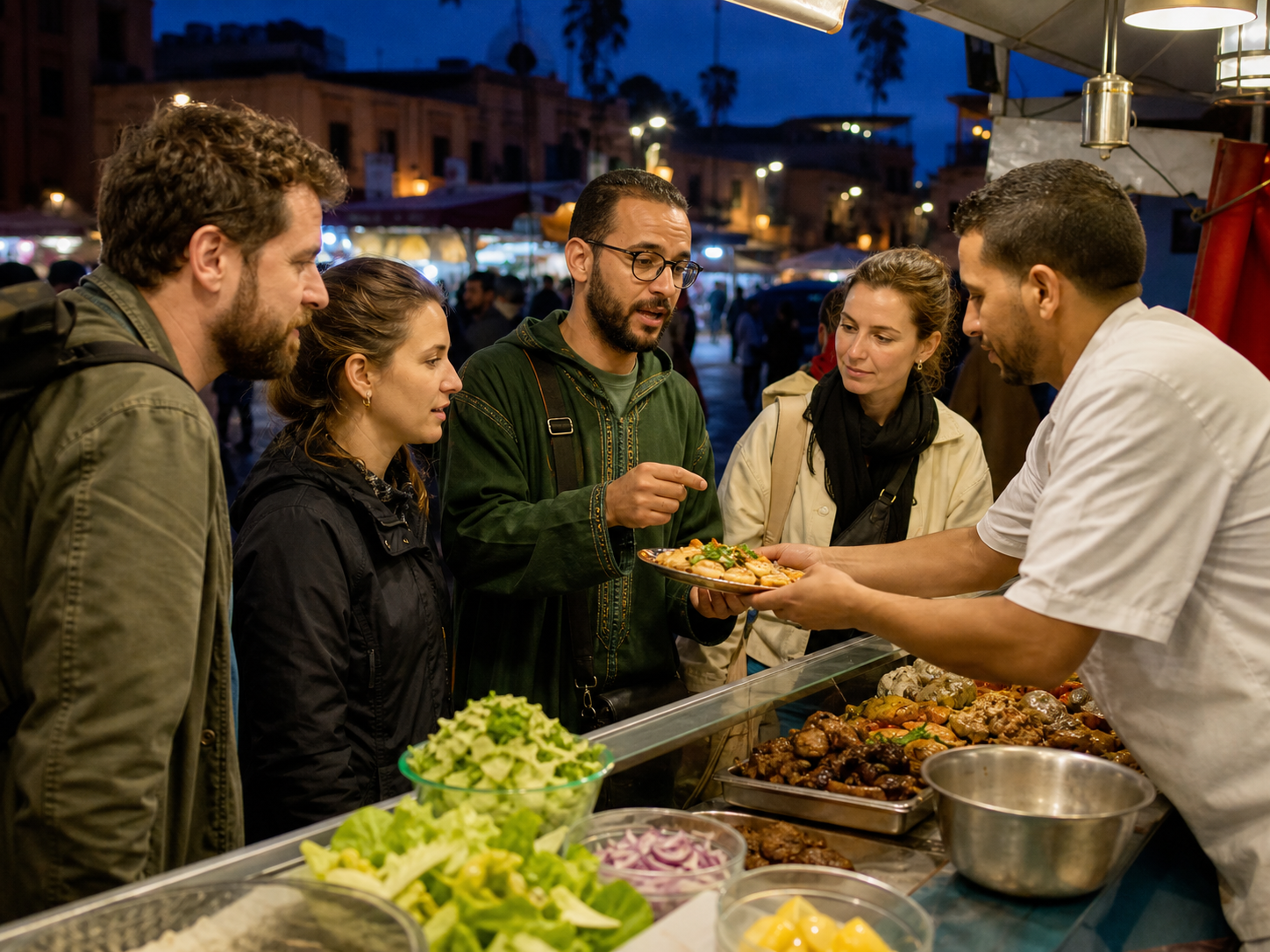
Gluten-free Moroccan food
Good news: the most iconic Moroccan dish — the tagine — is naturally gluten-free. Tagines are slow-cooked stews thickened by reduction, not flour. Chicken tagine with preserved lemon, lamb with prunes, and kefta tagine are all safe.
Bad news: couscous, Morocco's other signature, is wheat semolina. Bread (khobz) is at every meal. Pastilla uses thin wheat pastry. Briouats are fried in wheat wrappers. Ask for tagine with rice instead of couscous — most riads can accommodate this.
- Safe: tagines, zaalouk, taktouka, harira (check for noodles), grilled meats, salads
- Avoid: couscous, bread, pastilla, briouats, chebakia, msemen, baghrir (wheat-based)
- Ask: harira may contain vermicelli noodles — some versions are broth-only
Dairy-free Moroccan food
Most Moroccan cooking uses olive oil, not butter — except in pastry. Tagines, salads, grilled meats, and most soups are dairy-free by default. Mint tea traditionally uses sugar, not milk.
Watch for: msemen (contains butter), some pastry fillings (cream cheese), and hotel-buffet sauces that may add cream for tourist palates. Traditional home cooking is almost entirely dairy-free.
Nut allergies in Morocco
This is the hardest restriction. Almonds are everywhere: in amlou, in pastilla, in pastries (kaab el ghazal, ghriba), in bastilla, and sometimes ground into tagine sauces. Argan oil comes from a nut-like kernel. Peanuts appear in some street snacks.
If you have a severe nut allergy, carry an allergy card in French and Arabic, and ask at every restaurant. Simple tagines and grilled meats are generally safe, but always confirm.
How to communicate dietary needs
French is widely spoken in Marrakech tourism. Key phrases: 'sans gluten' (gluten-free), 'sans produits laitiers' (dairy-free), 'allergie aux noix' (nut allergy), 'je suis végétarien/ne' (I am vegetarian). In Arabic: 'ana 3andi hassasiya men...' (I am allergic to...).
Riad hosts and cooking class instructors are the most accommodating. Street food vendors cannot adapt — you must choose items you know are safe.
Frequently asked questions
Is Moroccan food safe for coeliacs?
Many dishes are naturally gluten-free (tagines, salads, grilled meats), but wheat is at every meal in the form of bread and couscous. Cross-contamination in shared kitchens is likely. Carry gluten-free bread and communicate clearly.
Can I do a cooking class with dietary restrictions?
Yes. Most cooking classes can adapt: gluten-free tagine, nut-free pastry alternatives, vegan options. Book in advance and specify your needs.