- culture
- guides
Moroccan Food Etiquette: How to Eat, Share, and Show Respect
Moroccan food etiquette is generous, not rigid. Your hosts will forgive almost any mistake because the culture values the guest above the protocol. But knowing the basics — eating with your right hand, accepting tea, not wasting bread — shows respect and deepens the experience. These are the unwritten rules.
- Read
- 7 min
- Updated
- 23 July 2026
- Sections
- 5
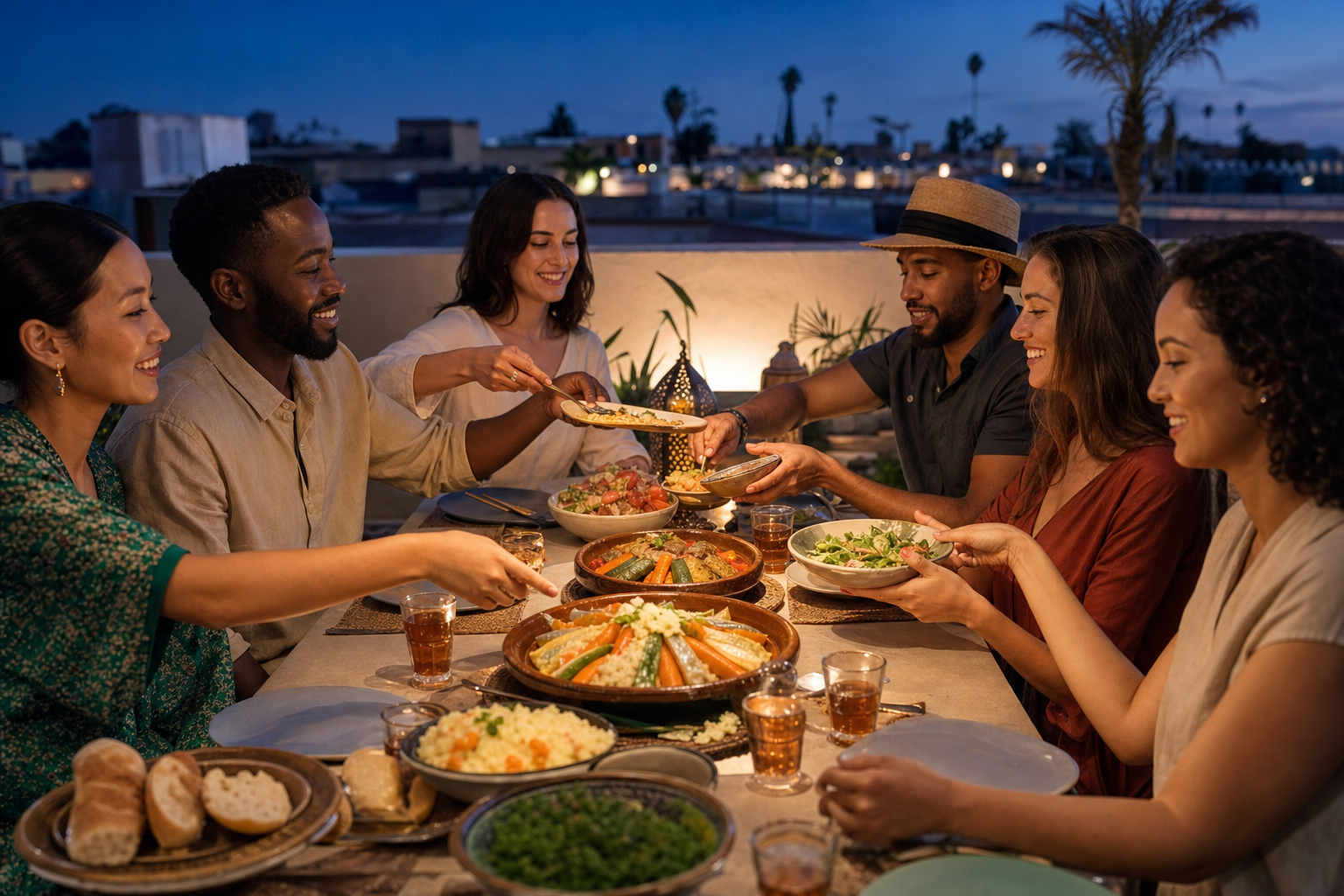
Eating with your right hand
In traditional Moroccan dining, food is eaten with the right hand (the left is considered unclean in Islamic culture). Use bread as a utensil: tear a piece with your right hand, fold it around a morsel of tagine or salad, and eat. No one will be offended if you use a fork — especially at restaurants and riads — but learning the bread technique is part of the experience.
When eating from a communal dish (standard at home meals), eat only from the section of the dish directly in front of you. The host may push choice pieces of meat toward you — accept them.
Bread: the sacred utensil
Bread has spiritual significance in Morocco. Never throw bread away, never put it on the floor, and never cut it with a knife (tear it by hand). Leftover bread is given to animals, not discarded. If you drop bread, pick it up.
At restaurants, bread is unlimited and free. At homes, the host decides when more bread is needed.
The mint tea ritual
When offered tea, accept. It is a gesture of welcome, not a casual offer. The host pours; you do not pour your own. Wait for the host to serve before drinking. Three glasses is traditional — the first is gentle, the second is strong, the third is bitter (though in practice all three are sweet).
If you truly cannot drink (you are in a rush, you have a medical reason), explain kindly. The host will understand. But do not refuse simply because you are not thirsty.
When invited to a Moroccan home
Remove your shoes at the door. Bring a gift: pastries (from a patisserie), sugar cones, or fruit. Do not bring alcohol unless you know the household drinks. Expect to eat more than you wanted — the host will insist, and refusing food is awkward. Eat slowly and pace yourself.
Say 'bismillah' before eating (in the name of God) and 'hamdulillah' after (praise be to God). Even non-religious Moroccans use these phrases at meals.
Tipping customs
Tipping is expected but modest. At restaurants: 10-15% or round up to the nearest 10 MAD. At cafes: leave the coin change. For cooking classes and food tours: 50-100 MAD per person for an excellent guide. For street food: no tip expected, but rounding up is appreciated.
Frequently asked questions
Is it rude to eat with my left hand in Morocco?
In traditional settings, yes — the left hand is considered unclean. In tourist restaurants and modern settings, no one will notice. When eating from a communal dish at a home meal, use your right hand.
Do I have to eat everything on my plate?
No, but leaving a completely full plate suggests the food was bad. Eat what you can. The host's job is to offer more than you can eat; your job is to eat generously and praise the cooking.