- guides
- dishes
- cities
Moroccan Food by Region: How Cuisine Changes Across Morocco
Morocco stretches from the Mediterranean to the Sahara, and its food changes with the geography. Coastal cities eat fish and chermoula; mountain villages cook berber tagines with foraged herbs; Fez has the most refined pastry tradition; Marrakech is the capital of spiced tagines; and the desert south preserves meat because nothing else survives the heat. Understanding these differences turns a generic 'Moroccan food' experience into a regional education.
- Read
- 9 min
- Updated
- 23 July 2026
- Sections
- 5
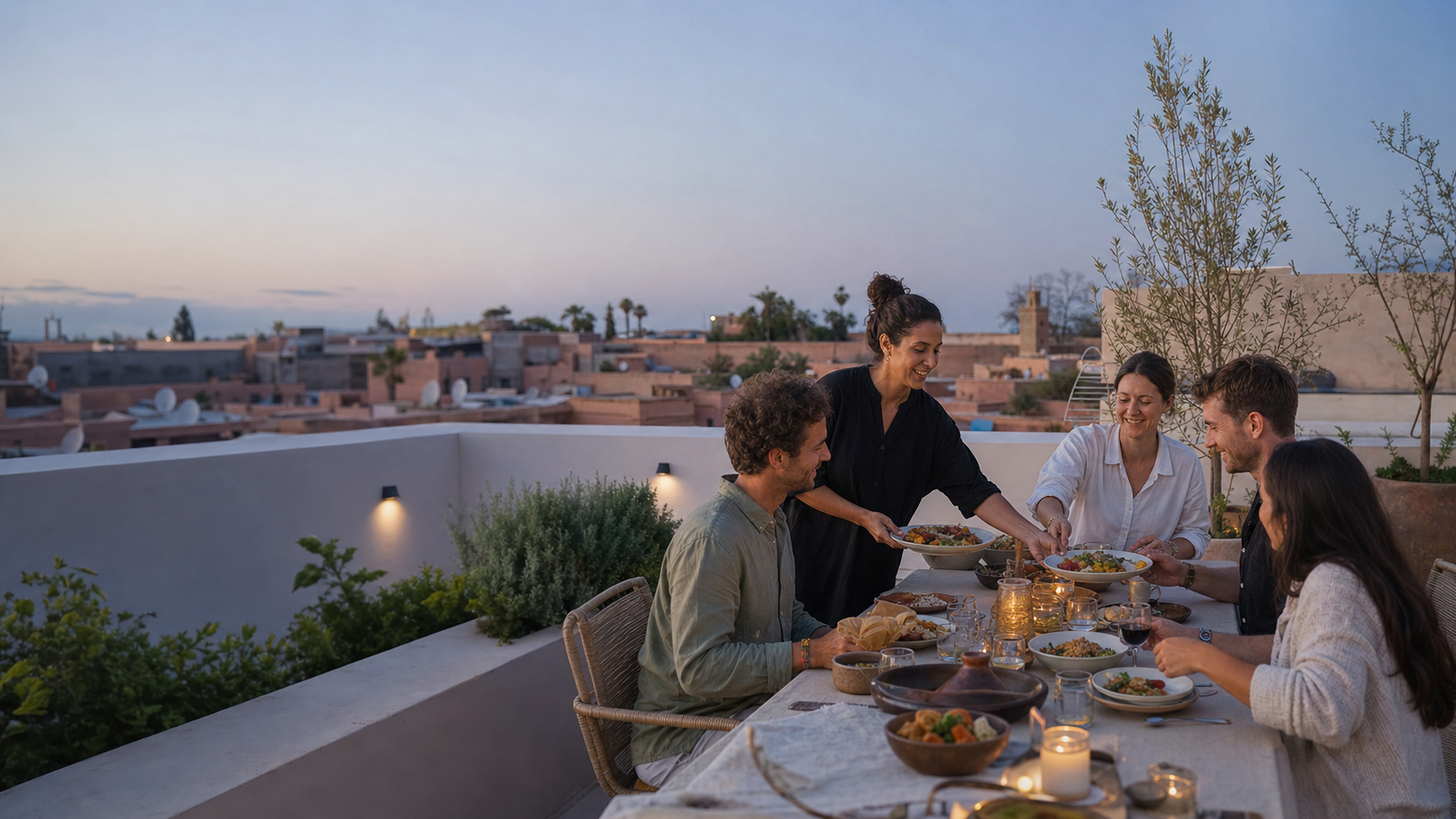
Marrakech: the spice capital
Marrakech food is defined by spice, variety and theatre. The city's position as a trade crossroads brought spices from sub-Saharan Africa, the Middle East and India, and its cooking uses more of them than any other Moroccan city. Ras el hanout originated here. The Jemaa el-Fna food stalls are the city's edible showroom.
Signature dishes: tangia (the bachelor's pot, slow-cooked in hammam furnaces), tagines with complex spice blends, and the full street-food ecosystem from msemen to snails.
Fez: the refined kitchen
Fez is considered Morocco's culinary capital for fine dining and pastry. Fassi cuisine is the most complex and labour-intensive: pastilla (the layered pigeon or chicken pie with almonds and cinnamon sugar) is a Fez invention. The city's pastry tradition — kaab el ghazal, briouats, m'hanncha — is the most elaborate in the country.
Fez also has distinct tagine variations: beef with quince, lamb with artichokes, and chicken with green olives and preserved lemon in a richer sauce than the Marrakech version.
The coast: Essaouira, Casablanca, Tangier
Coastal Morocco eats fish. Essaouira's port grills sardines, sea bream and prawns over charcoal minutes after the boats come in. Casablanca has the most diverse restaurant scene. Tangier's food shows Spanish and Andalusian influence: tapas-style sharing, olive oil-heavy cooking, and a tradition of seafood pastilla.
Chermoula — the herb-and-spice marinade for fish — is the defining flavour of coastal Moroccan cooking. It rarely appears inland.
The mountains: berber cooking
Atlas Mountain cooking is simple, seasonal and based on what grows at altitude: barley couscous (not wheat), foraged herbs (wild thyme, oregano, lavender), goat meat, walnuts, honey. Tagines are cooked over wood fires and the flavour is smokier and more austere than lowland versions.
The berber omelette — eggs with tomatoes, peppers and herbs, cooked in a tagine — is a mountain staple and one of the most satisfying simple meals in Morocco.
The south and desert: preservation and dates
Southern Morocco and the oasis towns (Zagora, Erfoud, Rissani) revolve around dates, preserved meat (khlii), and survival cooking. The heat demands preservation: meat is salted, dried and packed in fat. Dates are the currency and the dessert.
Madfouna — the 'Berber pizza', a stuffed bread baked in sand — is a desert speciality from the Draa Valley. It is filled with meat, onions and spices and cooked underground.
Frequently asked questions
Which city has the best food in Morocco?
Fez for refined dining and pastry, Marrakech for variety and street food, Essaouira for seafood, and the Atlas for rustic berber cooking. There is no single answer — each region excels at different things.
Is food in Marrakech different from food in Fez?
Yes. Marrakech uses more spices and has a stronger street-food culture. Fez has more elaborate pastry, richer tagines, and is considered the origin of pastilla. Both are excellent.