- best
- neighbourhoods
- guides
Marrakech Food Photography: Where to Eat for Instagram-Worthy Shots
Marrakech is one of the most photogenic food cities in the world. The colours — saffron yellow, paprika red, mint green, olive oil gold — are built into the cuisine. The settings — riad courtyards, rooftop terraces, market stalls with pyramids of spices — require no staging. This guide maps the most visually striking food experiences in Marrakech and the practical details (time of day, lighting, etiquette) that make the difference between a snapshot and a photograph.
- Read
- 7 min
- Updated
- 23 July 2026
- Sections
- 5
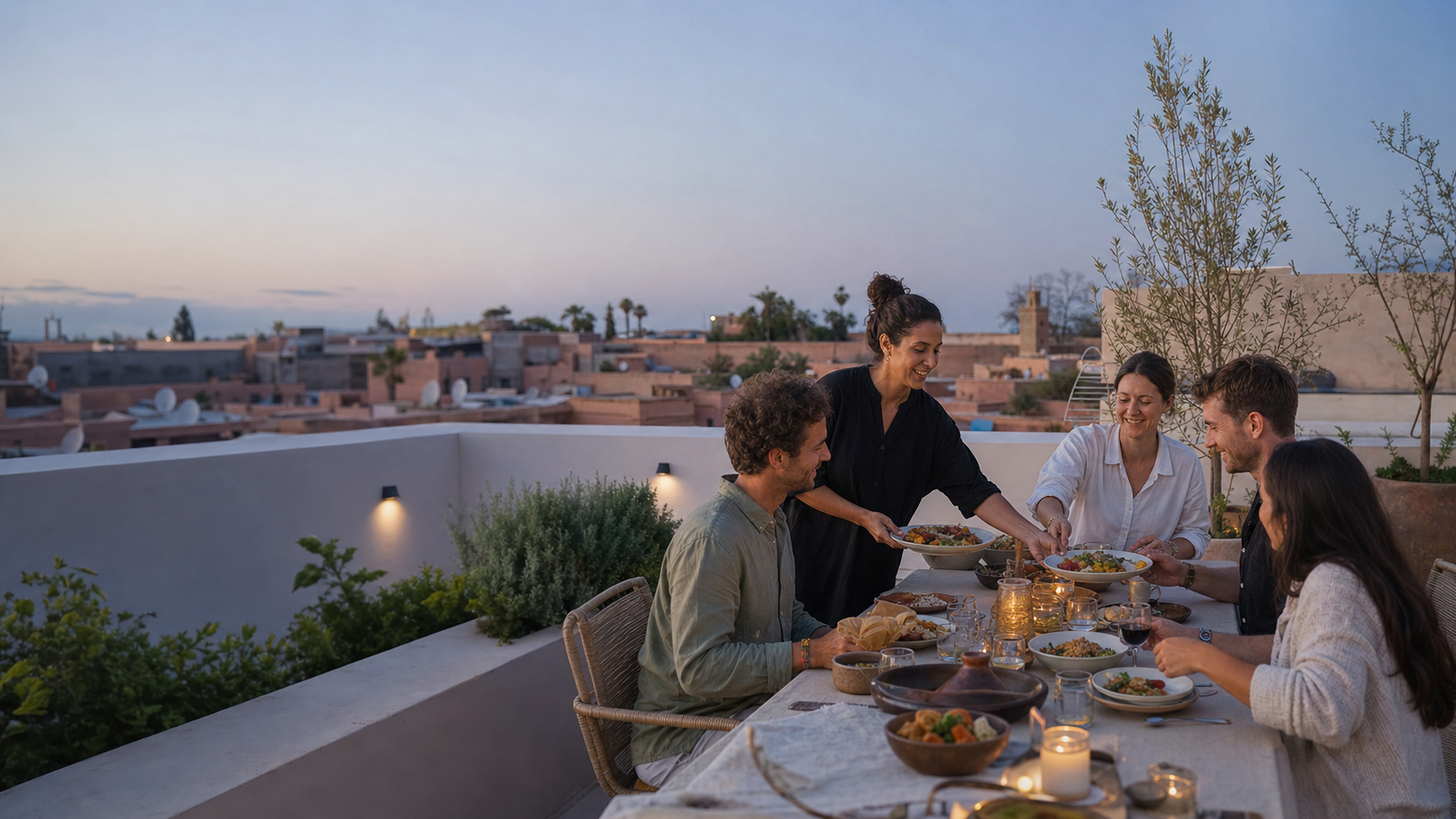
Riad rooftop breakfast
The single most photographed food moment in Marrakech: a rooftop spread of msemen, baghrir, amlou, olives, fresh juice and mint tea against a backdrop of the Medina skyline and the Koutoubia minaret. The best light is 7:30-9:00 am when the sun is low and warm.
Book a riad with a rooftop terrace and confirm breakfast is served there. The breakfast guide covers what to expect on the table.
The spice souk
The spice stalls in Rahba Kedima and the covered souks display pyramids of ground spices — cumin, paprika, turmeric, ras el hanout — in perfect geometric cones. The colours are extraordinary. Best time: mid-morning (10-11 am) when the stalls are fully set up and the light filtering through the souk roof is soft and directional.
Ask before photographing a specific vendor's stall. Most are happy to oblige, especially if you buy something. A small purchase (20-30 MAD of saffron or cumin) buys goodwill and better access.
Jemaa el-Fna food stalls at sunset
The food stalls of Jemaa el-Fna are set up each evening as the sun drops. The steam, the smoke, the lantern light and the theatre of the cooks create a scene unlike anything else. Arrive at 5:30-6:00 pm for the setup; the best light is during the transition from daylight to lantern light (6:00-7:00 pm in winter, 7:00-8:00 pm in summer).
For overhead shots: the Cafe de France terrace overlooks the square. For close-ups: walk among the stalls and photograph the grills, the snail pots, the juice vendors.
Tagines in their pots
A tagine served in its conical clay pot — lid lifted to reveal the steaming dish — is the iconic Moroccan food photograph. The best versions come in rustic, hand-painted pots with a preserved lemon and olive garnish on top. Ask your server to lift the lid while you photograph.
The most photogenic tagines are the ones with colour contrast: preserved lemon (yellow) against olives (green) on chicken (golden), or prunes (dark purple) on lamb (brown) with almond slivers (white).
Photography etiquette
Ask before photographing people, especially cooks and market vendors. Most are friendly, but some do not want to be photographed, and pushing is rude. Buying food from someone before photographing their stall is good practice.
Do not photograph the inside of private homes, the interiors of mosques (non-Muslims cannot enter most), or people in prayer. Food in a public market is fair game; food on someone else's table is not.
Frequently asked questions
What is the most photogenic food in Marrakech?
A riad rooftop breakfast spread is the most visually complete scene: multiple dishes, beautiful ceramics, a city backdrop. For a single dish, a tagine served in its clay pot with the lid just lifted is iconic.
Can I photograph in the Marrakech souks?
Yes, but ask individual vendors before photographing their stalls. Most are happy, especially if you buy something. The spice pyramids are the most photogenic element.