Themed food days
Eating in Marrakech During Ramadan — A Visitor's Food Plan
Ramadan in Marrakech is not a time of deprivation — it is a time of feasting, just on a different schedule. The city fasts from dawn to sunset, then explodes into one of the most magnificent food scenes anywhere. As a visitor, you can eat during the day (discreetly, in tourist restaurants), and you absolutely should experience the iftar (fast-breaking) meal.
- Fasting hours
- Dawn to sunset (~5am–7:30pm)
- Iftar
- Sunset — the evening feast
- Day dining
- Tourist restaurants, riads, hotels open
- Best experience
- Join an iftar meal
Before you start
During Ramadan, most local restaurants and street stalls close during the day. Tourist-oriented restaurants, riad restaurants and hotel dining rooms remain open — you will not go hungry. Eating in public during daylight hours is considered disrespectful; eat in restaurants or your accommodation.
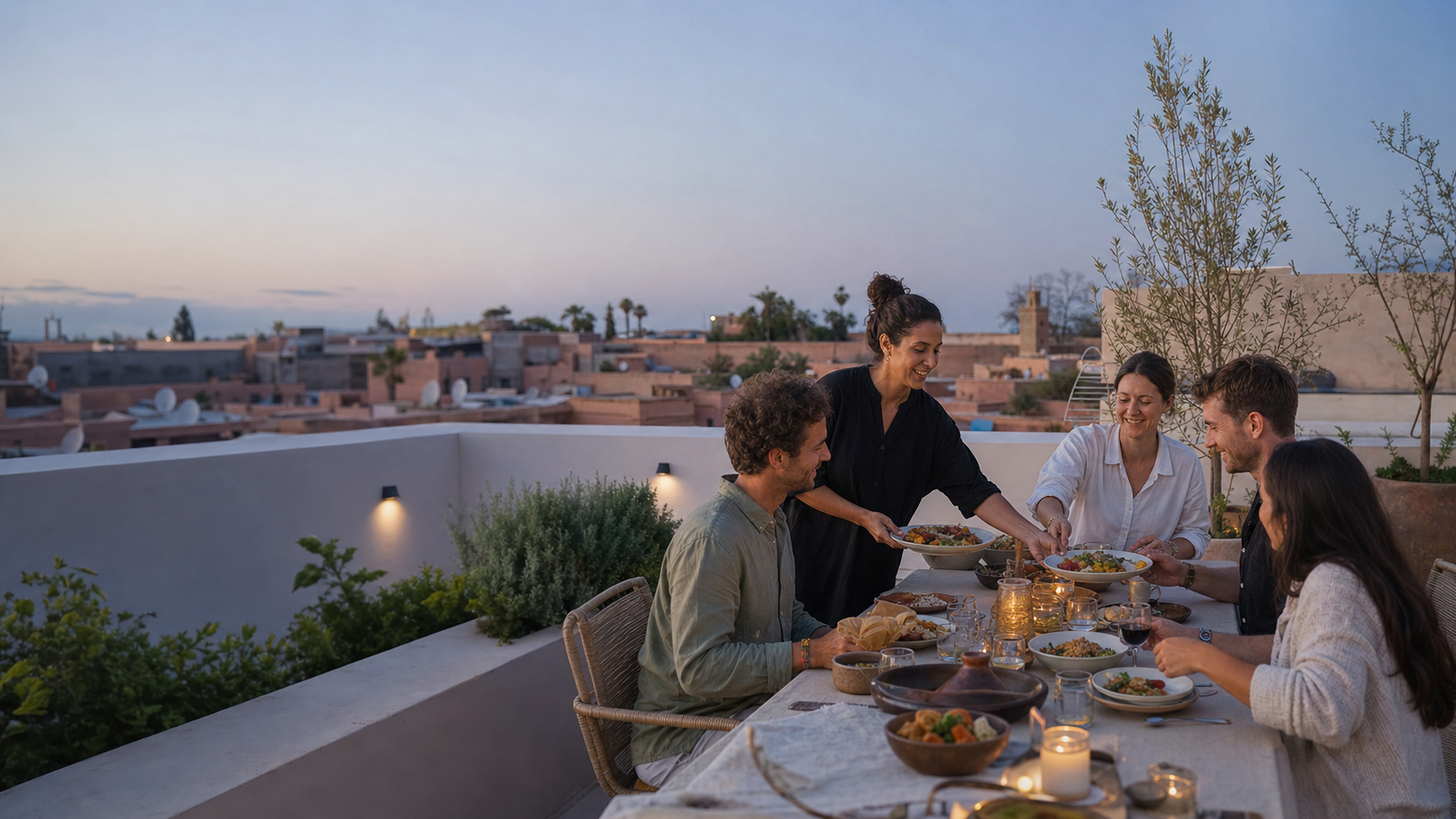
The real magic happens at sunset. The call to prayer signals iftar, and the city comes alive with food: harira soup, dates, chebakia pastries, msemen, boiled eggs, juice and more. Jemaa el-Fnaa transforms into one of the world's great outdoor dining experiences.
The plan, in order
8 stops, timed morning to night — follow it top to bottom.
Daytime
8:00am – sunset
Quiet eating, cultural exploration
-
Breakfast at your riad
Most riads serve breakfast to guests as normal — this does not change during Ramadan. Eat well because your next easy meal may be late.
-
Light lunch at a tourist restaurant
Gueliz restaurants and riad restaurants in the medina serve lunch to non-fasting guests. Eat discreetly — do not eat, drink or smoke while walking in the medina during daylight hours.
-
Explore without eating
The souks are quieter than usual — a good time for shopping and sightseeing. Energy levels in the medina drop in the afternoon as the fast wears on. Museums, palaces and gardens are open.
Iftar
Sunset – 9:00pm
The fast-breaking feast
-
Iftar begins
At the call to prayer, the fast breaks. The traditional iftar starts with dates and a glass of milk, followed immediately by harira soup. This is the most important meal of the Ramadan day.
Harira guide -
The iftar table
After the harira, the table fills: chebakia pastries dipped in honey, msemen with butter, boiled eggs, mixed juices, sellou (a sweet almond-sesame paste). This is a grazing meal — many small dishes rather than one large one.
-
The main course
After the initial iftar spread, families serve a larger meal — often a tagine or couscous. In restaurants, special Ramadan menus offer the full sequence from harira to dessert.
Late evening
9:00pm – midnight
Night market and street life
-
Jemaa el-Fnaa at night
The square is at its most electric during Ramadan nights. The food stalls open late and stay open later. The energy is celebratory — families walking, children playing, the smell of grilled meat and fresh pastries everywhere.
-
Late-night patisseries
Patisseries do their biggest business during Ramadan, staying open until midnight or later. Buy a box of chebakia, sellou or briwat to take home.
Practical tips
- Do not eat, drink or smoke in public during daylight hours. It is not illegal for non-Muslims, but it is disrespectful.
- Many riads and restaurants offer special iftar meals for guests — book in advance.
- The souks are quieter and less crowded during Ramadan — good for shopping, less good for food.
Frequently asked questions
Should I visit Marrakech during Ramadan?
Yes — it is a different experience but a wonderful one. The evenings are magical, the city is more relaxed during the day, and an iftar meal is one of the most memorable food experiences you can have in Morocco.
Will I offend anyone by eating during the day?
Moroccans are welcoming and understand that visitors are not fasting. The courtesy is to eat discreetly — in restaurants, not on the street. You will not be lectured or confronted.
Make it happen
Ready to turn the plan into a trip? Book the hands-on parts, find a food tour to fill an afternoon, or read up before you go.