Themed food days
Ramadan Food Itinerary: Eating in Marrakech During the Holy Month
Visiting Marrakech during Ramadan is not a food obstacle; it is a food opportunity. Yes, most restaurants close during daylight hours. But the iftar (sunset breaking-of-fast) is the most generous, communal, spectacular food moment in the Moroccan year. The sweets are exceptional, the atmosphere is electric, and you get to eat dishes that only appear during Ramadan.
- Duration
- 3 days during Ramadan
- Key moment
- Iftar at sunset
- What changes
- Daytime restaurants close; sunset feast
- Special dishes
- Harira, chebakia, briouats, sellou
Before you start
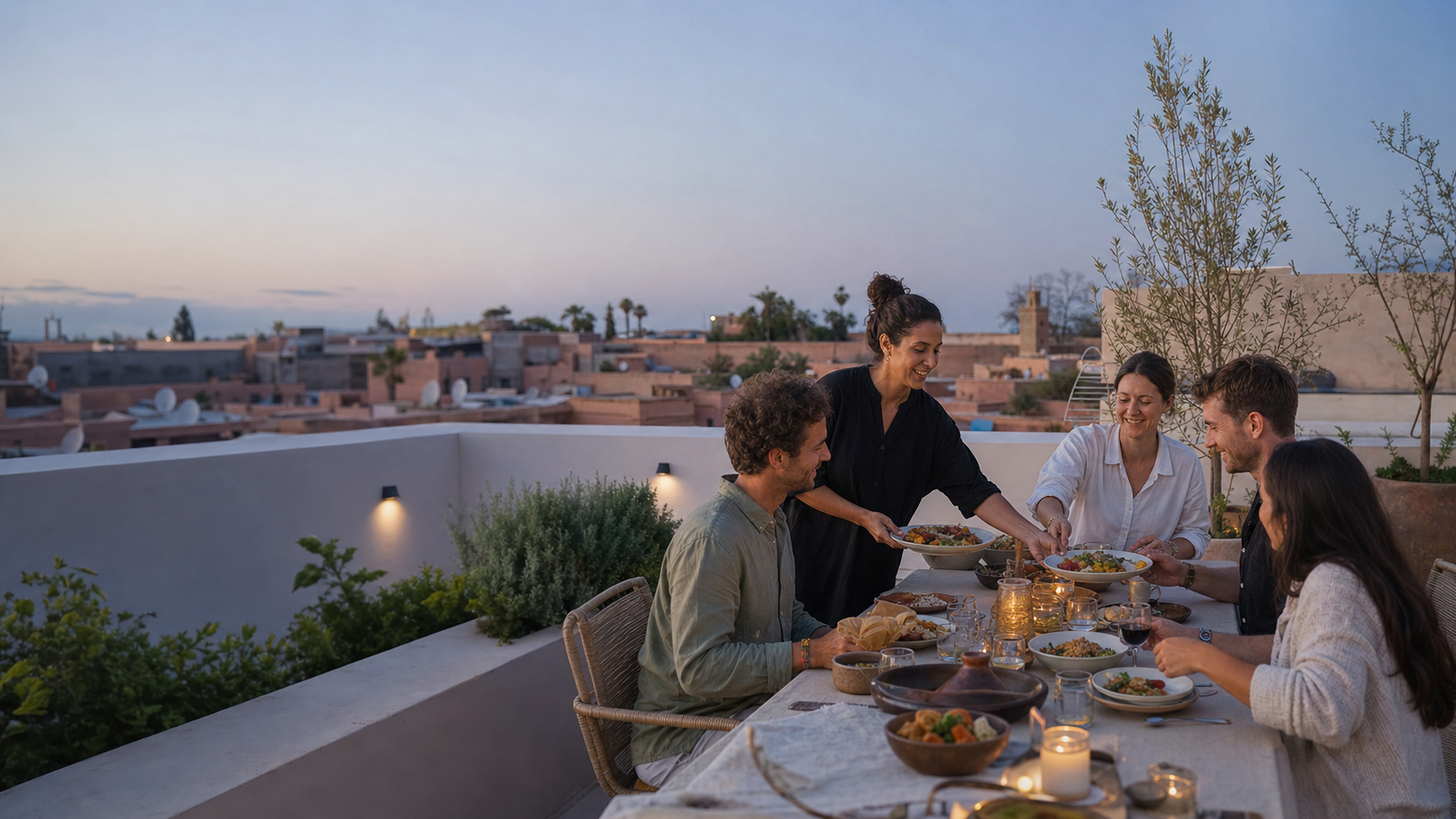
During Ramadan, Marrakech's food rhythm inverts. From dawn to sunset, the city fasts. Most restaurants and street food stalls close (some tourist-area restaurants stay open). At sunset, the city breaks its fast simultaneously — millions of people eating at the same minute. The iftar meal is a fixed, beautiful ritual.
As a visitor, you are not expected to fast. But eating discreetly during the day and joining the iftar at sunset is the most respectful and most rewarding approach.
The plan, in order
7 stops, timed morning to night — follow it top to bottom.
Day 1
Arrival + first iftar
Arrive, rest during the day, experience your first iftar.
-
Check in and rest
Arrive and settle into your riad. The Medina will be quiet during the day. Rest, read, explore the lanes at a gentle pace. Eat discreetly in your riad if hungry.
-
First iftar
Ask your riad if they serve iftar — many do during Ramadan. The meal opens with dates and milk, then harira soup with chebakia, then a main course. Watch the city wake up as everyone eats at the same moment. The atmosphere is magical.
Day 2
Morning exploration + evening food tour
A morning of quiet exploration, then a Ramadan-specific food experience.
-
Medina walk
The Medina in the morning during Ramadan is quieter than usual. Walk the souks, visit a museum, have mint tea at your riad. The pace is gentler.
-
Ramadan cooking class or food tour
Some cooking classes offer special Ramadan sessions where you learn to make harira, chebakia and briouats. Some food tours run evening iftar editions. Book in advance.
-
Post-iftar Jemaa el-Fna
After iftar, Jemaa el-Fna comes alive with extra energy. The stalls reopen, the crowds are festive, and the atmosphere is the best of the year.
Day 3
Shopping + final iftar
Souvenir shopping and a farewell iftar.
-
Spice and sweet shopping
Buy Ramadan sweets (chebakia, sellou) as food souvenirs. The patisseries are stocked with their best products during Ramadan.
-
Final iftar
One last iftar: harira, chebakia, dates, mint tea, and the sunset call to prayer echoing across the Medina. This is the meal you will remember.
Practical tips
- Eat and drink discreetly during the day (in your riad or a tourist-area restaurant). Do not eat, drink or smoke visibly in public during daylight hours — it is disrespectful.
- The best Ramadan food experiences are at iftar. Plan your day around sunset.
- Patisseries work overtime during Ramadan — the sweet selection is the best of the year.
Frequently asked questions
Can tourists eat during the day in Ramadan?
Yes, but discreetly. Most riads serve lunch to guests. Some tourist-area restaurants stay open. Do not eat, drink or smoke in public spaces during daylight hours.
Is Marrakech worth visiting during Ramadan?
Absolutely, if you are prepared for the rhythm change. The iftar experience is unique, the sweets are exceptional, and the city's generosity is at its peak. Many food travellers consider Ramadan the best time to visit.
Make it happen
Ready to turn the plan into a trip? Book the hands-on parts, find a food tour to fill an afternoon, or read up before you go.