Themed food days
Vegetarian Food Day in Marrakech
Morocco is one of the easiest countries in the world for vegetarian eating — though you would not guess it from the meat-heavy tourist menus. The real Moroccan kitchen is built on vegetables, pulses, herbs and olive oil. This itinerary takes you through a full day of eating without meat, from market breakfast to riad dinner.
- Duration
- Full day
- Budget
- 100–300 MAD
- Best for
- Vegetarians, vegans, plant-curious
- Difficulty
- Easy — options everywhere
Before you start
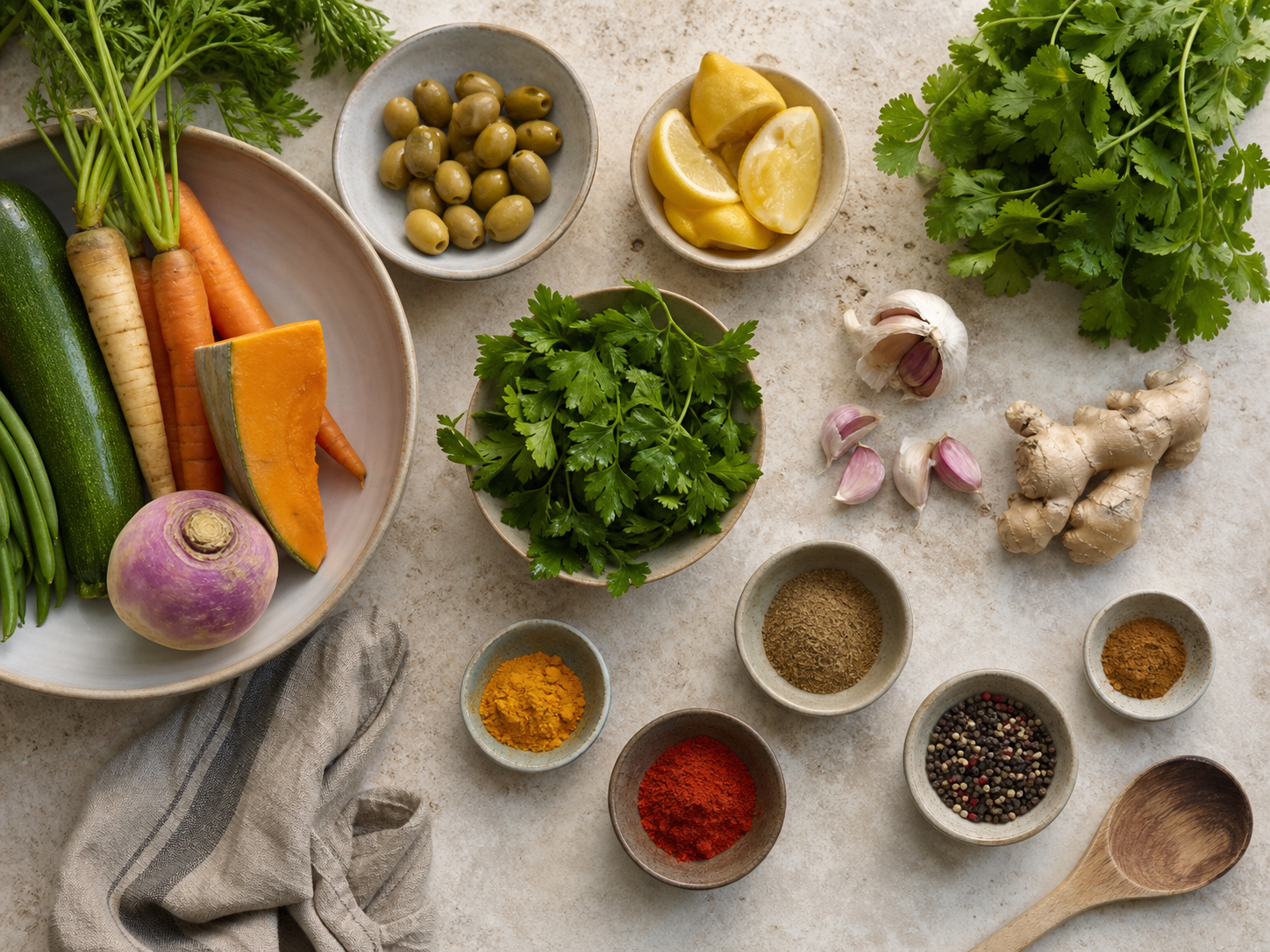
Moroccan cuisine has a deep vegetable tradition that predates modern vegetarianism. The salad course (5-7 cooked vegetable dishes), the pulse soups (bissara, harira without meat), the vegetable tagines, and the grain dishes (couscous, barley) are all naturally vegetarian. This itinerary shows you where to find them.
The plan, in order
7 stops, timed morning to night — follow it top to bottom.
Breakfast
08:00 – 09:30
Market breakfast
-
Beghrir and msemen with honey
Start at a café or street vendor for Moroccan pancakes: beghrir (spongy semolina pancakes with a thousand tiny holes) and msemen (layered flatbread), served with butter, honey, and amlou (argan oil, almond and honey paste). Add fresh orange juice and mint tea. This is a traditional Moroccan breakfast and entirely vegetarian.
-
Bissara at a market stall
Find a bissara stall — a thick, creamy soup made from dried broad beans (fava beans), served with a generous pour of olive oil, cumin and bread. Bissara is Morocco's original street breakfast: filling, cheap (5-10 MAD), and 100% vegan. It is best from October to April, when the dried bean harvest is fresh.
What is bissara?
Lunch
12:00 – 14:00
Vegetable feast
-
Seven salads course
Order a salad course at any traditional restaurant: zaalouk (smoky aubergine and tomato), taktouka (roasted pepper and tomato), carrot salad with orange blossom, beetroot salad, herb salad, and seasonal variations. These 5-7 small dishes with bread make a complete, satisfying lunch. Each is cooked differently and seasoned distinctly — it is one of the most flavourful vegetarian meals in the world.
-
Vegetable tagine
Follow the salads with a vegetable tagine: the classic is seven-vegetable tagine (turnip, courgette, carrot, potato, pumpkin, cabbage, tomato) with chickpeas and preserved lemon. Some restaurants also offer artichoke tagine, olive and lemon tagine, or prune and almond tagine (vegan). Ask for it to be made without meat — most kitchens will oblige immediately.
Afternoon
15:00 – 17:00
Snacks and sweets
-
Olive and dried fruit market
Visit the olive market for a tasting: green, black, cracked, spiced, herbed — Morocco has dozens of olive varieties. Buy 100g of your favourite (5-15 MAD). Then move to the dried fruit stalls: dates (Medjool from the Draa Valley are the best), figs, apricots, almonds and walnuts. A bag of mixed dried fruit and nuts is the perfect afternoon snack.
-
Avocado juice
Morocco is famous for its avocado juice — a thick, creamy shake of avocado, milk, sugar, and sometimes almonds or orange blossom water. It is served in tall glasses at juice shops across the medina. The vegan version substitutes almond milk. A glass costs 15-25 MAD.
About Moroccan avocado juice
Dinner
19:00 – 21:00
Riad dinner
-
Full vegetarian riad dinner
Book a vegetarian dinner at a riad restaurant — most will create a full multi-course vegetarian menu on request. Expect: lentil soup or harira (request meatless), a salad course, a main vegetable tagine or vegetable couscous, and Moroccan pastries with mint tea for dessert. Budget 150-400 MAD per person. Some riads specialise in vegetarian or vegan cuisine — ask when booking.
Practical tips
- The word for vegetarian in Moroccan Arabic is 'nabati' — but saying 'bla l7em' (without meat) is more universally understood
- Harira soup traditionally contains meat — always ask for the meatless version (harira bla l7em)
- Moroccan couscous is steamed in a couscoussier, not cooked in stock — the base is naturally vegan
- Many Moroccan pastries contain butter — ask for the almond-and-honey versions if you are vegan
Frequently asked questions
Is it easy to eat vegetarian in Morocco?
Very easy. Moroccan cuisine has a vast vegetable, pulse and grain tradition. The challenge is communicating your needs — learn 'bla l7em' (without meat) and 'bla djaj' (without chicken). In tourist areas, vegetarian is widely understood.
Can I eat vegan in Marrakech?
Yes, with some effort. Moroccan cooking uses olive oil more than butter (except in pastries). Tagines, couscous, salads, soups and street food are often naturally vegan. Argan oil with bread replaces butter beautifully. Some riads now offer dedicated vegan menus.
Make it happen
Ready to turn the plan into a trip? Book the hands-on parts, find a food tour to fill an afternoon, or read up before you go.