Vegetarian Moroccan
Best Vegetarian Restaurants in Marrakech — Meat-Free Moroccan Eating
Moroccan cuisine is built on vegetables, pulses, grains and olive oil as much as it is on lamb and chicken. Vegetarian eating in Marrakech is easy and genuinely delicious — from the mezze-like spreads of cooked salads to hearty vegetable tagines and bean soups that have been part of the diet for centuries.
- City
- Marrakech
- Cuisine
- Vegetarian Moroccan
- Typical price
- 40-180 MAD
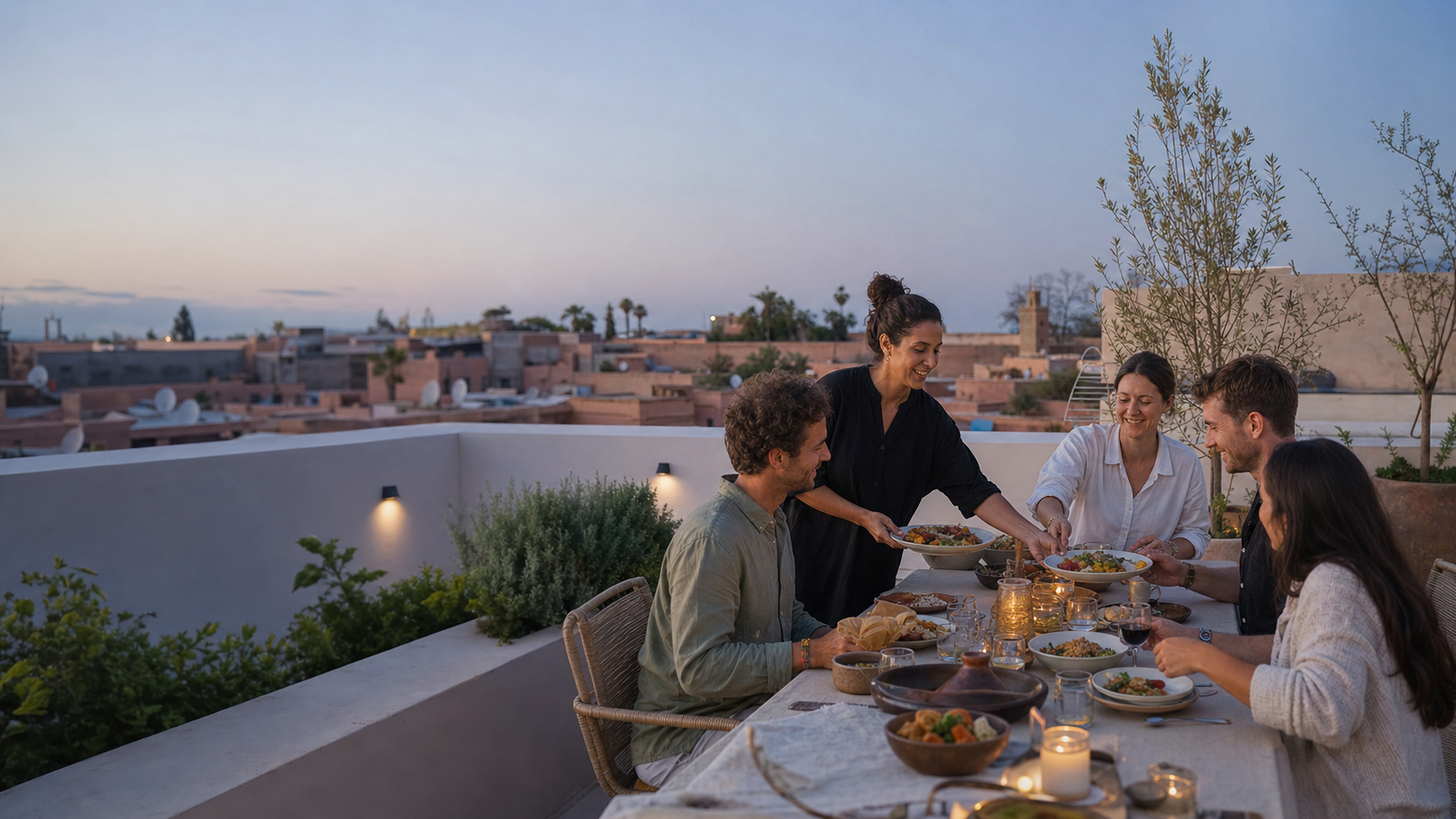
Morocco's vegetable cooking is not an afterthought or a concession to tourists. The tradition of cooked salads — zaalouk (smoky aubergine with tomato and garlic), taktouka (roasted peppers and tomato), carrot with cumin and orange blossom, beetroot with cinnamon — predates the concept of vegetarian restaurants by centuries. These dishes appear at the start of every Moroccan meal, and in many cooking classes they are the first things you learn to make. A spread of five or six cooked salads with bread is a complete, satisfying vegetarian meal in itself.
Vegetable tagine is widely available across Marrakech. The standard version layers seasonal vegetables — potato, courgette, carrot, turnip, aubergine, green peas — over a base of onion, saffron and olive oil, often with preserved lemon and olives. It is cooked in the same clay pot as a meat tagine and benefits from the same slow, steaming method. Some restaurants also offer a vegetable tangia, the Marrakech-specific slow-cooked variation. A dedicated vegetarian cooking class will focus on these dishes and on pulse-based preparations like lentil soup, chickpea stew and bissara.
The newer restaurants in Gueliz and the Majorelle quarter cater more explicitly to vegetarian and vegan diets, with menus that label dishes clearly and offer plant-based options beyond traditional Moroccan. Avocado toast and grain bowls sit alongside harcha and zaalouk on these menus, reflecting the international side of Marrakech's food scene. For a purely Moroccan vegetarian meal, though, the medina restaurants and riads are more rewarding.
Vegans should note that Moroccan cooking uses butter (including smen, aged butter) and honey liberally. Ask specifically for dishes cooked in olive oil only, and note that couscous is traditionally steamed with butter. Most kitchens will accommodate the request if you are clear about it.
How to eat well
Order a full spread of cooked salads (zaalouk, taktouka, carrot-cumin, beetroot) with bread for a complete vegetarian meal.
Vegetable tagine is available at almost every restaurant in Marrakech and is reliably good — it is never a second-class option.
Take a vegetarian-focused cooking class to learn the salad and pulse dishes that are the foundation of Moroccan vegetable cooking.
Vegans should ask for olive oil instead of butter and check that couscous is not steamed with smen (aged butter).
The Gueliz and Majorelle quarter restaurants have the clearest vegetarian and vegan labelling on menus.
Frequently asked questions
Is it easy to eat vegetarian in Marrakech?
Yes. Cooked salads, vegetable tagines, lentil soup, couscous and bean dishes are all part of traditional Moroccan cooking. You will not struggle to find excellent vegetarian food at any price level.
What about vegan food in Marrakech?
Most vegetable dishes can be made vegan by substituting olive oil for butter. Ask specifically, as traditional Moroccan cooking uses butter and honey in many preparations. The newer Gueliz cafes are more familiar with vegan requests.
What vegetarian dishes are taught in Marrakech cooking classes?
Cooked salads (zaalouk, taktouka), vegetable tagine, lentil soup, bissara, harira and hand-rolled couscous with vegetables. Some classes also teach vegetable pastilla and Moroccan bread.