Themed food days
Marrakech Spice Souk Shopping Itinerary
The spice souks of Marrakech are sensory overload in the best way: pyramids of turmeric, cumin and paprika, bundles of dried herbs, barrels of dried roses and orange peel. This focused itinerary takes you through the best spice areas, teaches you what to look for and helps you avoid the tourist-priced stalls.
- Duration
- 2 hours
- Best time
- Morning (9–11 AM)
- Budget
- 50–200 MAD for purchases
- Best for
- Food lovers, souvenir hunters
Before you start
This short itinerary focuses on the spice and food ingredient sections of the Marrakech medina — Rahba Kedima, the covered spice souk, and the olive and dried fruit vendors beyond. You will learn to identify quality spices, avoid common scams (especially with saffron), and find the best prices.
The plan, in order
6 stops, timed morning to night — follow it top to bottom.
Stop 1
09:00 – 09:30
Rahba Kedima (the old spice square)
-
Enter Rahba Kedima from the Jemaa el-Fna side
Rahba Kedima is the historic spice and apothecary square. Enter from the south and you will immediately see herbalist stalls selling dried herbs, traditional medicines, argan oil, and henna. Browse slowly — many stalls look similar but quality varies. The vendors here are used to tourists, so prices are higher than deeper in the souk.
-
Visit a traditional herbalist (attar)
Find a stall with an older vendor surrounded by glass jars and wooden drawers. These are the attarine — traditional herbalists who know every herb and spice by its Moroccan name and use. Ask to smell ras el hanout — each attar has their own blend. A good attar will explain the ingredients. Buy here if the quality is right (40–80 MAD per 100g for ras el hanout).
What is ras el hanout?
Stop 2
09:45 – 10:15
The covered spice souk
-
Walk north into the covered spice souk
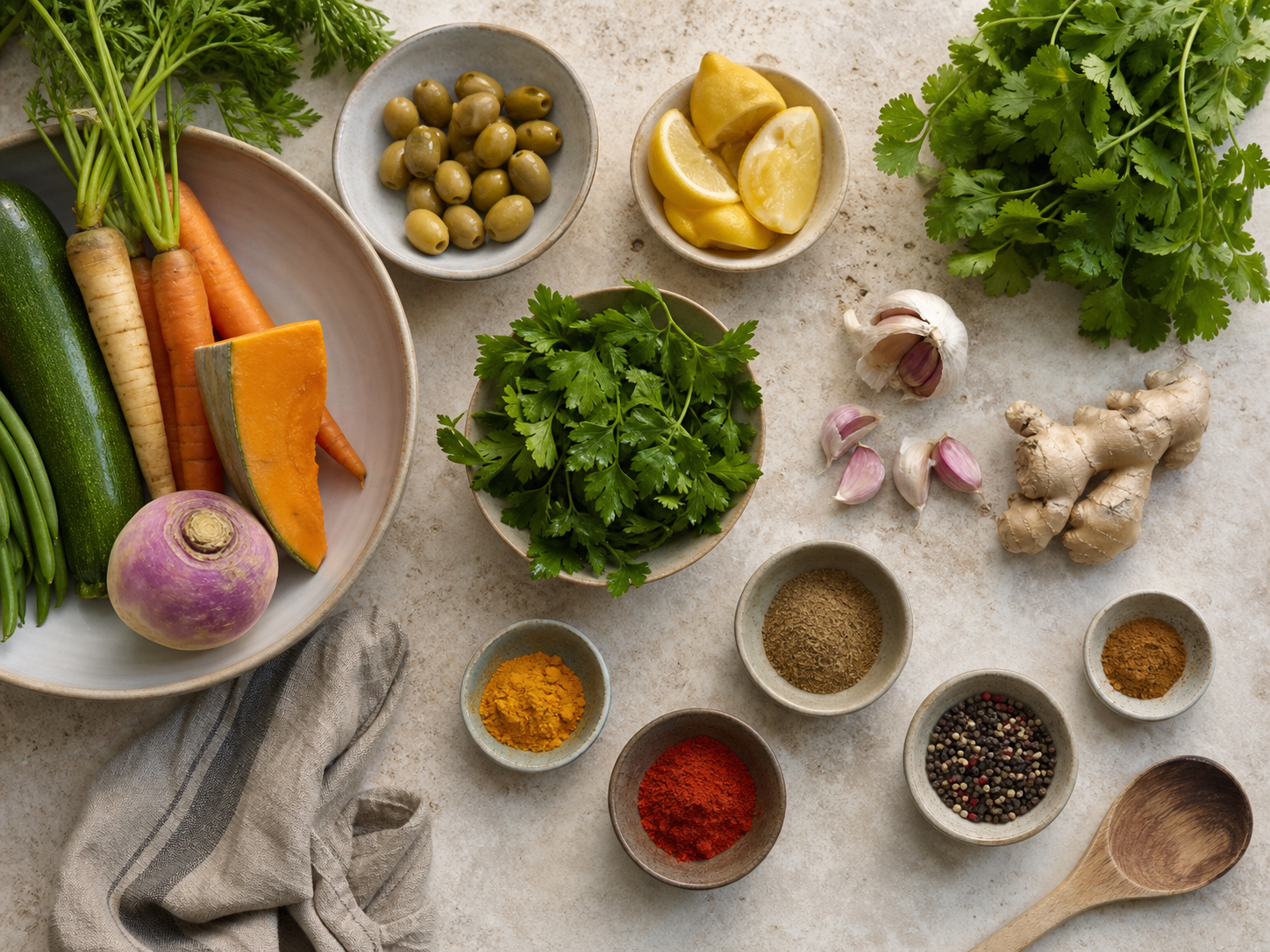
From Rahba Kedima, head north into the narrow covered alleys. This is where prices drop and quality rises — you are leaving the tourist zone. Look for cumin (kamoun), paprika (felfla hamra), turmeric (kharkoum), dried ginger (skinjbir), cinnamon sticks (karfa) and black pepper (ibzar). Whole spices are always better than pre-ground — they keep longer and you can verify quality.
Tip: Do not buy from the first stall — compare quality and prices across three or four vendors. -
Saffron stop
Saffron (zaafrane) is Morocco's most expensive spice. Real saffron costs 15–30 MAD per gram. If offered cheap saffron, it is fake (usually safflower or dyed corn silk). Test: real saffron threads are dark red with orange tips, release colour slowly in water, and have a distinctive hay-like aroma. Buy from a trusted vendor who lets you test before buying.
Tip: If saffron costs less than 10 MAD per gram, it is not real saffron.
Stop 3
10:20 – 11:00
Olives, preserved lemons and dried fruits
-
Olive and preserved lemon vendors
The souk transitions into olive vendors — massive barrels of green, black, red-brown and spiced olives. Taste before buying (this is expected). Preserved lemons (citrons confits) are sold in jars — the essential Moroccan pantry ingredient. Pick up a jar (15–30 MAD) as a food souvenir.
Food souvenir guide -
Dried fruit and nut stalls
The final section features dried fruits (figs, dates, apricots), nuts (almonds, walnuts, cashews) and amlou (the argan-almond butter). Medjool dates from Errachidia are spectacular. Almonds are sold raw, roasted, salted and sugared. Amlou in jars (60–120 MAD) is one of the best food gifts from Morocco.
Tip: Bring small bills (20 and 50 MAD notes) — vendors rarely have change for large notes.
Practical tips
- Morning is best — the souk is cooler and less crowded before 11 AM
- Whole spices keep for months; pre-ground spices lose flavour quickly — buy whole when possible
- Double-bag spices in plastic to prevent the scent from permeating your luggage
Frequently asked questions
Is bargaining expected for spices?
In tourist areas, yes — start at about 60% of the asking price. In local areas deeper in the souk, prices are more fixed and fair. If the vendor names a price without you asking, it is usually close to the real price.
How do I carry spices home?
Spices are lightweight and pack easily. Double-bag in plastic to prevent the scent from permeating your luggage. They pass through airport security and customs without issues in most countries.
Make it happen
Ready to turn the plan into a trip? Book the hands-on parts, find a food tour to fill an afternoon, or read up before you go.