Travel tips
Vegetarian Food in Morocco: The Complete Guide
Morocco is a meat-loving country, but its cuisine is packed with plant-based dishes that are so good they need no apology. Vegetable tagines, bessara soup, zaalouk, couscous with seven vegetables, msemen with honey — these are not afterthoughts but cornerstones of the diet. This guide maps every vegetarian option available to a traveller in Morocco, from restaurant menus to street stalls to self-catering.
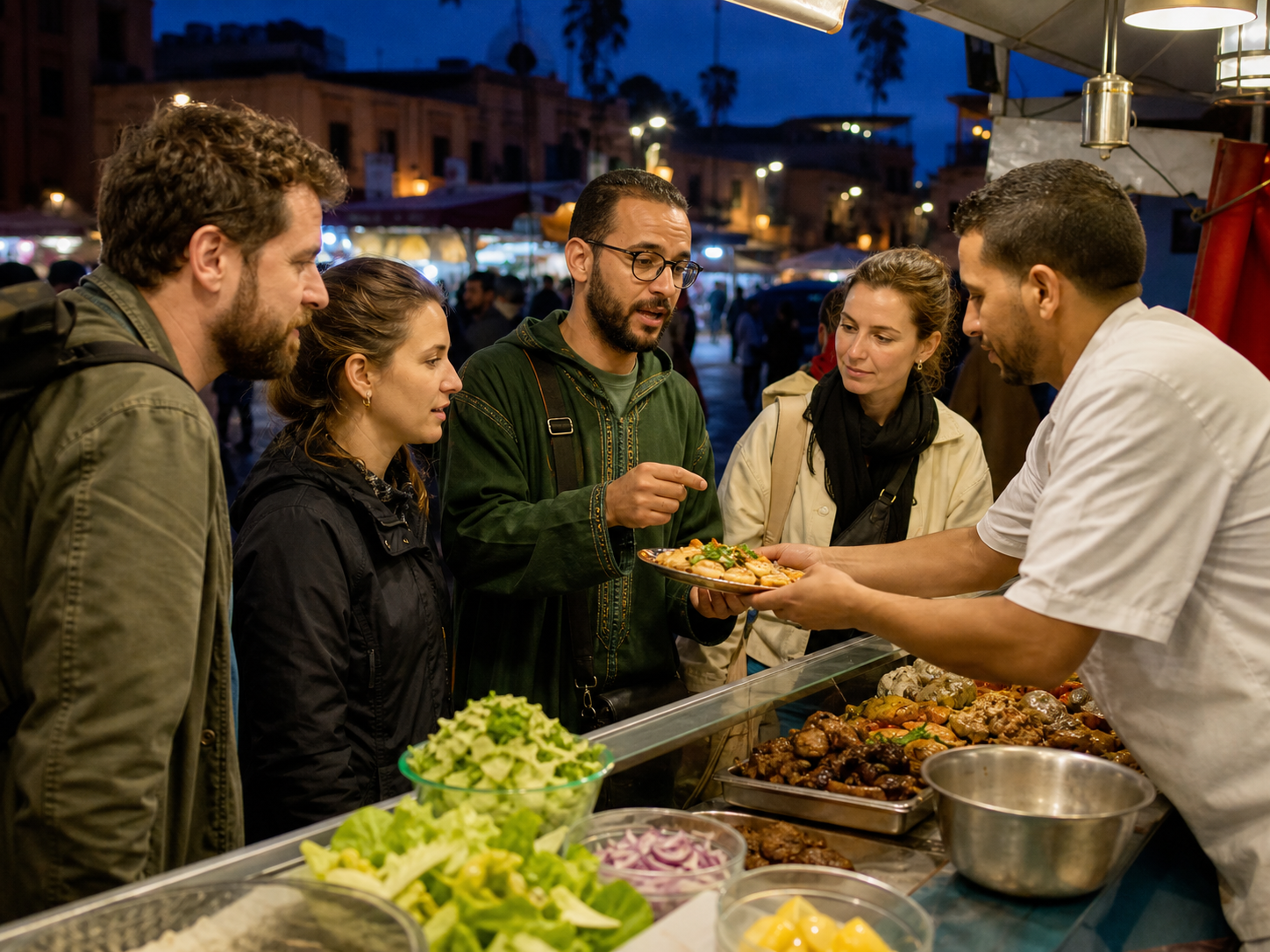
At a glance
- Many classic Moroccan dishes are naturally vegetarian — zaalouk, bessara, taktouka, harira (in its meatless version), and baghrir.
- Vegetable tagines are on every restaurant menu and are often the best dish available.
- Street food has many vegetarian options — msemen, sfenj, orange juice, boiled chickpeas, baghrir.
- Communicate clearly — 'bla l'hm' means 'without meat' in Darija.
- Some dishes that appear vegetarian may contain meat stock. Ask 'fih l'hm?' (does it have meat?) to confirm.
Naturally vegetarian Moroccan dishes
Zaalouk (smoky aubergine salad), taktouka (roasted pepper and tomato salad), and carrot salad are always vegetarian. They appear as starters at every meal and are among the best things Morocco has to offer.
Bessara (broad bean soup) is a vegan staple in northern Morocco — thick, earthy and finished with olive oil and cumin. Harira is traditionally made with meat, but meatless versions exist and are common during Ramadan. Vegetable tagines — with almonds and prunes, or with artichokes and peas — are on every restaurant menu.
For breakfast, msemen with honey, baghrir (pancakes), and fresh orange juice are all vegetarian. Sfenj doughnuts are vegan.
Ordering tips for vegetarians
Say 'bla l'hm' (without meat) when ordering. Most restaurants understand 'végétarien' in French. Ask specifically about stock — some tagines and couscous broths are made with meat even when the dish itself appears vegetarian.
Riad restaurants and cooking classes are usually the most accommodating — most will prepare a fully vegetarian menu if asked in advance. Street food stalls are less flexible but naturally offer many vegetarian items.
For self-catering, the souks are full of fresh vegetables, fruits, olives, nuts, bread and cheese. A riad with a kitchen gives vegetarian travellers the most flexibility.
Vegan considerations
Many Moroccan dishes are accidentally vegan — zaalouk, taktouka, bessara, sfenj, boiled chickpeas, orange juice and most breads. However, butter, honey and eggs are common in pastries and tagines. Asking 'bla jbna, bla beid, bla zebda' (without cheese, without eggs, without butter) covers the main concerns.
Argan oil and olive oil are widely used alongside butter, so many dishes can be adapted. Moroccan salads are reliably vegan.
Frequently asked questions
Can I be vegetarian in Morocco?
Yes — Morocco has more naturally vegetarian dishes than most visitors expect. The challenge is communicating your needs clearly (especially about stock) and being flexible about what you eat at restaurants versus what you prepare yourself.
Is couscous vegetarian?
The grain itself is, but the broth it is steamed over usually contains meat. Ask for 'couscous aux légumes' (vegetable couscous) and confirm that the broth is also meatless.