Travel tips
Street Food Safety in Morocco: What to Eat, What to Skip
Moroccan street food is one of the great eating experiences in the world — and it is overwhelmingly safe. Most travellers eat from stalls for days without issue. But food-borne illness does happen, and a few simple habits reduce your risk to near zero. This guide covers the practical signals that distinguish a safe stall from a risky one.
The golden rules
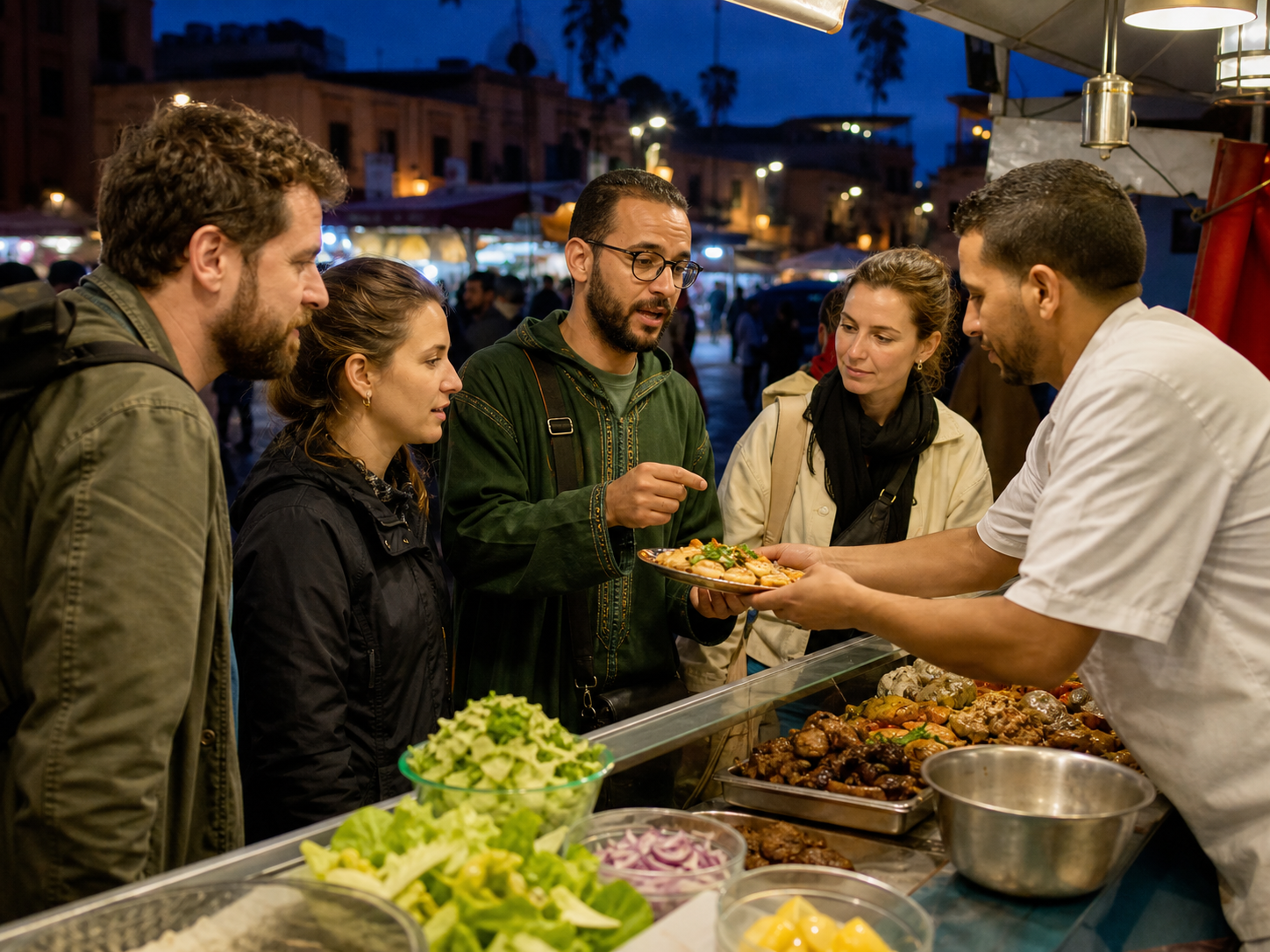
Three rules cover 90% of street food safety: (1) Eat where the locals eat — a busy stall with high turnover means fresh food. An empty stall at peak meal time is a warning. (2) Eat food that is cooked to order in front of you — grilled meat, fried items, and freshly assembled plates are safe because heat kills bacteria. Pre-cooked food sitting at room temperature is the main risk. (3) Skip raw salads at stalls — the lettuce and tomato garnish on street food plates is the most common cause of traveller's stomach. Ask for your sandwich 'bla salata' (without salad) if you want to be cautious.
What to look for at a stall
Good signs: the vendor is cooking continuously (not reheating), the work surface is relatively clean, there is a visible water source for hand-washing, the vendor handles money and food with different hands (or uses tongs/paper), and there are Moroccan customers eating there. Bad signs: pre-cooked food sitting uncovered, flies swarming the food, the vendor touching food and money with the same unwashed hands, no other customers, and meat that looks like it has been sitting out for hours. Trust your instincts — if something looks off, walk to the next stall.
Water and drinks
Tap water in Marrakech and other major cities is treated and technically potable, but the mineral content differs from what your gut is used to — bottled water is the safest choice for short visits. Freshly squeezed orange juice is safe (the acid kills bacteria and the juice is made seconds before you drink it). Avoid juice that has been sitting in a jug. Mint tea is safe (boiled water). Ice in tourist-area restaurants is made from purified water; ice from street vendors may not be — avoid it if cautious. Bottled water costs 3-5 MAD and is available everywhere.
Lowest-risk street foods
The safest Moroccan street foods are those cooked at high temperature immediately before serving: grilled kefta and merguez (charcoal-grilled to well-done), msemen and harcha (cooked on a hot griddle), roasted corn (cooked over coals), hard-boiled eggs with cumin salt, and fresh bread from a bakery oven. Harira and bissara are safe (kept at a rolling simmer in the pot). Fresh orange juice is safe. Snail soup is boiled continuously. These are the zero-risk options for cautious eaters.
Frequently asked questions
How common is food poisoning in Morocco?
Most travellers eat street food without any problems. When stomach issues occur, they are usually mild (1-2 days of discomfort) and more often caused by the change in water mineral content or rich, unfamiliar food than by bacterial contamination. Serious food poisoning is rare. Carry Imodium and oral rehydration salts as a precaution.
Should I avoid meat at street stalls?
No — grilled meat is one of the safest options because high heat kills all bacteria. The risk comes from pre-cooked meat that has been sitting at room temperature. Meat that is cooked to order on a charcoal grill in front of you is safe. Eat it fresh off the grill.