Food culture
Food During Ramadan in Morocco: A Complete Guide
Ramadan transforms Morocco's food landscape. Restaurants close during the day, streets empty, and then — at the call to prayer at sunset — the entire country sits down to eat one of the most elaborate meals in the Moroccan calendar. For food-focused visitors, Ramadan is challenging but also uniquely rewarding.
At a glance
- Most restaurants close during daylight hours in Ramadan
- Iftar (the sunset meal) is the most spectacular food experience in Morocco
- Harira soup, dates and chebakia are the classic iftar starters
- Hotels serve non-fasting guests during the day
- Eating, drinking or smoking in public during daylight is disrespectful
What changes during Ramadan
During Ramadan, Muslims fast from dawn to sunset — no food, no water, no smoking. Most restaurants, cafés and street food stalls close during the day. Life slows down dramatically. The streets feel empty until about an hour before sunset, when vendors appear with trays of food and the energy shifts entirely.
Hotels that cater to international guests typically keep their restaurants open for non-fasting guests, though with reduced menus. Tourist restaurants in areas like Gueliz may also open.
Iftar: the sunset meal
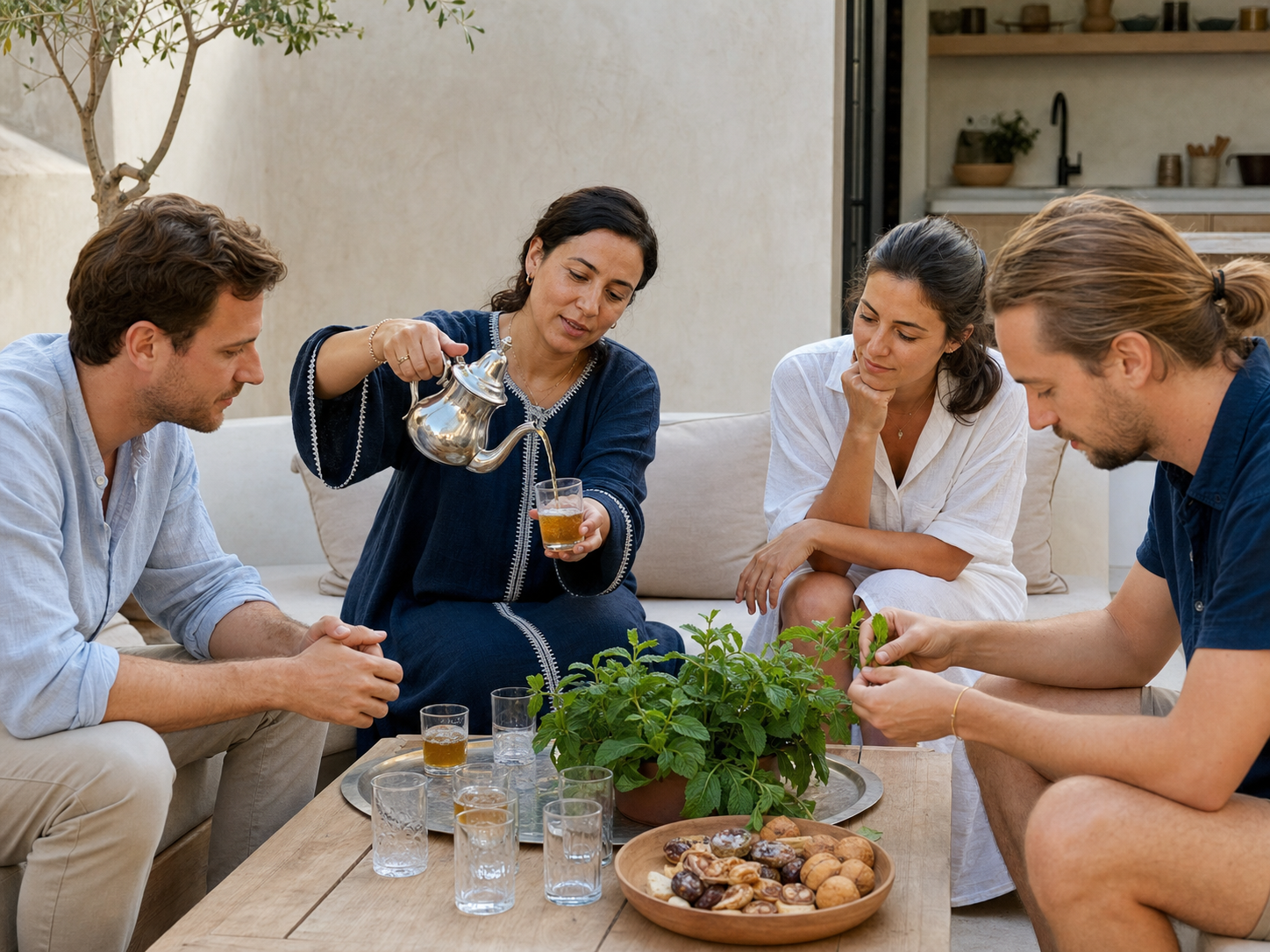
Iftar (called ftour in Moroccan Arabic) is the meal that breaks the fast at sunset. It is not a single dish but a spread — the table is covered with dates, harira soup, chebakia pastries, hard-boiled eggs, msemen, beghrir, juices and more. The meal begins with a date and a glass of water or milk, following the Prophetic tradition.
Harira — a thick, spiced soup of tomatoes, lentils, chickpeas and herbs — is the centrepiece. Every family has their own recipe. Chebakia (flower-shaped sesame cookies dipped in honey) are the essential sweet accompaniment.
The after-iftar hours
After iftar, Morocco comes alive. Streets fill, cafés open, and people socialise late into the night. A second, heavier meal (dinner) is often eaten later in the evening. Some families also eat a pre-dawn meal (suhoor) before the fast resumes.
This is when the best food exploration happens during Ramadan — the night markets buzz with activity and the atmosphere is festive.
Tips for visitors during Ramadan
Do not eat, drink or smoke in public during daylight hours — this is deeply disrespectful. Eat in your hotel or discreetly in private. Most Moroccans will not comment, but they will notice.
If invited to share iftar with a Moroccan family, accept — it is one of the most memorable food experiences in the country. The hospitality during Ramadan is extraordinary.
Frequently asked questions
Should I avoid visiting Morocco during Ramadan?
Not necessarily. Daytime food options are limited, but the iftar experience is extraordinary. If food is your primary reason for visiting, Ramadan adds complexity but also unique opportunities.
When is Ramadan?
Ramadan follows the Islamic lunar calendar, so dates shift by about 11 days each year. Check the specific dates for the year you plan to visit.
Are all restaurants closed during Ramadan?
Most local restaurants close during the day. Hotels, some tourist restaurants and a few international chains remain open.