Travel tips
The Best Time to Visit Marrakech for Food
The short answer: October to April is the best window for food-focused visitors. But every season has its own culinary personality.
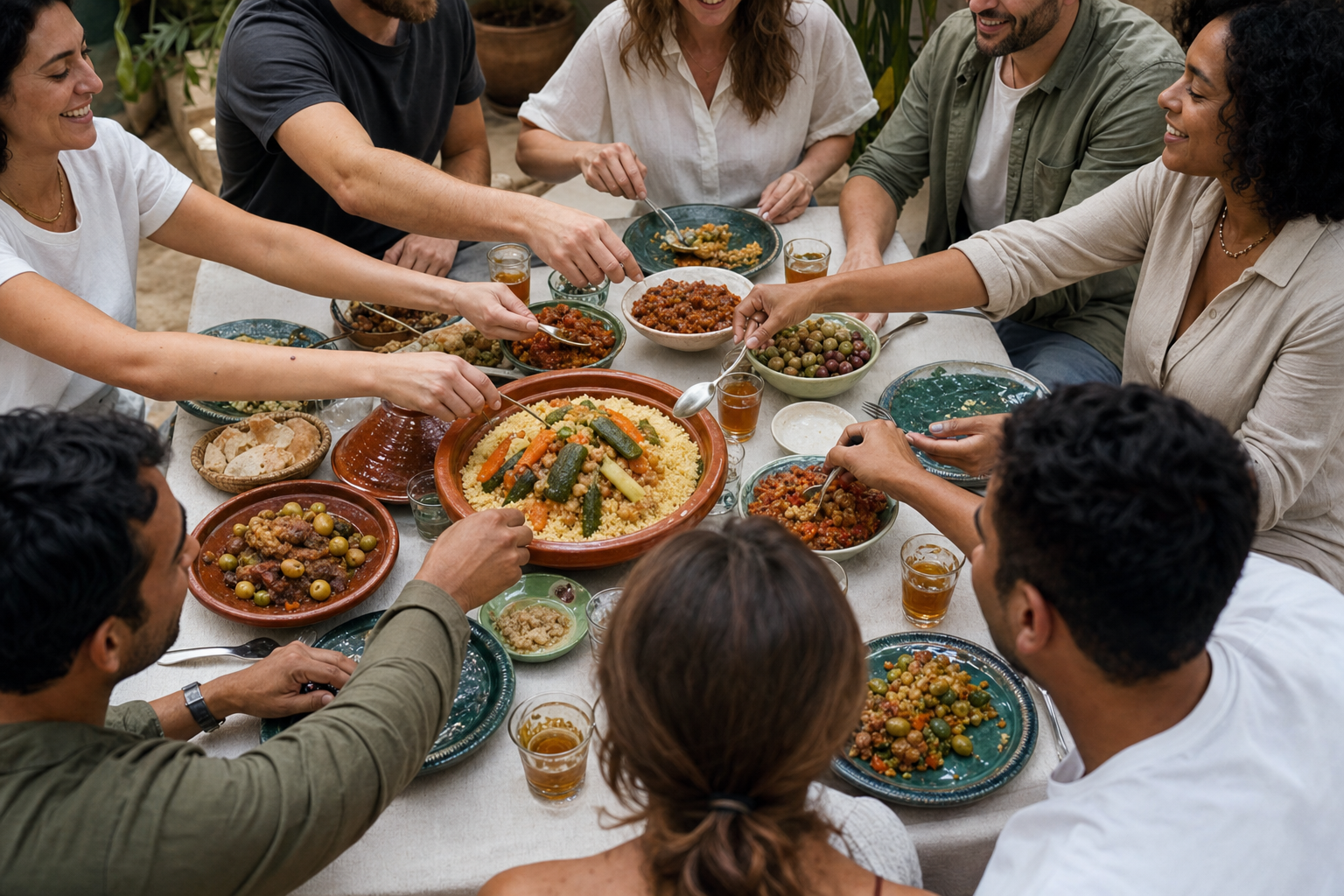
October-November: the sweet spot
Temperatures drop from the summer extreme to a comfortable 20-28°C. Pomegranates, figs (late season), quinces and dates flood the markets. Olive oil pressing season begins. Tagines shift from summer vegetables to autumn fruits — lamb with quince, chicken with pomegranate. Tourist crowds thin after the October half-term rush.
December-February: winter warmth
Cool mornings (5-10°C) and mild afternoons (18-22°C). Harira consumption peaks. Citrus season arrives: oranges, clementines, grapefruits pile high in the souks. Preserved lemon production is at its height. Winter tagines are hearty: lamb with prunes, chicken with olives and preserved lemon.
March-April: spring awakening
Fresh herbs appear everywhere — bunches of coriander, parsley, mint, verbena. Artichokes, broad beans and peas arrive. Almond trees blossom. The Dadès Valley rose harvest begins in late April. If Ramadan falls in spring, the food scene transforms entirely — daytime eating is quiet but iftar at sunset is extraordinary.
May-September: the hot months
Hot to very hot (35-45°C in July-August). Eating patterns shift: lighter salads, cold soups, grilled meats in the evening. The summer fruit season is magnificent: watermelons, peaches, apricots, grapes, prickly pears. But midday walking is uncomfortable and food tourism season pauses. Many cooking classes reduce their schedule.
Ramadan timing
Ramadan moves 10-11 days earlier each year. When it falls in cooler months, the iftar food experience is at its most accessible for visitors. In summer, the long fast (15+ hours) and heat make the daytime harder for everyone.
The practical recommendation: aim for late October, November, or March-April for the best combination of weather, seasonal produce and food tourism infrastructure.
Frequently asked questions
Can I visit Marrakech during Ramadan for food?
Yes — and it is one of the most culturally rich food experiences. Daytime eating is discreet and options are limited, but the iftar meal at sunset is extraordinary. Many riads offer special Ramadan dining.
Is summer too hot for a food trip?
July-August is genuinely uncomfortable for walking-heavy food tourism (40°C+). But summer fruit is magnificent and evening dining is wonderful. Plan food experiences for early morning and evening.